

On the 19th of February 2026, the Office of the Presidency convened something Ghana had not seen before. The First Annual National Forum on Women in Government and Media brought together, under one roof at the Presidential Banquet Hall in Jubilee House, female ministers, deputy ministers, CEOs, Members of Parliament, DCEs, senior presidential staffers, editors, broadcasters and journalists. The theme was ‘Leadership, Visibility, and Public Trust’. Vice President Professor Jane Naana Opoku-Agyemang was the keynote speaker. The room was so full of excellence that I kept thinking we needed a bigger venue.
I was in that room. And I need to tell you what happened in it, because most of Ghana never got the chance to find out.

What I saw was rare. You could count the men in that hall on two hands. The camera crew were mostly men. The Chief of Staff Julius Debrah was there. The Minister of State for Government Communications Felix Ofosu Kwakye was there. But the room belonged to women. Not just any women either. Young DCEs who looked like they were still growing into the size of the responsibility handed to them. Seasoned veterans like Oheneyere Gifty Anti, who has spent decades forcing the conversation about women’s dignity into spaces that would rather not have it.
Felicity Nelson, Deputy CEO of the Ghana Tourism Development Authority, whose journey as a feminist and advocate I have followed with the particular attention you give to someone you believe in, was sitting in that hall. Judith Adjobah Blay, CEO of Ghana National Gas Company and the best public sector CEO in the country, stood up and told us, without flinching, what it actually costs to lead in an industry that still treats her presence as a pleasant surprise.
The Minister of Tourism, Abla Dzifa Gomashie, spoke about what it meant to be the first female Member of Parliament for Ketu South, about having to perform a particular brand of toughness just to be taken seriously in rooms where competence alone was never quite enough for a woman. Speaker after speaker described, with a candour that should have shaken us, how gender quietly distorts the way their work is received, judged and undermined.
And then Efya walked in for a musical interlude, the Vice President danced, and Ghana decided that was the story.
I want to be careful here, because I am not interested in diminishing what those few minutes meant to the women in that room. There is something quietly radical about watching a Vice President let her guard down and move to music in a space that usually demands stiffness and protocol. I get that. But within hours, that brief moment of joy became the only thing anyone wanted to talk about. I even saw a version of the video circulating with a different song entirely, one that was not playing in that hall. I was there. I know what was playing. But the version with the wrong song spread anyway, because accuracy was never really the point. The image of women in power choosing, just for a moment, to be human was always going to travel faster than anything they actually said.
My friend Fati Shaibu-Ali, also a journalist, put a question to me that I have not been able to shake: must women always dance at events? I did not know how to answer her then and I am still not entirely sure I do now. But I think the more uncomfortable question is not whether they danced. It is why the dancing became the only thing the Ghanaian public decided to keep.
And here is where it gets harder to sit with because the bloggers sharing dancing videos, as frustrating as that is, are not the whole story. Many of the female journalists who were in that room went back to their various shows and platforms, and we did not talk about it. Not about what Judith Adjobah Blay said. Not about Abla Dzifa Gomashie’s testimony. Not about the young DCEs in that hall or the weight of what Prof. Naana Jane Opoku-Agyemang said from that podium. A lot of what I saw shared by journalists who attended was about how honoured they felt to be invited. Which, I understand. Being in that room did feel like something. But feeling honoured and then going silent about the substance is its own kind of erasure.

Now, some of that silence is structural. Many journalists do not control their editorial decisions. You can be moved by something and still go back to a newsroom that has already decided what is and is not a story. That is real, and it is worth saying plainly. But structure is not the only explanation. Some of it is habit. Some of it is the quiet internalisation of what we think will get attention, what we think is worth amplifying, what we believe audiences will find interesting enough to stay for. And somewhere in that calculation, the speeches of accomplished Ghanaian women in positions of real power did not make the cut.
Prof. Opoku-Agyemang said something at that forum that I have been turning over ever since. She said that influence is the goal, not visibility; and that influence without standards can be dangerous. She said that women in media hold a particular kind of power, not a ceremonial one, but a structural one. The power to decide what the public sees as urgent and what it sees as trivial. She was speaking directly to the journalists in that hall. She was, I now think, speaking prophetically about what was about to happen to her own forum.
Because the irony is almost too sharp to look at directly. A forum about the visibility of women in public life was rendered invisible by the very mechanisms she warned against from the podium. And some of the people who allowed that to happen were women who had been in the room, who had heard her say it.
This is the part where I want to be honest rather than comfortable. As women, we have to be intentional about telling our own stories. We have to decide, actively and on purpose, that what Ghanaian women in leadership are building and saying and surviving deserve the same urgency we bring to everything else. Because if we are not on our own side, whose side will we be on? If the women who were in that hall, who felt the pride and the weight of it, do not choose to amplify what happened there, then we cannot be entirely surprised when a blogger with a dancing video fills the silence we left.
Shamima Muslim and her team did something genuinely significant in assembling that forum. The Presidency gave it political backing. President Mahama’s commitment to affirmative action gave it purpose. But a well-run event is only the beginning. The room was full in the best possible way. Next time, we need a bigger venue and a bigger conversation to match, one that starts inside the hall and does not stop when we walk out.
The women in that room are not symbols. They are not moments. They are policy. They are governance. They are the national development narrative that Prof. Naana Jane Opoku-Agyemang said we cannot afford to leave on the periphery.
I was in that room. I know what I witnessed.
We have to be intentional. Because if we do not tell this story, no one else is coming to tell it for us.
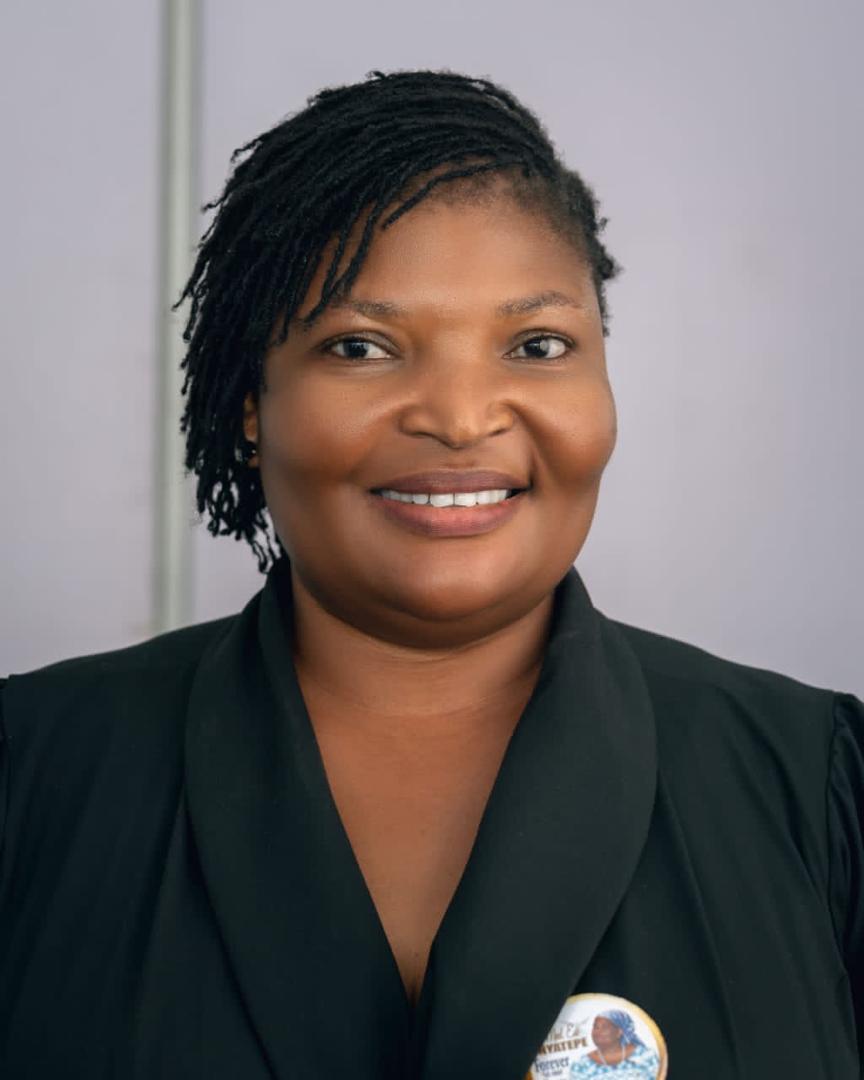
Bridget Mensah is a PR, Marketing & Communications professional and General Secretary of the Network of Women in Broadcasting (NOWIB). A dedicated feminist and advocate for women in media, she champions workplace excellence while empowering voices and building bridges across the industry. Bridget is passionate about amplifying women’s stories and driving positive change in Ghana’s media. She can be reached via email at [email protected]
Post Views: 36
Discover more from The Business & Financial Times
Subscribe to get the latest posts sent to your email.