

In Ghana’s growing economy and especially the flourishing service sector, a quiet, often underestimated spectacle unfolds daily. It is the dynamic interplay between capital and labour, between the drive for profitability and the quest for dignified work.
This interplay, formally framed as labour relations and mediated through the mechanism of social dialogue, constitutes the very bedrock upon which sustainable economic growth and social cohesion are built.
Yet, in contemporary Ghana, this critical system finds itself at a crossroads, strained by the aftershocks of global crises, evolving work paradigms, and persistent structural challenges.
As a nation, our ability to harmonise these forces, to move from sporadic negotiation to genuine, transformative dialogue, will shape our collective future prosperity and stability of the country.
Ghana’s labour relations landscape is historically rich, shaped by a tripartite structure involving government (through the Ministry of Employment and Labour Relations and its agencies), organised labour (primarily the Trades Union Congress, TUC), and organised employers (led by the Ghana Employers’ Association, GEA).
This framework is enshrined in a robust legal architecture, most notably the Labour Act, 2003 (Act 651), which provides for rights to association, collective bargaining, and the settlement of disputes.
The National Labour Commission (NLC) stands as the statutory body mandated to facilitate this process. This formal system has, over the decades, helped to avert crippling industrial conflicts and secure incremental improvements in wages and conditions for a broad section of the formal labour force.
Social Dialogue
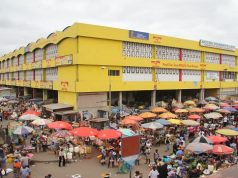
However, to focus solely on this formal structure is to miss the larger, more complex picture. The first fundamental tension lies in the stark reality of informality. According to the International Labour Organization (ILO), over 80% of Ghana’s working population operates within the informal economy (ILO, 2022).
These workers, market traders, artisans, small-scale miners, ride-hailing drivers, largely exist outside the protective umbrella of Act 651 and the traditional social dialogue processes. Their voices are fragmented, their representation nascent, and their engagements with authority often adversarial or non-existent.
Any discourse on labour relations in Ghana that does not centrally address how to extend the principles of social dialogue and protection to this overwhelming majority is, at best, a partial analysis. The recent efforts by Unions and some informal sector associations to organise these workers are commendable but remain a proverbial drop in a vast ocean.
The principle of social dialogue, as defined by the ILO, entails “all types of negotiation, consultation or simply exchange of information between, or among, representatives of governments, employers and workers on issues of common interest relating to economic and social policy” (ILO, 2024).
Its highest form is tripartite cooperation, which Ghana has institutionalised through bodies like the Tripartite Committee. The benefits of effective social dialogue are well-documented – it fosters industrial peace, builds trust, enhances policy ownership, and promotes equitable growth.
During periods of economic shock, such as the implementation of the COVID-19 lockdowns or the more recent negotiations for a Cost of Living Allowance (COLA), it was this tripartite machinery that facilitated crucial, though sometimes fraught, consensus. Yet, the practice often falls short of the principle. Social dialogue in Ghana is frequently reactive rather than proactive.
It is often triggered by crises, impending strikes, spiralling inflation, or external pressure from the International Monetary Fund (IMF), rather than being embedded as a continuous governance tool for shaping long-term industrial, fiscal, and social policy.
As Okome (2022) observes in a study on public sector bargaining, dialogue is sometimes reduced to “a ritual of demand and partial concession,” lacking the deep, problem-solving collaboration needed to tackle issues like productivity linkages, skills development, and the future of work.
The timing is often adversarial, unions present demands at moments of maximum leverage, while employers and government can be perceived as dragging their feet until disruption is imminent.
Several persistent challenges undermine more effective dialogue. The foremost issue is of representation and legitimacy. On the labour side, while the TUC is the central body, its influence is sometimes challenged by powerful public sector unions acting as a block or independently, leading to fragmented bargaining positions.
On the employers’ side, the GEA represents a significant portion of formal businesses, but many small and medium enterprises (SMEs), such as the Association of Ghana Industries (AGI), which form the backbone of the economy, are not members and may feel disconnected from agreements reached.
Furthermore, the government, as the largest single employer and the policy-maker, often wears two hats, a duality that can create confusion and mistrust. As Adusah (2021) notes, this can lead to a perception that the state is negotiating against itself, blurring lines and complicating resolutions.
Any discourse on labour relations, in Ghana that does not centrally address how to extend the principles of social dialogue and protection to this overwhelming majority of workers (market traders, artisans, small-scale miners, ride-hailing drivers etc), is at best, a partial analysis.
Second, the capacity for effective engagement is uneven. High-quality dialogue requires skilled negotiators, reliable data, and a focus on mutual gains. Unions may lack technical expertise in complex areas like pension fund management or actuarial analysis, while some employers may not have sophisticated human resource systems.
The NLC itself, though pivotal, has historically been hampered by resource constraints and case backlogs, affecting its ability to mediate disputes swiftly and authoritatively (Adu-Amankwah, 2019).
Third, and most critically, is the macroeconomic context. Ghana’s recurring cycles of fiscal distress, currency depreciation, and hyper-inflation in the recent past, as starkly exemplified by the recent debt crisis and IMF intervention, create a brutally difficult environment for dialogue. Collective bargaining agreements are eroded by inflation soon after they are signed, leading to perennial frustration and a sense of chasing shadows.
Negotiations become almost exclusively focused on short-term survival, wage adjustments and allowances, rather than on strategic issues of productivity, innovation, and competitiveness. The government’s commitment to dialogue is severely tested when its fiscal space is constrained by debt servicing and austerity measures dictated by international financial institutions.
The changing nature of work introduces another layer of complexity. The rise of the gig economy, digital platform work, and remote employment models challenges traditional definitions of the “employer-employee” relationship. Are ride-hailing drivers employees or independent partners? What are their collective bargaining rights?
Our current labour laws, including Act 651, are not fully equipped to answer these questions, creating a new frontier of informality within a seemingly modern sector. Without an urgent and inclusive dialogue to modernise our regulatory framework, we risk fostering a new generation of vulnerable workers without protections.
So, how do we move from a system of periodic, crisis-driven labour relations to one of sustained, productive social dialogue that drives national development? The path forward requires bold, systemic rethinking. The circle of dialogue must be expanded. The formal tripartite structure must be deliberately augmented to include stronger voices for the informal economy, SMEs, youth, and women’s groups.
This could mean creating a quadripartite council with dedicated informal economy representation or establishing sector-specific dialogues for areas like agriculture, tourism, and digital services. The goal is to make social dialogue more inclusive and representative of Ghana’s actual economic structure.
Again, we must invest in capacity building. All social partners require strengthening. Trade unions need training in data analysis, alternative dispute resolution, and strategic foresight. Employer associations, especially those supporting SMEs, need support in developing fair and sustainable human resource practices.
The NLC requires adequate funding and logistical support to fulfil its mandate effectively. The government’s technical negotiating teams must be bolstered. Development partners and institutions like the ILO can play a crucial role here.
Then, we must institutionalise proactive and data-driven dialogue. The very commonplace ‘makola-type’ negotiation must be replaced by interest-based systems anchored on common purpose and problem solving.
Instead of waiting for crises, the Tripartite Committee should have a mandated, regular calendar of meetings to review economic indicators, productivity trends, skills gaps, and social protection issues. The National Employment Policy and the Labour Act should be reviewed collaboratively and regularly.
As Fashoyin (2020) argues, effective social dialogue thrives where it is underpinned by credible, shared information. An independent labour market observatory could provide the neutral data needed for evidence-based negotiations.
Linking wages to productivity and skills development is non-negotiable. This is the hardest but most essential shift. Dialogue must graduate from haggling over slices of a static economic pie to collaborating on how to grow the pie.
Sectoral agreements should increasingly incorporate commitments to training, technology adoption, and quality improvement. The government can incentivise this by tying tax incentives for businesses to demonstrable investments in upskilling their workforce and improving industrial relations.
We must additionally modernise our legal and institutional framework. A comprehensive review of the Labour Act is overdue to address gaps related to the gig economy, remote work, sexual harassment, and the specific vulnerabilities of migrant and ‘contract’ workers. The dispute resolution machinery must be made faster and more accessible.
Furthermore, social dialogue outcomes must be better integrated into national development planning, ensuring that agreements on wages, pensions, and safety are reflected in the national budget and implementation priorities.
Labour relations and social dialogue in Ghana are not merely technical matters for specialists. They are a barometer of our social contract, a determinant of the business climate, and a catalyst for inclusive growth.
The current system, while having served Ghana through significant transitions, is busting its seams under new pressures. We have an opportunity to re-orchestrate this system into a more inclusive, forward-looking, and resilient symphony of cooperation amidst the current buoyant and performing economy.
It requires political will from government, strategic vision from employers, and a broadening of perspective from organised labour. The alternative is a future of heightened industrial unrest, deepening inequality, and stunted competitiveness. The dialogue must continue, but it must evolve, from a sporadic conversation about survival into a continuous, constructive partnership for building the prosperous, decent, and equitable Ghana we all aspire to see.
For further reading:
Adu-Amankwah, K. (2019). The National Labour Commission and Industrial Peace in Ghana: Challenges and Prospects. Labour Research and Policy Institute.
Adusah, R. A. (2021). “The Dual Role of the State in Public Sector Labour Relations in Ghana: A Critical Analysis.” Ghana Journal of Industrial Relations, Vol. 7.
Fashoyin, T. (2020). Social Dialogue and Economic Development: Comparative Experiences. ILO Publications.
International Labour Organization (ILO). (2022). Informal Economy in Ghana: Trends and Characteristics. ILO Country Office for Ghana.
International Labour Organization (ILO). (2024). Social Dialogue. [ILO Website]. Retrieved from https://www.ilo.org/global/topics/social-dialogue/lang–en/index.htm
Okome, G. A. (2022). “Collective Bargaining in Ghana’s Public Sector: Ritual or Reality?” African Journal of Economic and Management Studies, 13(1).
Post Views: 17
Discover more from The Business & Financial Times
Subscribe to get the latest posts sent to your email.