

By Maame A.S. Mensa-Bonsu
On International Women’s Day, we pause to truly focus on the state of women around the world. It is a moment of celebration for sure. But it is also a moment of deep contemplation. I will tell you three anecdotes. Then we will celebrate the distance run through the work of our predecessors, reflect on what injustices remain in the lived experience of women and introspect on how we individually make the journey of girls and women harder.
On my first visit to Lancaster in 2015, I was given a tour and one of the historical sites pointed out to me was a spot in a 19th century marketplace, where a man brought his wife, halter around her neck, leash attached and sold her for £2 for being a nag. After about a month, we were told, he missed her and so went and bought her back. In 2016, we took a family road trip to Benin and one day we were pulled over by a gendarme who wanted a bribe. My husband was sitting in front with the driver, and I was in the back with our sons. I rolled down my window, greeted him and asked if there was a problem. He told me, sharply, to be quiet, and that he was speaking to the men.
When there are men present, he scolded me, women should not speak. I promptly kept quiet, knowing that I was the only person in the vehicle who spoke French. After he tried futilely to communicate with my husband, he turned to me. But I refused to utter a single word. Finally, he gave up and let us drive off. One evening in 2024, while I was guest lecturing for a semester at GIMPA, I sought admittance through the staff-only back gate. The security man asked me a number of questions and then asked my name. I answered ‘Prof. Mensa-Bonsu.’ The guard let out a vastly amused snort, said, ‘a woman taking professor?!’, and burst into laughter. Still chortling, he sauntered off and opened the gate.
The comical twist at the end of all three anecdotes makes them good dinner party stories. But after the chuckles die down, one is struck, (I hope) by what they betray of life as a woman. Two hundred or so years ago, English men could sell their wives. Imagine the total helplessness of a woman of that age- to be another’s property, as easily tradeable as a donkey or a chair. What a sad state to live in.
The condition of women has come a long way since then. In many countries women are no longer chattel. The common law doctrine of ‘coverture’, and its civil law equivalent, under which a married woman was ‘covered’ i.e. absorbed by her husband have ceased to apply in very many places. Married women now can own property, take jobs without their husband’s permission, have a vote.
Here in Ghana, the courts’ jurisprudence has moved from the 1959 decision in Quartey v Martey, where a woman was held to be duty bound to help her husband excel in his station of life, and in return was entitled to the use of that which the said man considered suitable for his wife; only for as long as she was his wife. On divorce or widowhood therefore, she was to return to her people as she came.
Our Constitution now entitles each spouse to an equitable share of property jointly acquired during marriage and the courts have said, they will accept the performance of family duties as contribution towards property. That is nice. But in practice, the majority of women are in no better place for it. For how does one distinguish a mother’s own parenting and homemaking duties from parenting and homemaking duties that amount to sweat equity in property?
Still, we have come a long way from Quartey v Martey. And that is worth celebrating. We lift our glasses to the heroes of our fight whose intentional steps have brought us here: the members of the Nana Dr SKB Asante Committee of Experts whose draft proposals for the 1992 Constitution introduced article 22; the judges in landmark cases like Mensah v Mensah; the gender advocates and gender law lecturers who have opened the eyes of many men and women; the courageous women who broke with cultural expectations to demand economic justice and brought us these cases.
We celebrate the high increase in access to education over the years especially since free SHS, even as we bemoan its poor quality. We celebrate the 41 women MPs who together are the largest representation our gender has had in Ghanaian legislative history. We celebrate also every person who voted for them, who did not see their womanhood as incapacitating. We celebrate the first Second Lady in our history who is not so in virtue of marriage. We celebrate every headmistress of every school, and in particular of primary schools, who are instrumental visuals to young girls and young boys alike that a woman both can and does no wrong to be the boss to whom a man reports.
We celebrate the females who work on rigs and in labs, in law chambers and on the bench, in polling stations and on campaign trails. We celebrate women in Air Force uniform wherever they may be: customs and immigration, the police service, the army, the navy, the prison service. We celebrate every woman who, by the example of her life, is offering new horizons to a little girl somewhere in this country.
But we are still as far away from the constitutional ideal as we are from Quartey v Martey. There is plenty to celebrate. But there is plenty more to do, as my anecdotes demonstrate. Law alone cannot remove the obstacles women face. The Beninois gendarme was expressing a view held by a substantial portion of the continent’s population -both male and female. I am a lawyer.
If I were to be quiet whenever men spoke, what good work would I achieve? And if clients found that I cannot do good work for them unless opposing counsel is also female, would they not prefer male lawyers over me, and could you fault them for it? Believing women should be silent before men translates into believing women should do tasks no man would want to do.
That does not leave very many career options open to women. I imagine this gendarme, if he were ever to become in charge of promotion in his country’s army, would promote very few female soldiers. As I drove into GIMPA for my jurisprudence class that evening, I chuckled at the security guard’s amusement. But on my way home, I considered what this man would allow his female children and what he would encourage in his sons. Female suppression and misogyny seem the inevitable experience of his daughters and sons. Gender biases become decision shapers for those whose have them and thus create a limiting framework for women and an unjustly enabling one for men.
This International Women’s Day, I want to charge each of you, not, to join rights marches and write petitions and press statements, though those are important. This International Women’s Day, I charge you to reflect on the ways in which you personally perpetuate gender inequities. The tiny ways are the hardest to change because they feel inconsequential to the person doing them.
This year, let us change the tiny ways we oppress women. Sir, do you call your female coworkers, ‘dear’? Ladies, do you call out your male colleagues when they address you or other women by personal endearments they never use on their male colleagues, as if you were in that space at their tolerance or for their entertainment? Do you automatically assume the man in the delegation you have just met is the boss? Are you surprised when a smart woman turns out to be pretty? Do you dismiss a woman’s caution on the road as bad driving natural to women? Do you correct those who do? Do you express surprise at how well a career woman can cook? Do you think the Head Girl is the second prefect after the Head Boy? Do you assume the lone woman at your meeting took notes? Do you make bawdy ‘boys-boys’ jokes on social media platforms you know are mixed gender, be they work, alumni, or club?
When I taught leadership, I ran an unconscious bias test in my classes and invariably, students surprised themselves by the biases they carried. The male firefighter’s direction felt more instinctively correct or trustworthy than his equally uniformed female counterpart’s. The random man on the construction site’s instructions to them as guests there ‘felt’ more authoritative than those by the woman in the hard hat and high visibility jacket. ‘Dr Ansah’ was always a man… This year, introspect hard. What gender inequalities do you accept, perpetuate or ignore that would not take great political will, institutional intentionality or a policy shift to act on? What acts could you do or stop doing to help more girls and women believe in themselves, or enjoy their workspaces, or take pride in their careers or have the courage to start a firm, or dare to apply to doctoral programmes, or voice an unpopular opinion or be unashamed about disliking meal preparation? What can you, by your single self, do?
Unconscious biases are imbibed from our environment. They will be passed on from generation to generation unless conscious effort is made to break with them. So, this year, do more than shout out ‘Happy International Women’s Day!’ and wave. Do not just post feminist soundbites on your socials. Ruminate. Find one tiny thing you could fix, stop, or improve in the way you interact or permit others to interact with woman, and do that. Happy International Women’s Day, dear!
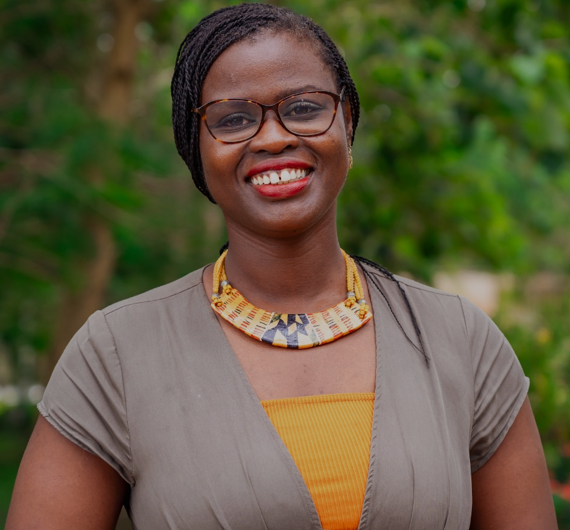
Maame A.S. Mensa-Bonsu holds a BA in Theatre Arts and Spanish; and an LLB, both with First Class Honours, from the University of Ghana. She completed the Bachelor of Civil Law with distinction and her DPhil without corrections both at the University of Oxford, UK. Maame joined Ashesi from the LSE where she taught Public Law and Criminal Law. Maame’s research focuses on the constitutional experience of African democracies. She has a particular interest is judicial power in postcolonial African states.
Post Views: 2
Discover more from The Business & Financial Times
Subscribe to get the latest posts sent to your email.