

By Juliet ETEFE
As the world commemorates International Women’s Day 2026, conversations on rights, justice and action for all women and girls underscore the need to dismantle structural barriers and to translate equality into real economic empowerment.
At the same time, the Give to Gain spirit of IWD 2026 highlights a simple but powerful truth: when society gives women opportunities, support, visibility and resources, everyone gains.
In Ghana’s corporate and policy landscape, this principle plays out in practice. Women are increasingly steering major economic decisions, shaping monetary policy, investment priorities, trade expansion and digital innovation. From banking and finance to telecoms and enterprise regulation, female leaders are strengthening institutions, modelling inclusive governance and inspiring a new generation to aim for boardroom and policymaking roles.
In the entrepreneurial space, women-led micro, small and medium enterprises – which account for an estimated 44 percent of MSMEs in Ghana – operate within a sector that represents about 92% of registered businesses and is estimated to contribute between 60–70% of GDP. This underscores the significant role female entrepreneurs play in job creation, market expansion and local economic activity.
Yet, while progress is visible, gaps remain. Women occupy about 25 percent of board seats in listed companies and many still face barriers in accessing capital, networks and leadership pipelines. Initiatives aimed at mentorship, capacity building and financial inclusion are beginning to close these gaps, signalling positive change in Ghana’s economic fabric and aligning with the global IWD call for action.
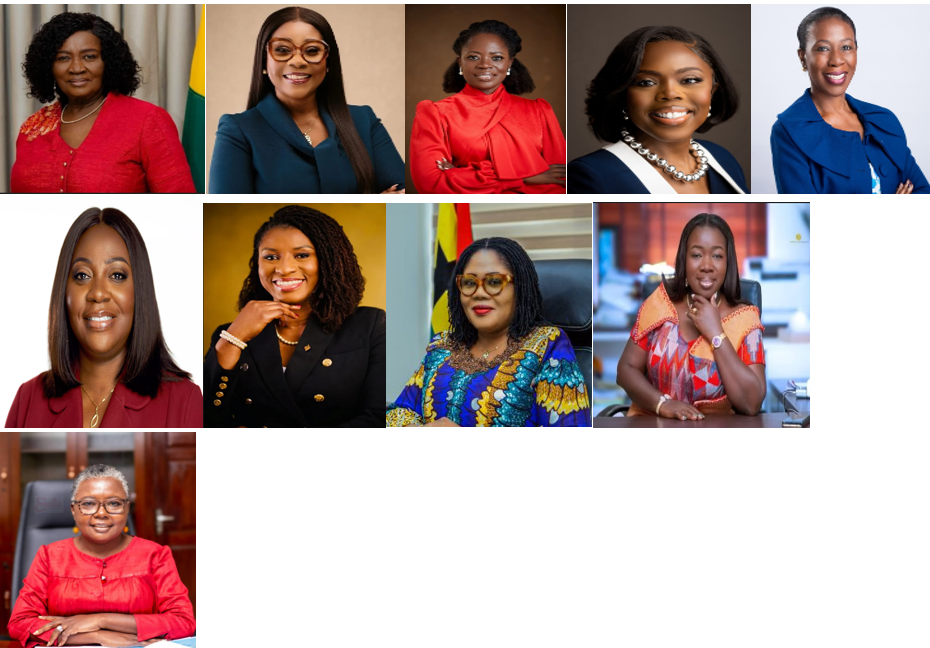
Behind Ghana’s economic growth and strategic decision-making are women whose leadership is shaping the nation’s future spanning governance, finance, telecoms and the economy. While this is by no means an exhaustive list, the blurbs that follow highlight some of the most influential figures whose vision, expertise and decision-making are driving investment, fostering innovation and turning opportunity into measurable economic impact.
These women exemplify how female leadership is powering the nation’s economy and inspiring the next generation of professionals to aim for boardrooms, policy-making roles and beyond.
Vice President Jane Naana Opoku-Agyemang, Ghana’s First Female Vice President

Professor Jane Naana Opoku-Agyemang is a distinguished academic, educator and politician who made history on 7 January 2025 when she was sworn in as Ghana’s first female Vice President, serving under President John Dramani Mahama.
A former Minister for Education and the first female Vice-Chancellor of the University of Cape Coast, she brings decades of academic and governance experience to the highest level of national leadership.
As Vice President, Prof. Opoku-Agyemang plays a strategic role in supporting national governance and policy coordination. Her portfolio places emphasis on inclusive development, human capital formation and gender equity, areas that intersect directly with Ghana’s long-term economic transformation agenda. Through high-level engagement across ministries and sectors, she contributes to shaping policies that promote sustainable growth, social inclusion and private-sector participation.
Matilda Asante‑Asiedu, Second Deputy Governor, Bank of Ghana

Matilda Asante Asiedu is the Second Deputy Governor of the Bank of Ghana (BoG), a senior role under the Bank of Ghana Act. Her career spans banking, communications, and institutional leadership, including executive roles in retail banking and strategic stakeholder engagement.
At BoG, she contributes to monetary stability, financial system soundness, and regulatory oversight, while supporting initiatives that promote financial inclusion and institutional innovation across the sector.
As one of the few women in senior central banking leadership, her role signals the growing influence of female executives in shaping Ghana’s financial landscape and expanding economic opportunities for women.
Abena Amoah, Managing Director, Ghana Stock Exchange

Abena Amoah is the Managing Director of the Ghana Stock Exchange (GSE) and the first woman to hold that position, having taken office in November 2022.
She is a seasoned investment banker and capital markets specialist, with experience spanning stock market listings, trading, asset management, and corporate finance.
Under her leadership, the GSE has pursued strategic initiatives to modernise trading infrastructure, expand investor participation, and develop new market products, contributing to deeper market activity and broader access to capital. Her inclusion in Ghana’s Presidential Economic Advisory Group highlights her influence on national economic policy.
As one of the few women leading a major national financial institution, Abena Amoah exemplifies how female executives are shaping Ghana’s capital markets and contributing to strategic economic decision-making.
Abena Osei‑Poku, Managing Director, Ecobank Ghana

Abena Osei‑Poku leads Ecobank Ghana and serves as Regional Executive for the Anglophone West Africa region. A seasoned Pan‑African banking leader with over 25 years’ experience in corporate, investment and commercial banking, she has guided Ecobank’s strategic expansion, digital innovation and client‑driven growth initiatives, reinforcing the bank’s role as a key financier in Ghana’s economic ecosystem.
As one of the few women leading a major bank in Ghana and a regional banking cluster, Abena Osei‑Poku’s leadership reflects the deepening influence of female executives in shaping the country’s financial landscape and broadening access to finance and markets.
Mansa Nettey, CEO, Standard Chartered Bank Ghana

Mansa Nettey is the Chief Executive Officer of Standard Chartered Bank Ghana, leading the bank through transformative growth, digital innovation and institutional strengthening. She oversees initiatives in corporate governance, risk management, and financial inclusion, extending banking access to underserved populations, including women and SMEs.
With over 25 years of experience across the West Africa sub-region, she has contributed significantly to financial and capital markets development, including pioneering risk management solutions for governments.
As a prominent female executive, she mentors emerging leaders and supports programmes that develop women in finance, demonstrating how female leadership in banking is shaping Ghana’s financial ecosystem and driving inclusive economic growth.
Ing. Patricia Obo‑Nai , CEO, Telecel Ghana

Ing. Patricia Obo‑Nai is the Chief Executive Officer of the Ghana Telecommunications Company Limited (Telecel Ghana), and the first Ghanaian to lead the company following its transition from Vodafone Ghana. She brings over 25 years of experience in the telecommunications sector.
At Telecel Ghana, Ms. Obo‑Nai has driven strategies to expand network coverage, enhance digital connectivity, and promote digital literacy, particularly for underserved communities and SMEs. Her initiatives have strengthened the telecom sector’s role in digital inclusion and economic participation, highlighting the importance of innovation and collaboration in Ghana’s digital transformation.
A recognised industry leader and advocate for women in STEM and technology leadership, Ms. Obo‑Nai exemplifies how female executives are shaping the digital economy and advancing inclusive growth in Ghana.
Pearl Nkrumah, Managing Director, Access Bank Ghana Plc

Pearl Nkrumah is the first female Managing Director of Access Bank Ghana, bringing over 23 years of banking experience across retail, digital, SME, and commercial operations. Since joining the bank in February 2022, she has led initiatives that expand financial inclusion for women and youth, including the Womenpreneur Pitch‑a‑thon and youth banking programmes.
Under her leadership, Access Bank has strengthened mass-market banking, inclusive governance, and corporate social responsibility, reflecting the growing influence of women executives in shaping Ghana’s financial sector and advancing inclusive economic growth.
Dr. Agnes Naa Momo Lartey, Minister for Gender, Children and Social Protection

Dr. Agnes Naa Momo Lartey heads the Ministry of Gender, Children and Social Protection, the institution responsible for advancing gender policy, social welfare programmes and protections for vulnerable groups.
At a time when women’s economic participation remains constrained by access to capital, informality and unpaid care burdens, the Ministry’s work sits at the centre of Ghana’s inclusion agenda. Its oversight of social protection schemes and gender mainstreaming policies influences how economic growth translates into broader opportunity.
While structural gaps in financing, leadership pipelines and labour participation persist, the Ministry’s mandate positions it as a key factor in shaping policy responses that determine whether growth is inclusive or uneven.
Abla Dzifa Gomashie, Minister for Tourism, Culture and Creative Arts
Abla Dzifa Gomashie is Ghana’s Minister for Tourism, Culture and Creative Arts, appointed in January 2025. A veteran actress, producer, screenwriter and two‑term Member of Parliament for the Ketu South constituency, she brings decades of experience in the creative arts and cultural advocacy to the role.
As Minister, she has emphasised the economic potential of Ghana’s creative industries and heritage tourism, calling for stronger institutional support, stakeholder engagement and investment to grow jobs, revenue and national identity. Her work includes stakeholder consultations and initiatives to integrate culture with tourism‑led growth, reflecting the sector’s contribution to employment and foreign exchange.
Elizabeth Ofosu‑Adjare, Minister for Trade, Industry and Agribusiness

Elizabeth Ofosu‑Adjare serves as Minister for Trade, Industry and Agribusiness, a portfolio central to Ghana’s industrialisation, export diversification and private sector growth. She has advocated policies to strengthen the business environment, support non‑traditional exports and leverage the African Continental Free Trade Area (AfCFTA) to expand market access.
Ms. Ofosu‑Adjare has emphasised the importance of investment, value addition and reforms under the Business Regulatory Reform programme to boost competitiveness and attract investors. She has also reaffirmed government support for women‑led businesses and inclusive economic participation, reflecting the ministry’s role in facilitating trade, agribusiness development and industrial strategy.
Emelia Arthur, Minister for Fisheries and Aquaculture Development

Emelia Arthur is the Minister for Fisheries and Aquaculture Development, leading a sector that supports livelihoods, food security and export opportunities. Since assuming office in January 2025, she has focused on strengthening aquaculture, sustainable fisheries management and public‑private partnerships to enhance productivity and jobs, particularly for youth and coastal communities.
Ms. Arthur has also overseen efforts to revitalise the National Aquaculture Centre, expand training and engagement programmes, and support compliance with international standards, recognising the sector’s role in the broader blue economy agenda and Ghana’s economic development.
Building on Progress
As Ghana marks International Women’s Day 2026, the contributions of women across government, finance, telecom, and entrepreneurship underscore a simple truth: inclusive leadership strengthens the nation’s economic fabric.
While challenges remain, the rising influence of women in leadership and the impact of highlight the need for inclusive economic growth. Ghana’s experience shows that when women lead, the benefits ripple across society, driving innovation, creating jobs, and expanding opportunities for sustainable development.
Happy International Women’s Day to all women whose leadership, resilience and innovation continue to shape our world!!!
Post Views: 4
Discover more from The Business & Financial Times
Subscribe to get the latest posts sent to your email.