
…. highlights Ghana’s Circular Economy Drive
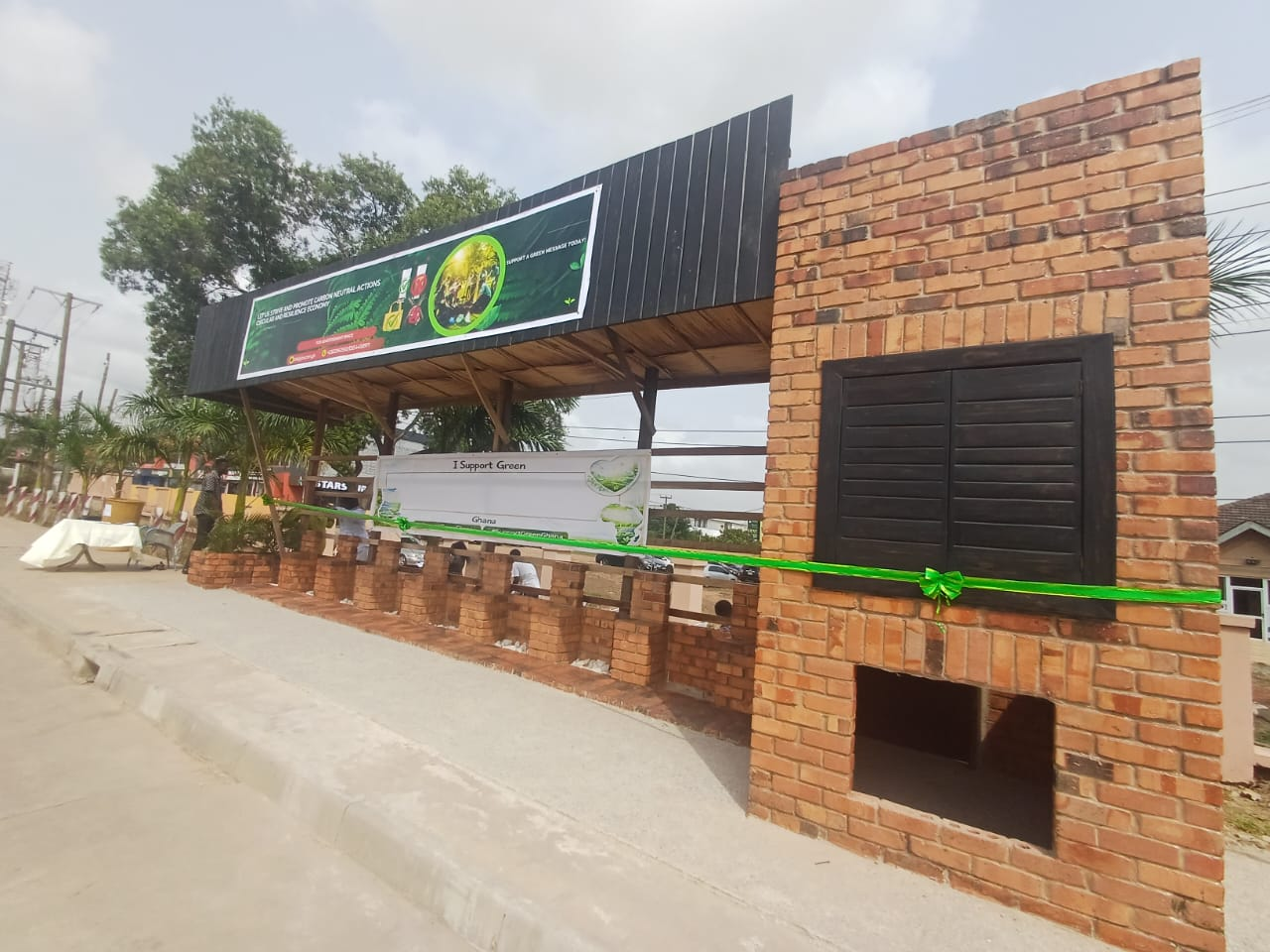
JCS Investments Limited has, as a novelty, built an eco – friendly bus stop along the Spintex corridor in Accra, drawing attention as an unlikely symbol of Ghana’s circular economy ambitions.
The structure departs from the conventional concrete-and-steel designs that dominate the capital’s roadside infrastructure. Instead, it is built largely from locally sourced bricks, wood, and woven matting.
The Chief Executive Officer and founding partner of JCS Investments, Patricia Safo, said the project is both practical and political. She explained that while the bus stop provides shelter for commuters, it also demonstrates how businesses can align commercial activity with climate responsibility.
Ms Safo emphasized that policy must play a critical role, noting that municipal authorities need to stimulate the circular economy through incentives, clear regulatory frameworks, and long-term support. Without such measures, she cautioned, private initiatives risk remaining symbolic.
The circular economy, which emphasises reuse, recycling, and local production to minimize waste and emissions, is gaining traction globally as countries set targets toward carbon neutrality. Ghana has signaled similar ambitions in its climate commitments, though implementation has been uneven, expressing confidence that local enterprise can help bridge this gap.
She explained that JCS Investments intentionally prioritized Made-in-Ghana materials and artisans to reduce the project’s carbon footprint while retaining value within the domestic economy. This approach, she added, supports small producers, shortens supply chains, and reduces emissions associated with imports.
The benefits extend beyond environmental considerations. For the Greater Accra Region, the bus stop enhances commuter safety and improves the urban landscape along a busy commercial stretch.
Nationally, such projects reinforce local content development, stimulate small-scale manufacturing, and promote skills in sustainable construction.
Analysts argue that replication is key. They suggest that if metropolitan, municipal, and district assemblies adopt similar design principles, supported by fiscal incentives and procurement reforms, small-scale infrastructure could become a lever for industrial growth and emissions reduction.
Although JCS Investments may not rank among Ghana’s largest developers, its Spintex project underscores a larger point: the transition to a circular economy will depend as much on practical demonstrations as on policy declarations. Ms Safo stressed that the bus stop represents more than infrastructure, describing it as a statement of values.
In a country grappling with urban congestion, youth unemployment, and climate vulnerability, that statement may resonate far beyond a single roadside shelter.
Newly launched Eco-friendly bus stop at Spintex in Accra
Post Views: 3
Discover more from The Business & Financial Times
Subscribe to get the latest posts sent to your email.