
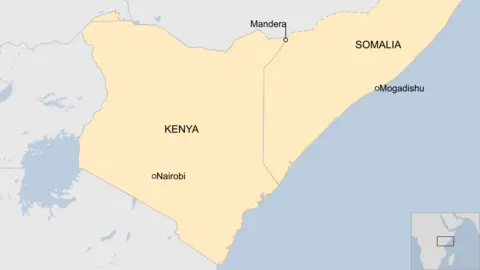
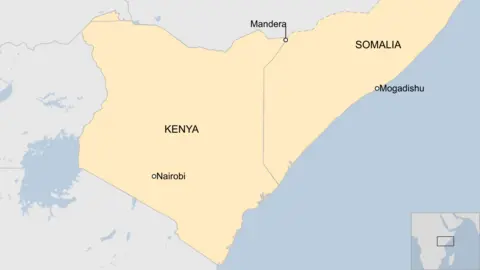
Kenya’s border with Somalia will reopen in April, almost 15 years after it shut because of attacks by the Islamist militant group al-Shabab, President William Ruto has announced.
Based in Somalia, the group has masterminded a series of deadly assaults in Kenya, including one on a shopping centre in the capital, Nairobi, killing 67 people in 2013 and one at a university in Garissa two years later, killing 148.
The plan was announced in 2023, but subsequent attacks delayed the implementation.
Ruto said the intention to reopen two crossings follows years of security assessments, adding that there will be a heavy deployment of security forces to ensure the move does not compromise safety.
Kenya has also been concerned about illicit weapons and other contraband goods being smuggled across the border.
The president announced the plan on a visit to the border town of Mandera, in Kenya’s far north-east, which has a large population of ethnic Somalis.
“It is unacceptable that fellow Kenyans in Mandera remain cut off from their kin and neighbours in Somalia due to the prolonged closure of the Mandera Border Post,” Ruto posted on X.
He hoped that the re-opening would boost “cross-border trade for the mutual prosperity of our people”.
In a speech, he asked all residents of Mandera, which has been targeted several times, to “join in the battle against al-Shabab. These al-Shabab are useless, I want to assure that Kenya will work together with you, just help us combat these criminals and terrorists.”
In addition to the attack on the Westgate mall and Garissa University, other major al-Shabab attacks in Kenya include the killing of 28 bus passengers in Mandera county in 2014 and an assault on a hotel in Nairobi five years later, which left at least 21 people dead.
In 2015, Kenya had embarked on building a perimeter barrier along the country’s 680km (423-mile) common border because of the militant threat, but the project was suspended after nearly three years when only 10km (6 miles) of a wire fence had been built at a cost of $35m (£26m).
DISCLAIMER: The Views, Comments, Opinions, Contributions and Statements made by Readers and Contributors on this platform do not necessarily represent the views or policy of Multimedia Group Limited.
DISCLAIMER: The Views, Comments, Opinions, Contributions and Statements made by Readers and Contributors on this platform do not necessarily represent the views or policy of Multimedia Group Limited.
Source link