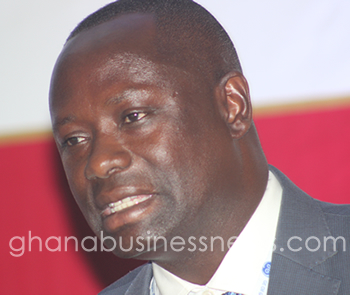

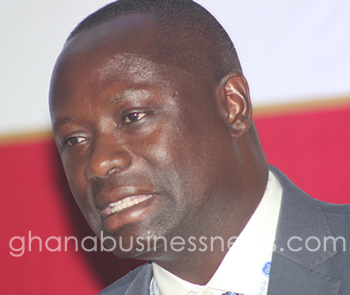
Mr Emmanuel Armah -Kofi Buah, the Minister for Lands and Natural Resources, says mining communities should become centres of real and genuine development as against what is being witnessed today.
That, he noted could be achieved through compliance, commitment and bold transformation in the industry from procurement, technology, talents and skills so that “when the Gold leaves, poverty should also leave every community and be replaced with world class development. ”
He said currently, 40 per cent of procurement spending was in country while, 70 per cent of engineering, technical expertise came from outside, a huge capital flight and warned against fronting which continued to entrench these practices.
“The value has flowed through our hands, but too much of it has settled elsewhere. Why should our local businesses, despite their immense potential, capture less than 40 percent of the procurement spend in a sector that generates billions of cedis in expenditure annually? Why should over 70 per cent of high-value services-engineering design, equipment supply, specialized technical support still be sourced from outside our borders?”
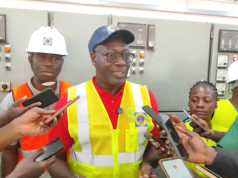
The Lands Minister was speaking at the Minerals Commission maiden Local Content Summit 2026 in the Western Region on the theme “Strengthening local content and indigenisation – building a resilient mining sector in Ghana.”
The two-day national event attracted high-level government officials, foreigners, mining industry regulators, major local service providers, financial institutions, and the community, to forge a unified path toward truly deriving real benefits and indigenising Ghana’s mineral sector.
Mr. Buah said, Fronting was theft of opportunities for the Ghanaian saying, “for how long you can allow yourselves to feed on the crumbs when you can actually own the bakery.”
The minister listed key pillars for driving value addition and resilience to include creating a Special Purpose Vehicle (SPV) to drive sustainable and strategic partnerships for industrialisation to promote collaborative efforts to build financial resilience for business investments.
“Government is committed to creating enabling environments with transparent policies and incentives to drive industrialisation. Local businesses must rise to the challenge of quality, efficiency and innovation.
Together, we can build a mining industry that is not only profitable but resilient an industry that empowers our people and secures our future. –Let’s be reminded, the minerals are finite, but the value we create through local content can be infinite.”
Mr Joseph Nelson, the Western Regional Minister, said the region was a strategic hub of Ghana’s mining, petrochemical, and logistics operations adding “Our region plays a pivotal role in shaping Ghana’s economic future” and believed the summit had come at an opportune time as all worked toward creating a more resilient, diversified and inclusive regional economy.
He encouraged traditional authorities and host communities to keep nurturing a peaceful and stable environment that allowed sustainable mining operations to flourish.
Local content, he argued, must evolved from basic participation to high -value technical environment, from supply of goods to engineering, digital services and manufacturing, and from labour provision to knowledge-based roles.
Mr Nelson however, stressed the connection between local content and fight against illegal mining, suggesting the empowerment of local enterprises, formalising the supply chain and ensuring transparent indigenisation to reduce the incentives that fuelled illegal operations to create lawful and structured participation in the sector.
He continued “The region stands ready to support policies and partnerships that provide capacity building for businesses, transparent procurement frameworks, environmental sustainability and responsible mining practice and strong collaboration between mining companies and host communities.”
Mr Isaac Andrews Tandoh, the Chief Executive, Mineral Commission, called on Ghanaians to stop fronting for foreign businesses at their own peril.
“Why do you lend your name to such agreement or arrangement…open your eyes, you are being used”.
The Commission, he announced was working on new royalty regime as well as reviewing long term leases which often outlived policies and systems.
Mr Tandoori said, “We are ready to support Ghanaian businesses, CSOs, local communities and other stakeholders to derive tangible benefits.”
The President of the Western Regional House of Chiefs, Nana Kobina Nketsia V, called for a fundamental transformation of Ghana’s mining sector to ensure that resource wealth directly benefits host communities.
He stressed that the time had come to move beyond rhetoric and adopt bold, people-centred reforms that prioritise indigenous participation and community development.
He underscored the historical significance of the Western Region as the backbone of Ghana’s gold production.
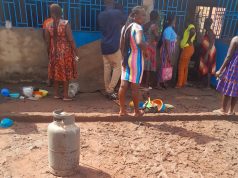
Mentioning key mining towns such as Tarkwa, Prestea, Bogoso and Wassa, he noted that despite their immense contribution to national revenue, many of these communities continued to grapple with underdevelopment.
The wealth of the land must first feed the children of the land and questioned why areas that generated substantial mineral wealth often remained impoverished.
He urged stakeholders to deepen local content policies, expand indigenous ownership, reduce capital flight and build domestic industrial capacity within the mining value chain.
The summit would draw strength on tangible strategies to enforce L.I. 2431, driving local enterprise participation, promoting value-add and manufacturing and achieving the 2026-2030 resilience roadmap.
Source: GNA