

Abstract
The decision of the CAF Appeal Board concerning the AFCON 2025 final between Morocco and Senegal raises significant legal concerns within international sports law. This article argues that the ruling is inconsistent with CAF Regulations, violates the FIFA Laws of the Game, and contradicts established jurisprudence of the Court of Arbitration for Sport (CAS). It further contends that the decision undermines the principles of legal certainty, proportionality, and sporting integrity.
1. Introduction
Football governance operates within a structured legal framework comprising the CAF Africa Cup of Nations Regulations, the CAF Disciplinary Code, the FIFA Disciplinary Code (2023 Edition), and the FIFA Laws of the Game. These instruments are interpreted and harmonised through the jurisprudence of the Court of Arbitration for Sport (CAS), which serves as the apex body for international sports dispute resolution.
The CAF Appeal Board’s ruling in the Morocco v Senegal case represents a significant departure from these established norms. This article examines the legality of that decision through three principal lenses: (i) the misapplication of CAF Regulations, (ii) the violation of Law 5 of the FIFA Laws of the Game, and (iii) the broader implications for the integrity of football.
2. Misinterpretation and Misapplication of CAF Regulations
2.1 Scope of Articles 82 and 84
Articles 82 and 84 of the AFCON Regulations provide that:
Article 82
“If, for any reason whatsoever, a team withdraws from the competition or does not report for a match, or refuses to play or leaves the ground before the regular end of the match without the authorisation of the referee, it shall be considered loser and shall be eliminated for good from the current competition. The same shall apply for the teams previously disqualified by decision of CAF.”
Article 84
“The team which contravenes the provisions of Articles 82 and 83 shall be eliminated for good from the competition. This team will lose its match by 3-0 unless the opponent has scored a more advantageous result at the time when the match was interrupted; in this case, that score will be maintained. The Organising Committee may adopt further measures.”
Articles 82 and 84 of the CAF AFCON Regulations govern exceptional situations involving:
• withdrawal from competition
• refusal to play
• abandonment of a match
They impose severe sanctions, including automatic forfeiture (3–0) and elimination from the competition. Given their punitive nature, these provisions must be interpreted strictly and applied only where the factual threshold is clearly satisfied.
2.2 Distinction Between Temporary Disruption and Abandonment
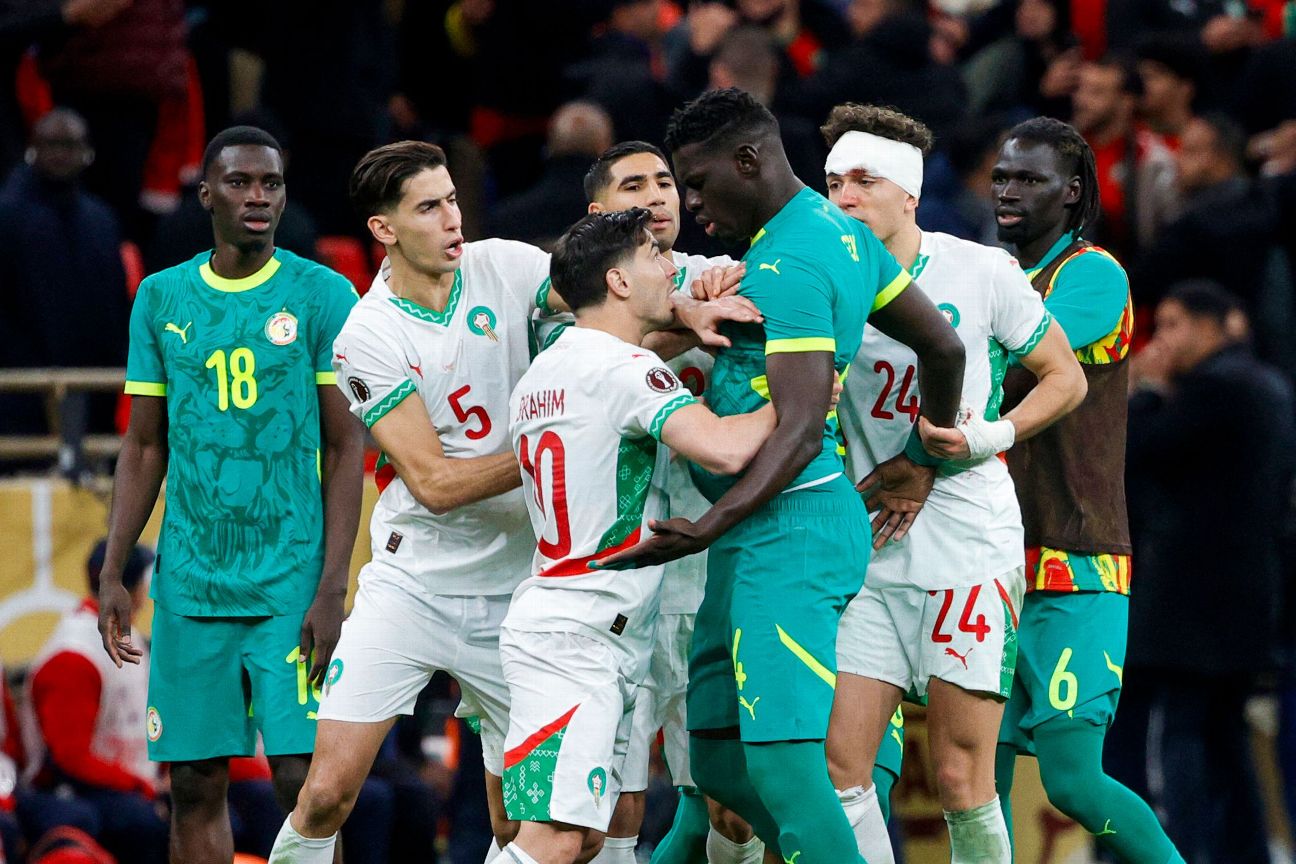
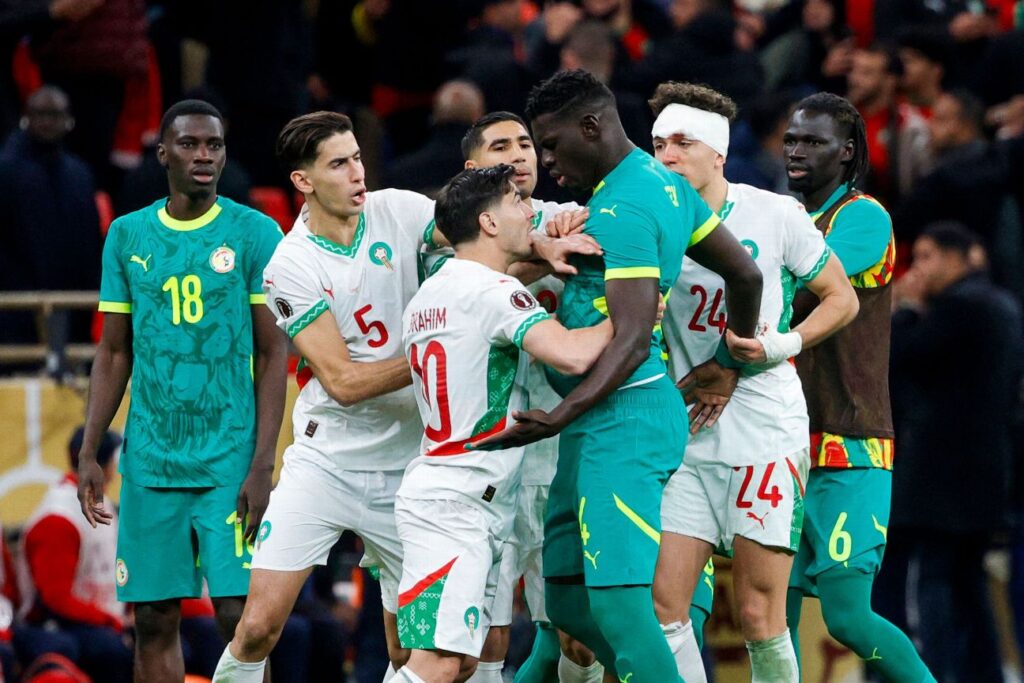
In the present case, the match experienced a temporary interruption or protest, after which:
• players returned to the field
• play resumed
• the referee brought the match to its conclusion
This factual matrix does not satisfy the regulatory threshold for abandonment. Both CAF and FIFA disciplinary frameworks distinguish between temporary disruptions and definitive non-completion of matches.
Relevant provisions include:
• FIFA Disciplinary Code (2023):
• Art. 14 (Misconduct by teams)
• Art. 15 (Abandonment of matches)
• Art. 16 (Forfeiture of matches)
These provisions confirm that forfeiture is applicable only where a match is not completed due to serious violations attributable to a team.
2.3 EXCESS JURISDICTION
CAF AFCON Regulations, Articles 82 & 84 together with the CAF Disciplinary Code (Articles 88–106) provide a comprehensive framework for addressing misconduct, including:
• fines
• suspensions
• stadium bans
• point deductions
The Appeal Board’s lack of a comprehension of the specific provisions (Arts. 82 & 84) and the reliance on generally non-applicable regulations resulted in the Board acting in excess of its jurisdiction.
2.4 CAS Position on Match Forfeiture
CAS has repeatedly held that forfeiture is a measure of last resort:
CAS 2007/A/1217, FIFA v. Club Atlético Peñarol, Award of 31 January 2008
Forfeiture applies only where a match cannot be validly completed due to serious violations.
CAS 2011/A/2426, Al-Wehda Club v. Saudi Arabian Football Federation, Award of 15 March 2012
A completed match cannot be retroactively invalidated in the absence of clear regulatory grounds provided by law/regulations.
3. Violation of Law 5 of the FIFA Laws of the Game
3.1 Final Authority of the Referee
Law 5 provides:
“The referee’s decisions on facts connected with play are final.”
This includes determinations relating to:
• match completion
• timekeeping
• disciplinary actions during play
3.2 CAS Jurisprudence on Referee Decisions
CAS has consistently upheld the doctrine of non-interference with “field of play” decisions:
• CAS 2008/A/1641, FC Midtjylland v. UEFA, Award of 29 January 2009
• CAS 2016/A/4486, Real Federación Española de Fútbol v. FIFA, Award of 21 July 2016
• CAS 2017/A/5074, South African Football Association v. CAF, Award of 10 October 2017
These decisions confirm that match results may only be overturned in narrowly defined and exceptional circumstances.
3.3 Application to the Present Case
The referee, Jean-Jacques Ndala, resumed play and formally concluded the match. Accordingly:
• the match was legally completed
• the result became final
• CAF lacked authority to reinterpret that factual determination
4. Error of Law and Misapplication of Clear Regulations
A central defect in the CAF Appeal Board’s decision lies in its misapplication of clear and unambiguous regulatory provisions, amounting to a fundamental error of law. Articles 82 and 84 are explicit in scope and limited to situations involving refusal to play, withdrawal, or abandonment. Their application to a completed match is legally unsustainable.
The Appeal Board’s approach violates the doctrine of lex clara non interpretanda, which stipulates that clear rules must be applied as written. CAS jurisprudence confirms that a misapplication of clear regulations constitutes a reviewable error of law:
• CAS 2011/A/2426, Al-Wehda Club v. Saudi Arabian Football Federation, Award of 15 March 2012
• CAS 2014/A/3487, Fenerbahçe SK v. UEFA, Award of 9 July 2015
Moreover, by disregarding the specific factual circumstances for the application of Articles 82 & 84, the Appeal Board was caught by the ultra vires rule. This renders the decision not only legally defective but also ultra vires, as the body exceeded its regulatory authority.
5. Integrity of the Game and Legal Certainty
5.1 Principle of Finality of Sporting Results
CAS jurisprudence underscores the importance of preserving match results:
• CAS 2006/A/1100, Gibraltar FA v. UEFA, Award of 8 September 2006
Sporting outcomes must remain stable unless compelling legal grounds justify intervention.
5.2 Proportionality
The principle of proportionality requires that sanctions be commensurate with the offence:
• CAS 2012/A/2824, Clube de Regatas do Flamengo v. CONMEBOL, Award of 18 March 2013
In this case, the imposition of forfeiture—despite match completion—is manifestly unjust and disproportionate.
5.3 Legal Certainty
Legal certainty is fundamental to sports governance:
• CAS 2019/A/6301, WADA v. RUSADA, Award of 17 December 2020
The CAF decision introduces uncertainty by suggesting that completed matches may be overturned without clear legal basis.
6. Implications for African Football Governance
The decision sets a troubling precedent by:
• undermining referee authority
• weakening regulatory consistency
• creating uncertainty in competition outcomes
Such actions risk eroding:
• public confidence
• institutional credibility
• commercial partnerships
7. Conclusion
The CAF Appeal Board’s decision is legally unsustainable. It:
• misapplies CAF Regulations
• violates FIFA Law 5
• contradicts established CAS jurisprudence
• undermines the integrity of football
The correct legal approach would have been to uphold the match result while addressing any misconduct through targeted disciplinary measures.
8. Recommendations
- CAF should review or reconsider the decision
- Greater adherence must be given to:
• FIFA Laws of the Game
• CAF Disciplinary Code
• CAS jurisprudence - CAF should issue interpretative guidance on:
• match abandonment
• player protests
• disciplinary thresholds - Senegal should invoke the appellate justification of the Court of Arbitration for Sport (CAS) to undertake an immediate review of the impugned decision of the CAF Appeal Board. CAS should overturn the legally defective decision of the CAF Appeal Board and restore the status quo ante.
References
• CAS 2006/A/1100, Gibraltar FA v. UEFA, Award of 8 September 2006
• CAS 2007/A/1217, FIFA v. Club Atlético Peñarol, Award of 31 January 2008
• CAS 2008/A/1641, FC Midtjylland v. UEFA, Award of 29 January 2009
• CAS 2011/A/2426, Al-Wehda Club v. Saudi Arabian Football Federation, Award of 15 March 2012
• CAS 2012/A/2824, Clube de Regatas do Flamengo v. CONMEBOL, Award of 18 March 2013
• CAS 2014/A/3487, Fenerbahçe SK v. UEFA, Award of 9 July 201
DISCLAIMER: The Views, Comments, Opinions, Contributions and Statements made by Readers and Contributors on this platform do not necessarily represent the views or policy of Multimedia Group Limited.
DISCLAIMER: The Views, Comments, Opinions, Contributions and Statements made by Readers and Contributors on this platform do not necessarily represent the views or policy of Multimedia Group Limited.
Source link