


By Justina NELSON
At the Prospectors and Developers Association of Canada (PDAC), the world’s largest gathering of mining professionals, sustainability was the central currency in every serious conversation about the future of mineral development.
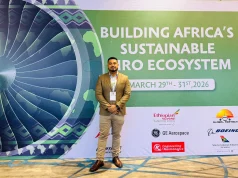
As Chief Executive Officer of the Minerals Income Investment Fund (MIIF), Ghana’s sovereign minerals investment vehicle, I participated in the convention together with key technical staff of the Fund, not merely as observers but as active contributors to discussions shaping the future of the industry. What we saw and heard carries important lessons for Ghana and every stakeholder within our mining ecosystem.
World Watching How We Mine
PDAC 2026 underscored that the rules of global mining have changed. The era when mining success was measured only by production volumes and reserve size is over. Today, environmental responsibility, climate resilience, community inclusion and transparent governance are equally decisive in determining whether projects are financed, permitted and sustained.
Investors, lenders and regulators now evaluate mining projects against comprehensive sustainability metrics, not just financial projections. Environmental assessments increasingly include lifecycle analysis, biodiversity protection and water stewardship. Projects that cannot demonstrate measurable environmental and social performance are finding themselves shut out of global capital markets.
Sustainability is no longer a corporate social responsibility initiative. It has become the foundation of investment strategy, risk management and long-term economic planning. The mining economies that will thrive in the next decade are those that embed sustainability across the entire value chain, hence the five lessons I picked.
Climate Risk vrs Financial Risk: Across the convention, one message was repeated: climate change is now a direct financial risk to mining operations. Extreme weather events, floods, droughts and heatwaves are already disrupting production, damaging infrastructure and increasing operating costs worldwide.
Investors now expect climate-risk assessments to be integrated into financial modelling and long-term project planning. Mines that demonstrate resilience to climate disruptions are considered more secure and more attractive to investors. Those that cannot are increasingly viewed as high-risk or potentially stranded assets.
Sustainable Finance: Global financing trends confirm this shift. International reports show that issuance of green, social, sustainability and sustainability-linked bonds now exceed one trillion dollars annually. This is no longer niche funding; it is mainstream capital.
Yet the mining sector has historically captured only a small share of this pool, largely because many projects have struggled to link financial returns with measurable sustainability outcomes. At PDAC, development finance institutions and private investors made it clear that this is changing. Green bonds, sustainability-linked loans and ESG-based financing conditions are becoming standard features of credible mining projects.
If Ghana’s mining sector is to remain competitive, we must speak the language of sustainable finance fluently and consistently.
Community Partnership: One of the strongest messages at PDAC was that community engagement is no longer optional. Meaningful partnership with host communities is now a structural requirement for project success.
Equity participation, revenue sharing, local development agreements and community oversight are increasingly expected elements of modern mining projects. The PDAC Sustainability Award this year recognised Blue Lagoon Resources for its partnership with the Lake Babine First Nation in Canada. The presence of the community’s Chief at the award ceremony illustrated the power of genuine collaboration.
The lesson for Ghana is clear: our communities are not obstacles to development. They are essential partners and, therefore, all players in the industry must see the communities in which they operate as such.
Clean Energy Strategy: The energy transition and mining are now inseparable. Discussions at PDAC on renewable energy, green hydrogen and new power technologies for mining attracted ministers, investors and industry leaders from around the world.
Decarbonising mining operations are no longer aspirational. It is being written into investment mandates and regulatory conditions. Countries that can offer low-carbon mining pathways are gaining a competitive advantage in attracting responsible capital.
National Policy Must Lead: Canada’s approach provided a powerful example of how national policy can drive sustainable mining. The Canadian government announced major funding initiatives to support critical minerals development, including billions of dollars in infrastructure and investment support.
The goal is not simply to extract minerals, but to build full value chains that create jobs, strengthen national security and benefit communities. This is the type of coordinated policy direction that Ghana is also pursuing, and one that MIIF is committed to supporting.
MIIF’s Commitment to Sustainability
As Ghana’s sovereign minerals investment fund, MIIF manages the country’s mineral royalties. This responsibility places us at the centre of efforts to ensure that mineral wealth supports both economic growth and environmental sustainability for present and future generations.
For this reason, sustainability is not a peripheral agenda for MIIF. It is integral to our investment philosophy.
As demonstration of that, we have, since last year and in line with some major institutional reforms, taken the strategic decision to establish Compliance and ESG as a standalone portfolio, separate from the Legal function. This institutional change signals clearly to investors and partners that sustainability governance is a core priority. We have also strengthened the Risk Department of the Fund.
This structure has firmly placed MIIF on the path to pursue sustainability-linked financing, align Ghana’s mining assets with global ESG standards, and engage more effectively with responsible capital.
We are also firming climate-risk assessment, deepening our approach to community development, and building systems that link financial performance to measurable sustainability outcomes. These are current priorities and in line with our Strategic direction between now and 2028.
Call to Action
Ghana has the mineral resources, institutions and policy direction to be a leader in responsible mining. The Government’s RESET Agenda provides a powerful framework for development that is inclusive, sustainable and forward-looking.
Our deposits of lithium, manganese, graphite and other critical minerals are essential to the global clean-energy transition. The question is not whether these resources will be developed. The question is whether they will be developed in a way that creates lasting value for our people.
I therefore call on all stakeholders in Ghana’s mining sector to embrace sustainability as a first principle.
Mining companies, large or small, must integrate environmental responsibility and community partnership into project design.
On the other hand, financial institutions must align capital with global sustainability standards.
Regulators must strengthen frameworks that reward responsible mining, while communities are increasingly recognised as partners in development.
MIIF, on our part, will continue working to ensure that Ghana’s mineral wealth becomes a source of long-term national prosperity, not a temporary windfall for present generation but the future as well.
Conclusion
What I witnessed at PDAC 2026 was not a minor shift in industry practice. It was a redefinition of what mining success means in the twenty-first century.
The nations that will lead the future of mining are those that combine resource development with environmental responsibility, strong governance and genuine community partnership.
Ghana has everything it needs to be among them. We have the resources and we have the institutions. The policy vision is clear and unambiguous.
What we need now is a unified commitment to make sustainability the foundation of our mining future.
The writer is the Chief Executive Officer of the Minerals Income Investment Fund (MIIF)
Post Views: 1
Discover more from The Business & Financial Times
Subscribe to get the latest posts sent to your email.