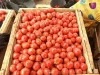



Dr. Gideon Boako, a financial economist and Member of Parliament for Tano North, has called on the government to allow the export of surplus food produce, arguing that restrictions on external sales are worsening post-harvest losses and squeezing farmers’ incomes.
Speaking to journalists, Dr Boako said the country’s recurring food gluts — where produce floods local markets with few buyers — demand a more flexible export policy rather than blanket bans.
“If we don’t have enough to consume locally, then limiting exports may make sense. But where food is abundant and not being bought, it is only logical to allow free exports so farmers can earn from their produce and reinvest for the next season,” he said.
He argued that when supply consistently outpaces domestic demand, prices collapse, leaving farmers unable to recover production costs. The result, he warned, is mounting waste, weaker rural incomes and declining incentives to expand output.
“The rest should go into processing or outside the country. There is no point keeping a ban when food is available and people are simply not buying,” he added.
The intervention comes as many smallholder farmers, after investing heavily in seeds, fertiliser and labour, struggle to secure reliable markets. Without alternative channels, large volumes of perishable goods risk spoilage, deepening financial losses across the agricultural value chain.
Beyond the immediate hardship for farmers, the economic implications are broader. Food gluts depress farm-gate prices, reduce rural spending power and weaken credit repayment capacity, with knock-on effects for agro-dealers, transporters and local banks.
Analysts say allowing exports could stabilise prices, improve foreign exchange earnings and reduce waste, while giving producers the confidence to sustain output.
The Ministry of Food and Agriculture says it is addressing the problem through longer-term structural reforms. Food and Agriculture Minister Eric Opoku told Parliament that the government is strengthening the processing, marketing, distribution and export segments of the agricultural value chain to absorb excess production and add value locally.
As part of the plan, a poultry processing factory is being established in Bechem to support large-scale processing, packaging, cold-chain management and value addition. The facility is intended to help Ghanaian poultry products meet both domestic and international standards.
Additional processing plants are planned for other regions to create a decentralised network capable of reducing post-production losses, cutting imports and positioning Ghana as a potential poultry export hub within the sub-region.
“These interventions ensure a fully integrated poultry value chain — from production to processing and marketing — while securing livelihoods across the sector,” the minister said.
Taken together, the debate highlights a familiar policy dilemma: whether to shield domestic supply through restrictions or open markets to protect farmer incomes. For producers facing unsold harvests, Dr Boako argues the answer is straightforward — access to markets, not barriers.
Post Views: 1
Discover more from The Business & Financial Times
Subscribe to get the latest posts sent to your email.