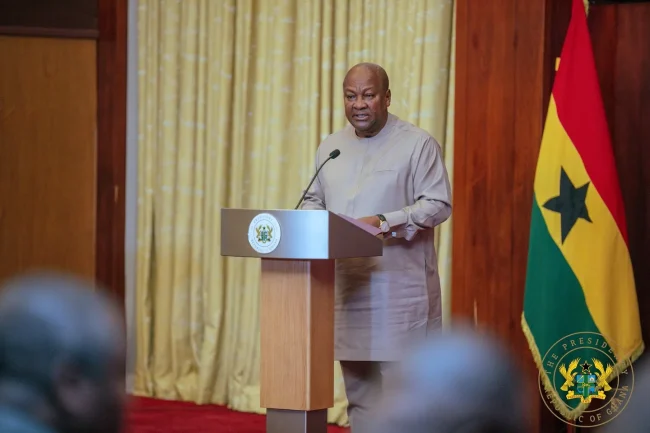
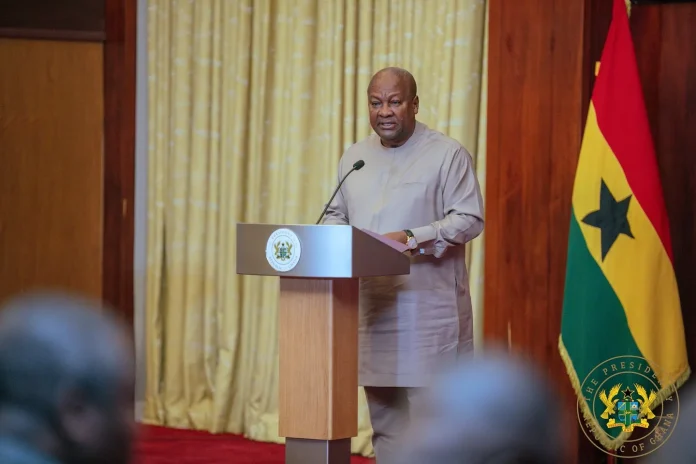

President John Mahama confronts a delicate balancing act between constitutional duty and political prudence following his removal of Chief Justice Gertrude Torkornoo, with legal experts pushing for transparency in the aftermath.
Constitutional lawyer Kow Abaka Essuman argues that Mahama’s next decision on whether to publish the investigative committee’s report will define public perception of his commitment to judicial accountability. While the President acted within his Article 146(9) powers in removing Torkornoo, the question of transparency now looms large.
“The Constitution does not, in any of its provisions, expressly prohibit the President from releasing the report,” Essuman noted, pointing to Supreme Court precedents that end confidentiality obligations once committee investigations conclude.
The legal expert reminded Ghanaians that former President Akufo-Addo established disclosure standards by releasing similar investigative reports, including findings from the SML audit and other Article 146 petitions. This precedent creates expectations for equivalent transparency under the new administration.
Mahama now faces competing pressures. Transparency advocates argue that releasing the report would demonstrate commitment to open governance and strengthen public confidence in judicial processes. However, publication could also expose sensitive internal judicial matters and potentially fuel partisan disputes over the late Chief Justice’s tenure.
Political observers suggest the decision carries significant risks either way. Withholding the report might invite accusations of selective transparency, while releasing it could provide ammunition for opposition criticism and deepen political divisions around judicial appointments.
Essuman emphasized that the stakes extend beyond immediate political calculations. Public trust in Ghana’s justice system depends not only on constitutional compliance but also on perceived fairness and openness in high-level judicial matters.
The dilemma reflects broader tensions in Ghana’s democracy between institutional accountability and political stability. As Mahama settles into his second presidency, his handling of this sensitive matter will likely influence public assessment of his governance approach.
The Chief Justice removal represents one of the most significant judicial developments in recent Ghanaian politics, with implications extending well beyond the immediate constitutional questions involved.