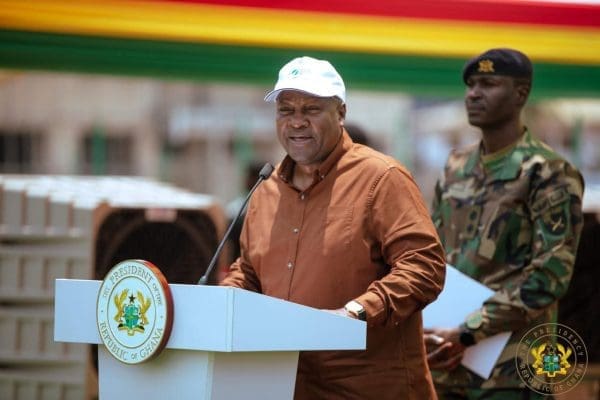
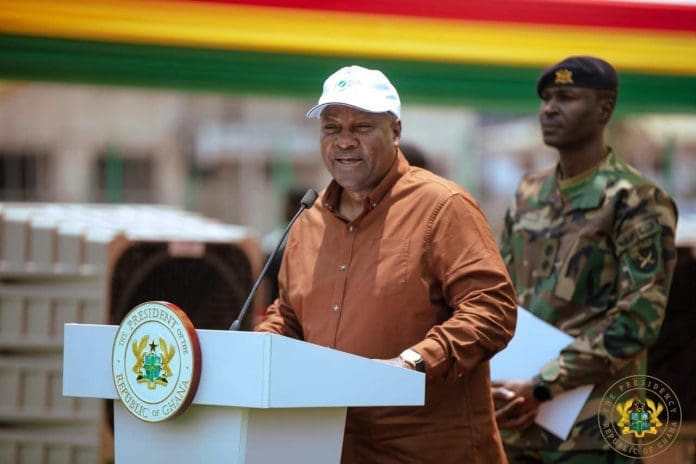

The Member of Parliament for Afigya Kwabre North has publicly challenged President John Dramani Mahama’s administration to transform campaign promises into concrete action on illegal mining and related environmental concerns. Collins Adomako Mensah’s criticism comes amid growing frustration over what he describes as a gap between government rhetoric and ground realities.
Speaking candidly about the administration’s performance, the New Patriotic Party lawmaker acknowledged visible government activity but questioned its effectiveness. “Yes, I have seen a lot of activities the President is talking about, the Minister is running around, but the Trades Union Congress is telling you that what is happening on the ground does not reflect the rhetoric being made by the President and the Minister,” Adomako Mensah stated.
His comments reflect broader concerns about the pace of implementation on key environmental policies. The MP specifically highlighted unfulfilled campaign commitments that resonated with voters during the election period, particularly promises involving technology and regulatory reform.
One contentious issue remains the proposed repeal of Legislative Instrument 2462, which currently governs small scale mining activities in forest reserves. The regulation, passed in November 2022, has become a lightning rod for environmental activists who argue it enables forest degradation. Recent reports indicate the Attorney General announced plans to present the repeal to Parliament, though Adomako Mensah expressed cautious optimism tempered by past delays.
“They promised that they’re going to repeal the L.I 2462. I have been told that the Minister has sent some documentation to the Attorney General and that when Parliament resumes, it will be laid. I’m just hoping that this time round, it will be laid,” the MP explained.
Perhaps more striking is his criticism of the administration’s signature technological solution to illegal mining. During the campaign, the president spoke confidently about leveraging AI systems to monitor mining sites, detect illegal operations, and coordinate enforcement, a proposal that captured attention among younger, tech savvy voters.
However, months into the administration, Adomako Mensah sees no evidence of implementation. “They talked about using AI to fight galamsey; I have not seen any activity around that as promised in their manifesto,” he said, using the local term for illegal mining operations.
The MP’s concerns extend beyond regulatory matters to enforcement priorities. He urged authorities to shift focus from small scale operators to what he termed the “kingpins” behind large scale illegal operations. “The President talked about going after the kingpins. I’m sure National Security can assist in the investigation to get to the kingpins,” he emphasised.
This isn’t the first time Adomako Mensah has pressed the government on environmental issues. He has previously warned about galamsey’s threat to Ghana’s energy security, noting its impact on water bodies connected to hydroelectric infrastructure like the Bui Dam.
The MP’s intervention adds to mounting pressure on the Mahama administration from various quarters, including civil society groups and traditional leaders, all demanding more aggressive action against environmental degradation caused by unregulated mining. While some traditional authorities have recently suggested improvements in the situation, critics like Adomako Mensah maintain that promised reforms remain largely undelivered.
His call for action underscores a familiar pattern in Ghanaian politics, where ambitious campaign promises often face implementation challenges once governing begins. Whether the administration can bridge the gap between its stated intentions and measurable outcomes on mining reform remains an open question as Parliament prepares to resume its work.