

President John Dramani Mahama announced sweeping reforms to Ghana’s correctional system Wednesday, shifting focus from punishment to rehabilitation as he commissioned the Damongo Prison Camp in the Savannah Region. The facility, built through partnership between the Church of Pentecost and Ghana Prisons Service, represents the fourth correctional center constructed by the religious organization.
The President described the new facility as a sanctuary symbolizing hope, redemption, and the power of partnership between state, church, and community. He praised the Church of Pentecost for demonstrating that nation building transcends government responsibility alone, citing similar facilities the church previously completed at Ejura and Nsawam, with another under construction at Obuasi.
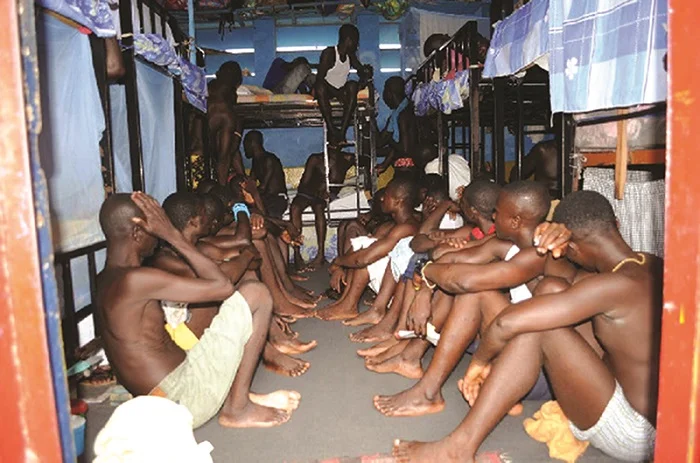
Mahama outlined three major policy changes designed to modernize Ghana’s penal approach. The government will expand alternative sentencing for minor and non violent offences, reducing reliance on incarceration for less serious crimes. Authorities will review bail conditions to prevent financial barriers from keeping economically disadvantaged defendants detained unnecessarily.
A new parole system will reward inmates demonstrating genuine rehabilitation with earlier release opportunities. The President emphasized these measures aim to reduce prison overcrowding while facilitating smoother reintegration of formerly incarcerated individuals into society.
The government pledged to complete the 800 inmate capacity remand prison at Nsawam, a project initiated during Mahama’s previous administration in 2016 but subsequently abandoned. Plans include developing modern correctional centers specifically designed for men, women, and juveniles, alongside enhanced conditions of service for prison officers.
Mahama announced the donation of a brand new 66 seater bus to the Damongo facility following an appeal from the Director General of Ghana Prisons Service. He indicated the vehicle would serve both officers and inmates while benefiting the broader Damongo community.
The President referenced international standards, specifically the United Nations Standard Minimum Rules for the Treatment of Prisoners, known as the Nelson Mandela Rules. These guidelines, adopted by the UN General Assembly in December 2015, establish minimum standards for humane prison management and prisoner treatment worldwide.
Mahama affirmed Ghana’s commitment to collaborating with the United Nations Office on Drugs and Crime, African Union, and Economic Community of West African States to ensure humane, fair, and effective justice systems. He emphasized that true justice extends beyond punishment to offering paths toward redemption.
The President called on religious organizations, civil society groups, and corporate institutions to emulate the Church of Pentecost’s example. Quoting biblical teachings about serving vulnerable populations, he urged stakeholders to build a Ghana where justice operates with mercy, discipline with compassion, and power with purpose.
The Church of Pentecost’s involvement in prison infrastructure represents unprecedented faith based contribution to Ghana’s correctional system. Beyond prison facilities, the church has constructed police stations and provided mechanised boreholes in deprived communities, demonstrating comprehensive engagement with national development.