
…How to be young, gifted and black?
Oh, how I long to know the truth
There are times when I look back
And I am haunted by my youth…”
This are opening lines from the 3rd verse of her popular Civil Rights song “To be Young Gifted & Black” Every opportunity I have had to listen to or perform this song, I pause intermittently to consider what Nina Simone had been through. What in her youth haunted her so…and whether the haunting feeling is shared by other Blacks of her generation and beyond.
NINA SIMONE
Nina Simone born Eunice Kathleen Waymon on February 21, 1933, was an American pianist, singer, songwriter, and civil rights activist. Her music spanned styles including classical, folk, gospel, blues, jazz, R&B, and pop. Her piano playing was strongly influenced by baroque and classical music, especially Johann Sebastian Bach, and accompanied expressive, jazz-like singing in her contralto voice.
Simone began playing piano at the age of three or four; the first song she learned was “God Be With You, Till We Meet Again”. Demonstrating a talent with the piano, she performed at her local church. Her concert debut, a classical recital, was given when she was 12. Simone later said that during this performance, her parents, who had taken seats in the front row, were forced to move to the back of the hall to make way for white people. She said that she refused to play until her parents were moved back to the front, and that the incident contributed to her later involvement in the civil rights movement.
Early in her career, to make a living and in order to fund her private lessons in Classical music, Simone performed at the Midtown Bar & Grill on Pacific Avenue in Atlantic City, New Jersey, whose owner insisted that she sing as well as play the piano, which increased her income to $90 a week. In 1954 She changed her name to “Nina Simone” to disguise herself from family members, having chosen to play “the devil’s music” or so-called “cocktail piano”. Performing at this nightclub effectively launched her career as a jazz vocalist.
Her debut with Little Girl Blue in 1958, was released in February 1959 through Bethlehem Records. It included George Gershwin’s “I Loves You Porgy” (from Porgy and Bess) which she learned from a Billy Holiday album and performed as a favor to a friend. It was subsequently released as a single and became her only Billboard top 20 single in the United States. Because she had sold her rights outright for $3,000 (equivalent to $31,100 in 2025), Simone lost more than $1 million in royalties (notably for the 1980s re-release of her version of the Jazz standard “My Baby Just Cares for Me” and never benefited financially from the album’s sales.
After the success of Little Girl Blue, Simone signed a contract with producer Hecky Krasnow at Colpix Records and recorded a multitude of studio and live albums. Colpix relinquished all creative control to her, including the choice of material that would be recorded, in exchange for her signing the contract with them. After the release of her live album Nina Simone at Town Hall, Simone became a favorite performer in Greenwich Village. By this time, Simone performed pop music only to make money to continue her classical music studies and was indifferent about having a recording contract. She kept this attitude toward the record industry for most of her career.
CIVIL RIGHTS ACTIVISM YEARS (1964- 1974)
In 1964, Simone changed record distributors from Colpix, an American company, to the Dutch Philips Records, which meant a change in the content of her recordings.
On her debut album for Philips, Nina Simone in Concert (1964), for the first time she addressed racial inequality in the United States in the song “Mississippi Goddamn” This was her response to the June 12, 1963, murder of Medgar Evers and the September 15, 1963, bombing of the 16th Street Baptist Church in Birmingham, Alabama, that killed four young black girls and partly blinded a fifth. She said that the song was “like throwing ten bullets back at them”, becoming one of many other protest songs written by Simone
Simone performed and spoke at civil rights meetings, such as at the Selma to Montgomery marches. Like Malcolm X, her neighbor in Mount Vernon, New York , she supported black nationalism and advocated violent revolution rather than Martin Luther King Jr.’s non-violent approach. She hoped that African Americans could use armed combat to form a separate state, though she wrote in her autobiography that she and her family regarded all races as equal.
As her political activism rose, the rate of release of her music slowed.
Simone and Weldon Irvine turned the unfinished play To be Young Gifted and Black by Lorraine Hansberry into a civil rights song of the same name. She credited her friend Hansberry with cultivating her social and political consciousness. She performed the song live on the album Black Gold (1970)
In 1958 Nina Simone married Donald Ross, but regretted marriage and left quickly. In 1961, she married Andrew Stroud, a detective with the New York Police Department . In a few years he became her Manager and the father of her daughter Lisa, but Simone later claimed that he abused her psychologically and physically.
LATTER YEARS
During the 1980s Simone stayed everywhere and nowhere. She lived in Liberia, Barbados and Switzerland and eventually ended up in Paris. In 1987, Simone scored a major European hit with the song “My Baby Just Cares for Me” Recorded by her for the first time in 1958, the song was used in a commercial for Chanel No. 5 perfume in Europe, leading to a re-release of the recording. The song reached number 4 on the UK’s NME singles chart, giving Simone a brief surge in popularity in the UK and elsewhere. In the spring of 1988, Simone moved to Nijmegen in the Netherlands where she made friends with Gerritt de Bruin, who lived close to the house she had bought. She was diagnosed with bipolar disorder by a friend of De Bruin, who prescribed Trilafon (perphenazine) for her. In 1991 Nina Simone exchanged Nijmegen for Amsterdam, where she lived for two years with friends.
Simone suffered from breast cancer for several years before she died in her sleep at her home in Carry -le- Rouet (Bouches-du-Rhône), on April 21, 2003, at the age of 70
SONGS, AWARDS & NOMINATIONS
Nina Simone had well-known songs from her Philips albums. They include Don’t Let Me be Misunderstood” on Broadway – Blues Ballads (1964); “I Put a Spell on You”, “Ne me quite pas” (a rendition of a Jacques Biel song), and “ Feeling Good” on I Put a Spell on You” (1965); and “Lilac Wine” and “Wild is the Wind” on “Wild is the Wind” (1966).
Simone was the recipient of a Grammy Hall of Fame Award in 2000 for her interpretation of “I Loves You Porgy”. Based on the provided search results, Nina Simone’s race and “blackness” was a significant factor that created obstacles in her career, particularly in her early aspirations, but it also became the core of her artistic identity and activism. In 1999, Simone was given a lifetime achievement award by the Irish Music Hall of Fame , presented by Sinead O’Connor.
Two days before her death, Simone learned she would be awarded an honorary degree by the Curtis Institute of Music,, the music school that had refused to admit her as a student at the beginning of her career.
In conclusion Nina Simone’s race and blackness was a significant factor that created obstacles in her career, particularly in her early aspirations, but it also became the core of her artistic identity and activism. Let us examine the following:
Classical Career Obstacles: Simone’s early dream of becoming a classical pianist was derailed by racism. After studying at Juilliard and preparing for the Curtis Institute of Music in Philadelphia, her application was denied in 1950. She believed this was due to racial prejudice, a pivotal moment that forced her away from a classical path.
Industry Challenges & Activism: As a Black woman, she faced barriers in the music industry, particularly when she began using her music to voice the civil rights movement. Her protest song “Mississippi Goddamn” resulted in being banned and boycotted by some, which she acknowledged as a sacrifice of potential mainstream fame and fortune.
Moving Abroad: Simone eventually left the United States, settling in France, because of the stifling, dangerous, and worsening racial situation in the U.S..
Reclaiming Identity: Despite these disadvantages, Simone did not view her blackness as a hurdle to be overcome, but rather as her life’s purpose and art. She embraced her identity, using her platform to foster pride and educate audiences, stating her music was designed to increase curiosity about Black origins and self-acceptance.
…Oh, but my joy of today
Is that we can all be proud to say
“To be young, gifted and black
Is where it’s at”
These are the closing lines of the 3rd verse
In summary, while racism created structural disadvantages that hindered her early, specific classical ambitions, it also fueled the powerful, socially conscious artistry that defined her legacy as a monumental figure in music.
In this month of February, the Black History Month, the song To be Young Gifted & Black would feature prominently. May it become more than a Civil rights anthem or solemn declaration. May its message ignite a passion for excellence, Liberate our Spirits and cause us to reflect on the achievements of blacks from every part of the world, also achievements from their status as Plantation slaves up till present day as notable figures in the fields of Science, Arts, Music, Politics, Banking, Inventions etc.
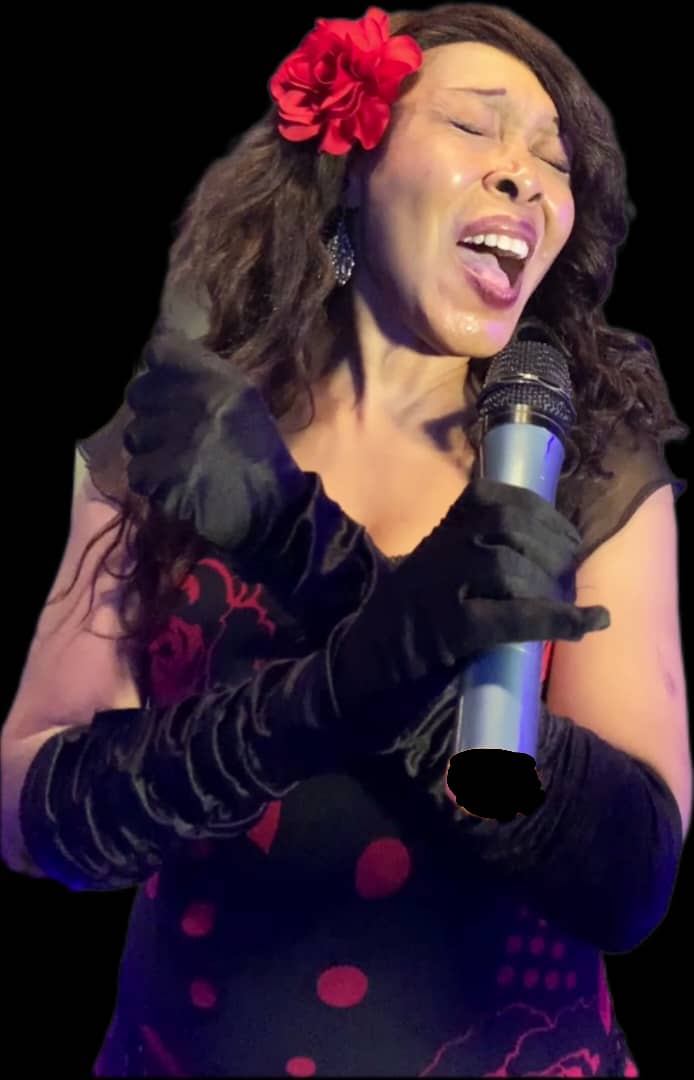
‘Me & My Jazz’ are the weekly musings of Jazz Singer & Jazz Radio Host, Yomi Sower. Her programme Maximum Jazz airs on Saturdays 4-7PM on Ghana’s Guide Radio 91.5FM. She is a Professional Voice Coach also offering Vocal Jazz Tuition @YomiSower – Facebook, Instagram, TikTok, X and E- mail: [email protected]
Post Views: 35
Discover more from The Business & Financial Times
Subscribe to get the latest posts sent to your email.