
A prominent New Patriotic Party lawmaker has strongly defended former Vice President Mahamudu Bawumia against internal party criticism, highlighting tensions within Ghana’s main opposition party ahead of its 2026 presidential primaries.
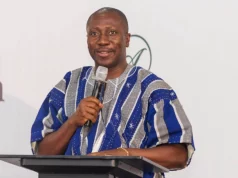
Dr. Ayew Afriyie, Member of Parliament for Effiduase-Asokore, challenged former Assin Central MP Kennedy Agyapong’s recent questioning of Bawumia’s electoral prospects, turning the criticism back on Agyapong’s own constituency performance.
Speaking on a Kumasi-based radio station Tuesday, Dr. Afriyie questioned how Agyapong could doubt Bawumia’s leadership capabilities when the Vice President successfully retained his Walewale constituency for the NPP while Agyapong lost Assin Central in the 2024 elections.
“If nothing at all, Bawumia ensured his constituency, Walewale, retained the seat for the NPP. What happened to Assin Central?” Dr. Afriyie asked during the interview.
The exchange reflects growing internal divisions within the NPP as party members position themselves for the January 2026 flagbearer contest. Current polling shows Bawumia leading with 52% support among delegates, while Kennedy Agyapong trails with 17%, though other surveys have shown different results with Agyapong securing 51.4% in some delegate polls.
Dr. Afriyie praised Bawumia’s approach during internal party contests, describing him as a unifying figure who maintained composure despite personal attacks. He contrasted this with what he characterized as provocative tactics from other contenders.
“Dr Bawumia has never insulted or cast a slur on any of the contenders although, on record, some of these contenders have either attacked his personality, his tribe or religion,” the MP stated, positioning the Vice President as above divisive rhetoric.
The criticism appears to respond to recent remarks where Agyapong questioned Bawumia’s “Aka 9 Pɛ” campaign slogan, arguing it would prolong the NPP’s time in opposition. Agyapong has challenged the mathematical logic behind Bawumia’s electoral strategy, suggesting it would take too long to close the vote deficit from the 2024 election loss.
The debate illuminates broader questions about the NPP’s path back to power after losing the presidency to the National Democratic Congress. Different factions within the party are advocating contrasting approaches to rebuilding electoral support and selecting leadership for the 2028 general elections.
Dr. Afriyie expressed confidence that Bawumia represents the NPP’s best chance for victory, arguing that political fortunes can change rapidly in Ghana’s democratic system. He noted that parties previously considered dominant have found themselves in opposition, suggesting the NPP’s current opposition status is not permanent.
The internal party dynamics also reflect regional and ethnic considerations within Ghanaian politics. Bawumia, a northerner and Muslim, would be the first from his background to lead the NPP as presidential candidate, while Agyapong represents a more traditional party demographic.
Kennedy Agyapong has positioned himself as a unifying candidate who can transcend partisan divides, though his supporters face an uphill battle against Bawumia’s apparent early lead in delegate support.
The exchange between party figures highlights the challenge facing the NPP in balancing internal democracy with party unity. Historical precedent in Ghanaian politics suggests that fractious primary contests can either energize or divide parties heading into general elections.
Political analysts note that the NPP’s ability to present a united front after selecting its flagbearer will significantly influence its 2028 prospects. The party won power in 2016 after eight years in opposition, demonstrating that electoral comebacks remain possible in Ghana’s competitive political landscape.
As the January 2026 primary approaches, both camps are likely to intensify their campaigns while party leadership seeks to prevent damaging divisions that could affect long-term electoral prospects.
The ongoing debate reflects deeper questions about leadership, electability, and party direction that will ultimately be decided by NPP delegates in the coming months.