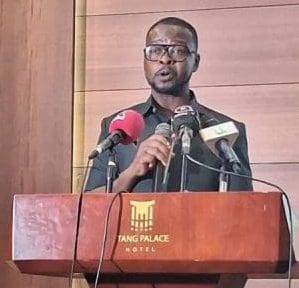


David Tamakloe, newly sworn-in President of the Private Newspapers and Online News Publishers Association of Ghana, has outlined comprehensive reforms to strengthen private media and combat unethical practices within the journalism sector.
Tamakloe, who serves as Managing Editor of Whatsup News and Editor of New Republic newspaper, secured the presidency with 87 votes in the August 19 election, defeating contender Awudu Mahama who polled 34 votes. The victory marked his successful bid for leadership after previously serving as PRINPAG Vice President.
Speaking at the swearing-in ceremony of PRINPAG’s new executives in Accra, Tamakloe announced a four-pillar agenda focusing on empowerment, advertisement growth, visibility, and integrity to ensure sustainability of private media operations across Ghana.
The new president emphasized professional development as a cornerstone of his administration, promising continuous training and mentorship programs for association members. He announced ongoing discussions with state agencies to secure scholarships for journalists seeking further education, positioning member development as essential for producing quality journalism.
Addressing financial challenges facing private newspapers, Tamakloe pledged to pursue fairer distribution of advertising opportunities from government agencies and corporate entities. He rejected the characterization of media organizations as charity recipients, describing advertising partnerships as value exchanges that recognize the influence and reach of private publishers.
The president took a firm stance against the practice of “soli,” referring to token payments often given to journalists by officials and organizations. He described these payments as compromising journalistic integrity and credibility, urging members to choose professional dignity over minimal financial incentives.
“When we make ourselves available for these pathetic hand-outs, we are essentially putting up a ‘For Sale’ sign on our credibility,” Tamakloe stated during the ceremony, challenging journalists to maintain ethical standards.
Among planned initiatives, Tamakloe announced the establishment of the PRINPAG Foundation to support member welfare and the inclusion of bloggers under the association’s umbrella to promote professionalism in digital media spaces. He also outlined a “Back to Reading” project aimed at reviving knowledge-driven journalism practices.

Deputy Presidential Spokesperson Shamina Muslim, representing the government at the ceremony, praised PRINPAG’s decision to incorporate bloggers and digital content creators. She emphasized that inclusion would help establish professional standards in emerging media formats where ethical guidelines may be less understood.
Muslim reaffirmed President John Dramani Mahama’s commitment to journalist safety and press freedom, citing recent disciplinary action against a police officer who assaulted a journalist and presidential intervention to reverse media license withdrawals. She assured continued full implementation of the Right to Information Act to enable accurate reporting and combat misinformation.
The government spokesperson stressed the importance of sanitizing Ghana’s information environment, noting that fake news undermines democratic institutions and erodes public trust. She positioned collaboration between government and media as essential for maintaining information integrity.

Tamakloe’s election comes as Ghana’s private media sector faces mounting pressures from digital disruption, declining print readership, and economic challenges that have affected advertising revenues. His background includes previous criticism of the Ghana Journalists Association, which he argued had lost credibility and connection with working journalists.
The new PRINPAG leadership team includes Michael Antwi Agyei as Vice President, with other executive positions filled through the August election process. The association represents private newspapers and online publishers seeking to maintain editorial independence while ensuring financial viability.
PRINPAG has historically advocated for press freedom and professional standards since its establishment by founders including G.B.K. Owusu, Kwame Obeng Fosu, and other pioneers who championed media pluralism during challenging periods in Ghana’s democratic development.