

Fresh research by WaterAid has revealed that nine in ten births at clinics across Ghana take place without access to basic sanitation, exposing mothers and newborns to serious health risks.
These findings are contained in the organisation’s ‘Born Without Water’ report, published on March 18, 2026 to mark World Water Day. The study assessed maternity conditions across 16 countries in Africa and Asia and found that three in four births in 10 surveyed sub-Saharan African countries occur in delivery rooms lacking essential hygiene infrastructure, including proper cleaning, handwashing facilities and functional toilets.
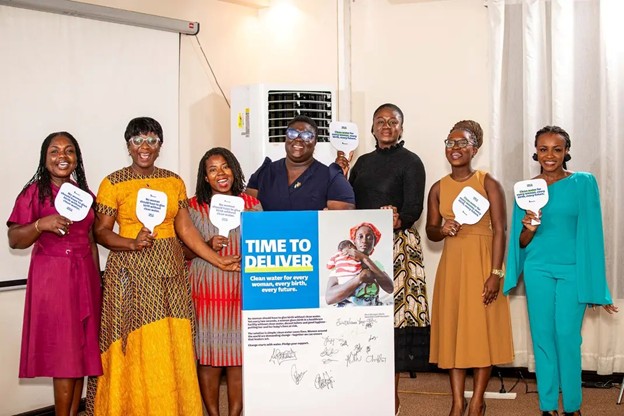
The report forms part of WaterAid’s broader campaign dubbed ‘Time to Deliver’, launched in Accra a few weeks ago.
The campaign highlights that approximately 25 percent of healthcare facilities in Ghana still lack basic water services.
The disparity is even more alarming in rural areas: while Greater Accra Region sees 92 percent coverage, Upper East Region struggles with only 12 percent.
The report highlights critical gaps in Ghana’s maternal care. It found that 43 percent of deliveries take place without handwashing facilities, 33 percent without basic water services, 59 percent without environmental cleaning and 69 percent without safe waste management systems.
The report links these conditions to maternal sepsis – an infection caused when bacteria enter the bloodstream during or after childbirth – which is now the third leading cause of maternal mortality globally. Across sub-Saharan Africa, one in nine births result in maternal sepsis, contributing to an estimated 13,000 deaths annually – equivalent to 36 deaths each day.
Women in the region are also said to be 144 times more likely to die from sepsis than those in Western Europe and North America.
It noted that improving water, sanitation and hygiene (WASH) services in healthcare facilities could significantly reduce these risks. According to the report, such investments could prevent up to 10 million cases of maternal sepsis and 8,580 deaths each year at a cost of less than one US dollar per person – far lower than the cost of treatment.
The Country Director of WaterAid Ghana, Ewurabena Yanyi-Akofur, described this situation as an urgent public health concern, stressing that access to water and sanitation is fundamental to safe childbirth.
She urged government, development partners and the private sector to translate policy commitments into funded and measurable interventions.
WaterAid’s global ‘Time to Deliver’ campaign is urging governments to meet their water, sanitation and hygiene commitments ahead of the upcoming United Nations Water Conference in December.
WaterAid Ghana said the campaign will serve as a national accountability tool, noting that while Ghana has committed to global WASH targets under the Sustainable Development Goals, implementation at the facility level remains inconsistent.
The organisation further warned that cuts in overseas development assistance by major donor countries could undermine progress in maternal and newborn health, at a time when relatively low-cost interventions could deliver significant gains in lives saved.
Post Views: 2
Discover more from The Business & Financial Times
Subscribe to get the latest posts sent to your email.