
“I had relied on technical language, making it difficult to identify real buyers or sell existing products. Now I appreciate the value in shifting from an ‘everyone is my customer’ mindset to a one priority-focused segment mindset. This has helped me develop a small market-test plan focused on customers I can realistically reach.”
This reflection captures more than personal growth, it suggests a foundational shift in the business thinking of Elpidio Tossu, whose agri-tech start-up, Feathery-Care, provides digital solutions to make poultry farming and other food systems more attractive and efficient.
For many youth-led ventures within Ghana’s agri-food ecosystem, the challenge is not simply developing a product. It is identifying who that product is truly for, understanding buyer expectations, and designing the business around a reachable, priority market segment. The movement from “everyone is my customer” to a clearly defined segment signals a transition toward commercially grounded thinking precisely the orientation a market access intervention seeks to cultivate.
“For me, getting FDA approval for my venture, Crunchy Delight has been made possible because of the Nkabom Collaborative. I have been able to see my idea transformed into a business which is earning me revenue.” This reflection from Dickson Gyaabah, CEO of the granola bar start-up, underscores how navigating regulatory licensing can be an uphill task and how targeted support can make that journey possible.

Sustainable agribusiness does not begin with production; it begins with a clearly defined customer. That clarity cannot be an afterthought. And support in clearing regulatory barriers is not a feat to be glossed over. It is this kind of skills development and mindset transition that the Entrepreneurship Pillar of the Nkabom Collaborative at the University of Ghana set out to catalyse through its three-day intensive Market Access Bootcamp.
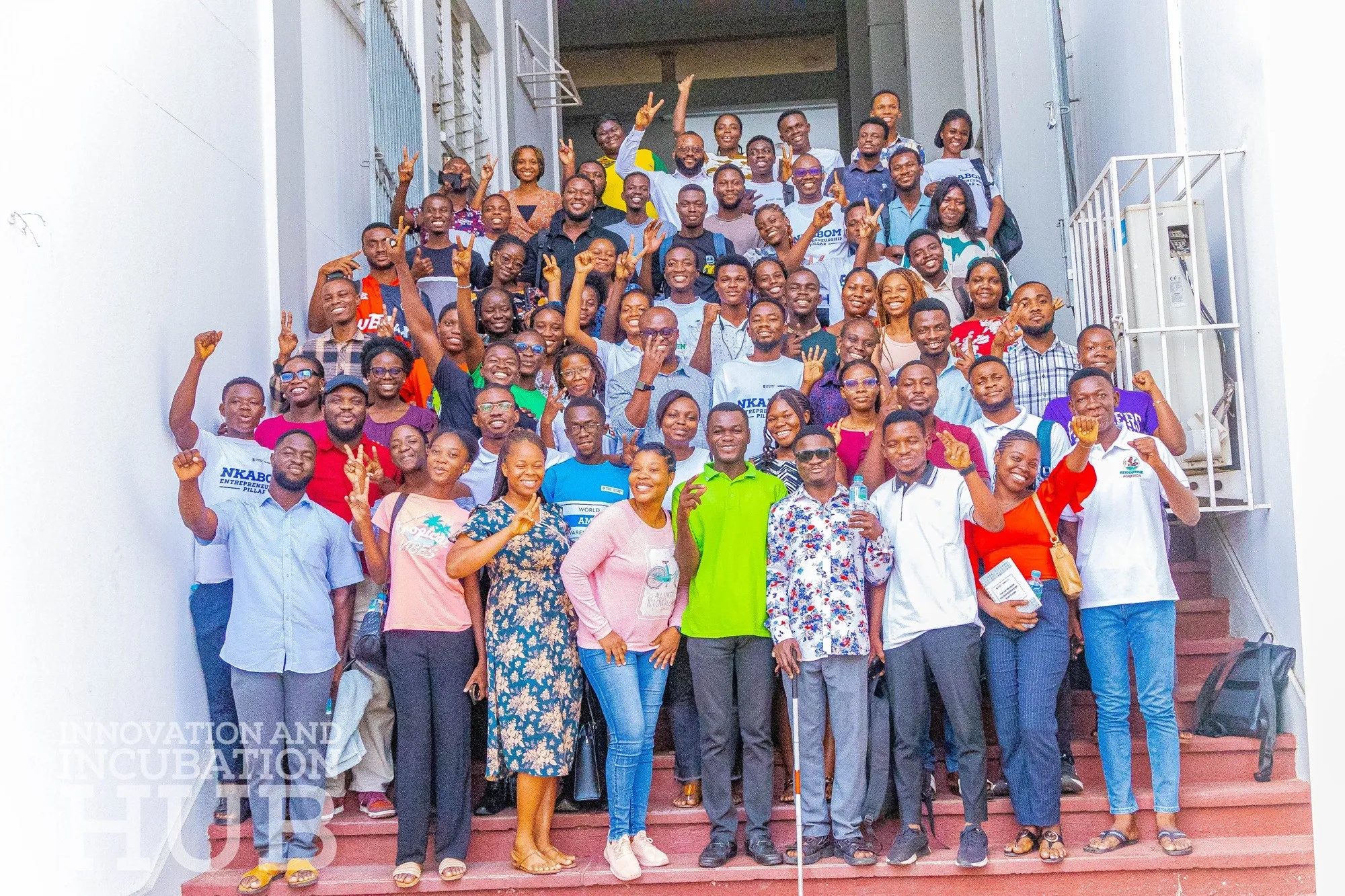
Held at the University of Ghana Business School (UGBS) Nest Student Experience Centre, the residential training brought together 80 youth entrepreneurs across Ghana’s agri-food and nutrition ecosystem. Rather than focusing solely on motivation or general entrepreneurship advice, the bootcamp focused on supporting agri-food and nutrition ventures as they transitioned from ideas and prototypes to real buyers and viable markets.
Highlighting the importance of such an intervention within the entrepreneurship life cycle, the Entrepreneurship Pillar Lead, Prof. George Acheampong, noted that effective and clear market segmentation was one of the most critical pieces in completing the business puzzle for new and emerging entrepreneurs.
“From the onset, you must have a keen sense of clarity as regards who your product, service or offering is meant for,” he emphasised. “Are you aiming for a generic market or a niche with the solution you are providing? This feeds critically into decisions on pricing, placement and growth.”
Prof. Acheampong stressed that the Nkabom Collaborative’s approach was intentionally holistic. “What we are doing differently is providing a complete suite of interventions from ideation, through careful handholding moments, to a point of total independence when the young entrepreneurs we have nurtured can stand on their own. This training in market access is a critical piece in that process.”
The training combined practical application sessions with relevant theoretical insights. Experts from the University of Ghana worked alongside professionals from Trolley Market and GB Foods to expose participants to real buyer expectations and procurement dynamics, orienting them toward validated market pathways and revenue-generating opportunities.

Following the training, Dickson shared: “The hands-on workbook exercises, peer feedback and facilitator coaching have equipped me with the know-how to move my sales another notch up.”
Beyond individual testimonials, the bootcamp also reflected a commitment to inclusive entrepreneurship. 31 women participated, alongside a differently abled entrepreneur with a visual impairment reinforcing the Collaborative’s focus on broadening access marginalised segments of youth.
To sustain momentum and translate learning into measurable outcomes, the Entrepreneurship Pillar will digitise key bootcamp outputs including customer snapshots, offer statements and test plans. This will enable coordinated follow-up by the Market Access & Innovation (MAI), Business Development (BD) and Financing teams.
A structured three- to six-month follow-up framework will then provide advisory sessions, targeted clinics and defined milestones, such as first market tests and initial buyer engagements
The intervention forms part of the Nkabom Collaborative’s at UG’s broader commitment to strengthening youth-led agrifood enterprises and positioning them for sustained and commercially viable participation in Ghana’s evolving agri-food economy.
The Collaborative at UG, is part of the Nkabom Collaborative – a partnership between the University of Ghana, Mastercard Foundation, McGill University, and six other Ghanaian institutions working to transform Ghana’s agri-food systems by empowering young people.
Through three core pillars, Education, Access and Success, and Entrepreneurship, Nkabom Collaborative at UG connects youth with the training, resources, and expertise needed to thrive in agribusiness. We prioritise those typically excluded from the sector, including women, displaced persons, and persons with disabilities.
Nkabom Collaborative at UG, provides educational opportunities, facilitates access to funding, builds entrepreneurial capacity, and creates pathways to mentorship and industry connections. By placing youth at the centre of Ghana’s food systems, we are demonstrating that agri-food is not just an economic sector; it is a platform for empowerment and national development.
Post Views: 1
Discover more from The Business & Financial Times
Subscribe to get the latest posts sent to your email.