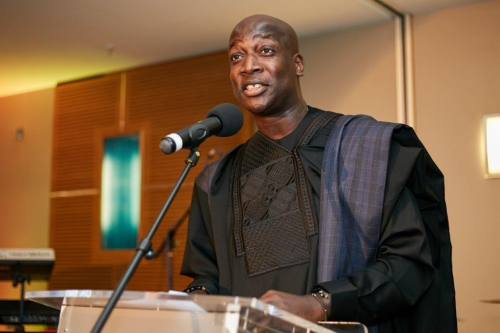
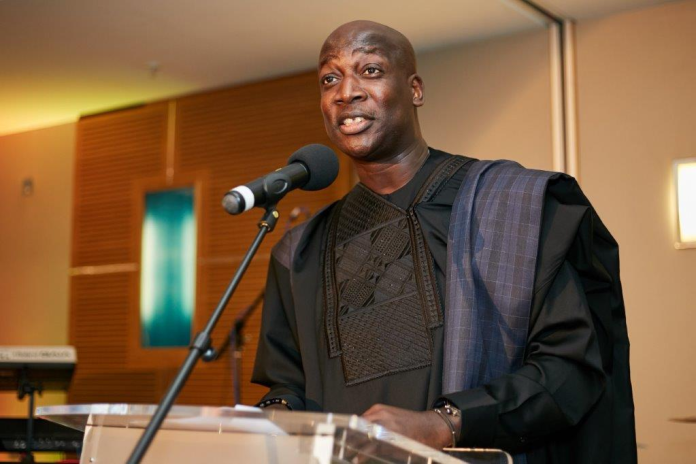
Former Unilever executive Yaw Nsarkoh has delivered a scathing critique of Ghana’s democratic trajectory, arguing that education represents the only pathway to dismantling what he terms a “Santa Claus democracy” that perpetuates poverty cycles and reduces citizens to token beneficiaries.
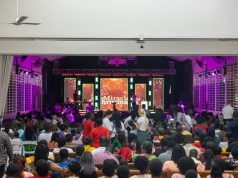
Speaking during the closing of Springboard’s 17th-anniversary Thinkathon series, Nsarkoh emphasized that “knowledge is the most powerful productive force and must be embraced if the country is to experience true liberation.” His intervention comes as Ghana grapples with systemic challenges that traditional economic indicators fail to capture.
The strategic adviser challenged Ghana’s progress metrics, questioning whether gross domestic product growth truly reflects societal advancement when citizens lack basic necessities and critical thinking capabilities. The Thinkathon series, which has operated for seventeen years as a platform for “thinking boldly” and “acting responsibly,” provided the backdrop for Nsarkoh’s provocative assessment of national development priorities.
Nsarkoh painted a stark picture of Ghana’s current reality, asking whether increased school construction translates to meaningful learning opportunities and whether the nation has created environments conducive to intellectual growth. His critique extended to visible governance failures, citing uncollected garbage as evidence of a society struggling to envision its future.
The former Unilever Global Markets Executive Vice President warned against democratic processes that reduce impoverished citizens to electoral commodities, where votes become transactions rather than expressions of genuine political choice. This monetization of politics, he argued, ensures that children born into poverty remain trapped in generational cycles of disadvantage.
Drawing on Nobel Laureate Wole Soyinka’s observation that Africa’s democratic variant has become a “public auction for the highest bidder,” Nsarkoh challenged the fundamental assumptions underlying Ghana’s political economy. His critique suggests that without educational transformation, democratic institutions merely serve elite interests while marginalizing ordinary citizens.
The business leader’s prescription focuses on comprehensive educational reform that extends beyond formal schooling to encompass critical thinking development and opportunity creation. He specifically recommended that Ghanaians engage with complex literature such as “Material World” by Ed Conway to deepen their understanding of global economic systems and resource dynamics.
Nsarkoh’s platform, Springboard Your Virtual University, has operated as Ghana’s “leading motivational and personal development broadcast” since August 2008, providing him with extensive insight into the nation’s human capital challenges and opportunities.
His analysis reflects broader concerns among Ghana’s intellectual class about democratic quality and social mobility. The intervention comes at a critical juncture as the nation prepares for future electoral cycles amid persistent socioeconomic challenges that traditional policy approaches have failed to address adequately.
The former corporate executive’s emphasis on education as liberation tool resonates with ongoing debates about Ghana’s development trajectory and the role of human capital in sustainable transformation. His critique suggests that without fundamental educational reform, political democracy remains largely cosmetic, serving elite interests while failing to deliver meaningful change for ordinary citizens.
Nsarkoh’s call for educational transformation extends beyond policy recommendations to encompass cultural change that prioritizes intellectual development, critical thinking, and genuine opportunity creation for all citizens regardless of their socioeconomic backgrounds.