
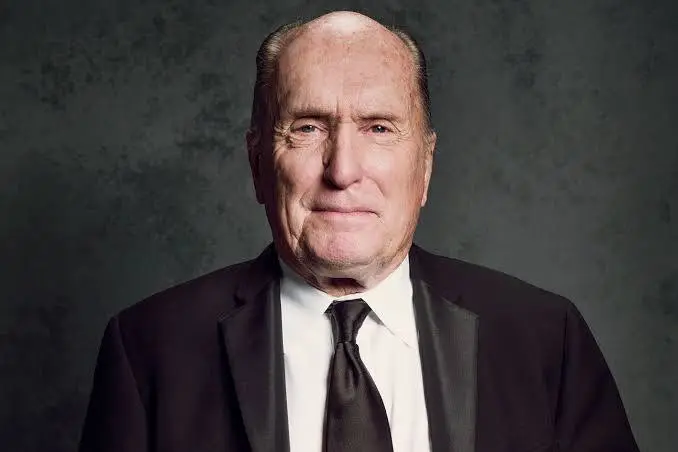
Robert Duvall, whose quietly commanding performances in films such as Tender Mercies, The Godfather, and Apocalypse Now helped define a generation of American cinema, has died at the age of 95.
His passing was confirmed in a statement shared on Facebook by his wife, Luciana Duvall.
“Yesterday we said goodbye to my beloved husband, cherished friend, and one of the greatest actors of our time,” she wrote. “Bob passed away peacefully at home, surrounded by love and comfort. To the world, he was an Academy Award-winning actor, a director, a storyteller. To me, he was simply everything.”
Duvall’s career spanned more than six decades, earning him seven Academy Award nominations and one win — Best Actor for his tender, deeply internal performance as a washed-up country singer in Tender Mercies. His gruff naturalism and understated intensity placed him alongside contemporaries like Robert De Niro, Dustin Hoffman, and Gene Hackmanas one of the defining screen actors of his era.
Breakthrough and Rise to Prominence
Duvall made a memorable big-screen debut as the reclusive Boo Radley in To Kill a Mockingbird. But it was his collaboration with director Francis Ford Coppola that cemented his place in film history.
In The Godfather, Duvall portrayed the patient and calculating consigliere Tom Hagen, earning his first Oscar nomination. He reprised the role in The Godfather Part II and continued working with Coppola on The Conversation and the Vietnam War epic Apocalypse Now, where his portrayal of Lt. Col. Bill Kilgore — complete with the iconic line, “I love the smell of napalm in the morning” — earned him another Academy Award nomination.
Throughout the 1970s and ’80s, Duvall delivered standout performances in Network, The Great Santini, and True Confessions, before securing his Oscar win in 1984.
Actor, Director, Storyteller
Though rarely chasing traditional leading-man stardom, Duvall earned enormous respect for disappearing into his roles. He often took on complex, morally layered characters in films such as The Natural, Days of Thunder, and Deep Impact.
In 1997, he directed and starred in The Apostle, earning another Oscar nomination for his role as a flawed preacher seeking redemption. The film won Best Feature at the Independent Spirit Awards and further solidified his reputation as an uncompromising storyteller.
Duvall continued to work steadily into his later years, appearing in Open Range, The Judge — which brought him his seventh Oscar nomination — and The Pale Blue Eye, one of his final screen roles.
A Force on Television and Stage
Beyond film, Duvall also made a significant impact on television. He earned Emmy nominations for projects including Lonesome Dove and won two Emmys for the acclaimed Western miniseries Broken Trail.
Born in San Diego to a Navy rear admiral, Duvall studied drama at New York’s Neighborhood Playhouse under Sanford Meisner after graduating from Principia College and completing military service. He shared early acting circles with Hackman and Hoffman before gradually building one of the most respected careers in Hollywood.
While he may never have pursued blockbuster superstardom, Duvall’s legacy lies in his unwavering commitment to character and truth. As Coppola once suggested, the line between leading men and great character actors often disappears — and Duvall embodied that rare blend of both.
He is survived by his fourth wife, Luciana Pedraza.
Robert Duvall leaves behind a body of work that is both formidable and unforgettable — performances marked not by flash, but by depth, discipline and an enduring understanding of the human spirit.