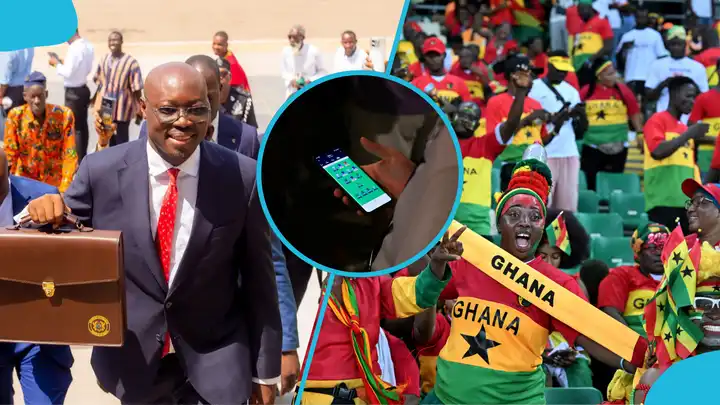

Parliament’s Economy and Development Committee has committed to monitoring how Ghana’s 2026 budget affects citizens and the economy beyond the usual approval process.
Kojo Oppong Nkrumah, the Ranking Member of Parliament’s Committee on Economy and Development and Member of Parliament for Ofoase Ayirebi, announced this commitment as the budget takes full effect. The approach marks a departure from past budget cycles where large allocations drew applause but left many Ghanaians questioning what actually changed in their lives.
Oppong Nkrumah explained that the committee will examine multiple layers of economic policy implementation. First, they will scrutinize how the National Development Planning Commission (NDPC) formulates economic policy and tracks whether government actions align with medium term objectives set for growth, employment, and stability.
The committee is also paying close attention to monetary policy instruments used by Bank of Ghana managers, recognizing that central bank decisions on inflation, interest rates, and money supply directly affect loan costs, business expansion, and purchasing power.
What distinguishes the committee’s new approach is its focus on connecting fiscal policy, monetary policy, and real sector outcomes. Rather than evaluating these elements separately, lawmakers will examine how they work together to produce stability, growth, jobs, and development.
Using agriculture as an example, Oppong Nkrumah noted that allocating billions to boost food production or poultry farming means nothing if food prices fail to drop and self sufficiency remains unachieved. The same logic applies to education spending. If massive annual investments do not improve West African Senior School Certificate Examination (WASSCE) pass rates, strengthen skills, and equip young people to solve problems and create jobs, then the expenditure has failed its purpose.
The committee plans to hold performance hearings, bringing ministries before Parliament not merely to explain spending but to demonstrate measurable impact. This represents a shift from checking procedural compliance to demanding evidence of progress.
Ghana’s 2026 Budget, themed “Resetting for Growth, Jobs, and Economic Transformation,” projects 4.9% economic growth with gross domestic product (GDP) expected to reach GH¢1.5 trillion. The services, industry, and agriculture sectors will serve as growth pillars, contributing 47%, 31%, and 22% respectively. Inflation is expected to remain within the medium term target band of 8% plus or minus 2%.
The budget earmarks GH¢30 billion for strategic infrastructure development in power, roads, and digital connectivity under the Big Push Programme. An additional GH¢401 million goes to the Women’s Development Bank to finance women led Micro, Small, and Medium Enterprises (MSMEs).
However, Oppong Nkrumah has urged government to submit programme documents for 11 launched initiatives including Big Push, 24 Hour Economy, and Feed Ghana to Parliament for thorough auditing and effective oversight. He noted that without these documents, Parliament and civil society struggle to assess whether programmes can deliver promised growth, jobs, and transformation.
For the committee, outcomes matter more than announcements. In 2026, every cedi voted will be judged not by how loudly it was announced but by how much it actually changed lives in farms, classrooms, businesses, and homes across Ghana.