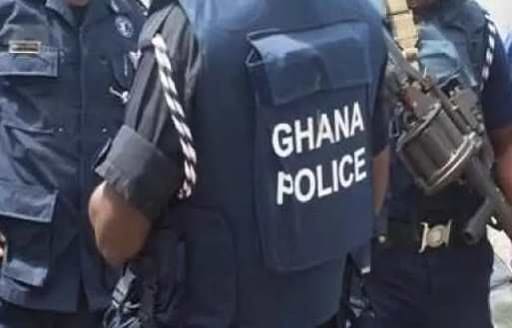

Two suspected armed robbers believed to be behind multiple robberies and killings in the Mankranso area died following a shootout with police during a Tuesday raid at Offinso in the Ashanti North Region. The operation, which authorities describe as intelligence led, targeted a criminal gang that had allegedly terrorized communities for months.
The Ashanti South Regional Police Command had gathered intelligence indicating that Osman Majid Abdul Sadik, known as Cross, was wanted in connection with several robberies and killings in the Mankranso area. According to a police situational report circulating online, the command identified three hideouts in Offinso where the suspect and his gang were believed to be hiding.
A special operation team led by three senior officers and other ranks, using both branded and unbranded service vehicles, conducted simultaneous raids on the identified locations. At Offinso Anyankaso, the suspect allegedly fired a gunshot from his room and attempted to escape through the ceiling, prompting police to return fire tactically. Two suspects sustained gunshot injuries during the exchange.
The injured men were rushed to Bekwai Municipal Hospital for treatment but were pronounced dead on arrival. Their bodies have been deposited at the hospital morgue for preservation and autopsy. The deceased were identified as Abdul Sadik, alias Cross, aged 25, and Abdulai Sadik, aged 20.
The weapons recovery speaks to the gang’s operational capacity. Police retrieved a pump action gun with six rounds of ammunition, a black Smith and Wesson pistol with 50 rounds of 9mm ammunition, an unmarked pistol, and two spent cartridges. Additional items discovered during the search paint a picture of organized criminal activity.
Officers found three smartphones, two keypad phones, mobile phone accessories, an Apple laptop, a machete, a smock and ash singlet with talismans, one black body armor, one brown body armor, two pairs of boots, a picture frame showing gang members, a Ghana Card bearing Osman Majid’s picture, and cash totaling 2,680 cedis. The body armor and communication devices suggest a level of planning beyond opportunistic crime.
What happened next provides investigative leads but raises questions about interrogation timing. During interrogation before being taken for medical attention, Cross reportedly confessed to involvement in multiple robberies in the Manso area and admitted to killing three people at Mankranso. The confession, obtained from a suspect with gunshot injuries before receiving treatment, will likely face scrutiny regarding its circumstances and admissibility.
Cross allegedly mentioned accomplices identified as Kingkong, Roy, Fii, Raph, Koboo, Ali, and Ike, revealing that some of the gang’s weapons were being kept at a mining site in Manso. These aliases and the mining site connection suggest the gang operated within informal mining communities, where criminal networks sometimes overlap with illegal mining activities.
The Mankranso area has experienced violent crime challenges. Police records show incidents dating back months involving armed robberies and killings that authorities now attribute to this gang. The alleged confession to three killings, if verified, places these suspects among the region’s most violent offenders.
Police have launched further investigations to apprehend the remaining accomplices and recover additional firearms linked to the gang’s operations. The mining site mentioned presents both opportunity and risk for investigators. Mining areas often have complex social dynamics where loyalty networks can shield criminals, but the specific location details might enable targeted operations.
The operation reflects Ghana Police Service’s current approach of intelligence driven raids targeting violent criminals. Similar operations across the Ashanti Region in recent weeks have resulted in arrests and weapons seizures, suggesting coordinated efforts to dismantle armed robbery networks.
Public reaction to such shootouts typically divides between those who see them as necessary force against dangerous criminals and those who question circumstances surrounding suspect deaths. Human rights organizations consistently emphasize that even accused criminals deserve due process and that lethal force should remain a last resort.
The police report’s language describing tactical return fire suggests officers acted defensively after being shot at first. However, the details about suspects attempting ceiling escapes and the subsequent deaths raise questions that investigations and inquests should address. Were less lethal options available? What exactly transpired during those critical moments?
The Ashanti Region’s armed robbery challenges reflect broader security concerns affecting mining areas and commercial routes. Gangs operating in these zones often target traders, miners, and travelers carrying cash or valuables. The weapons recovered in this operation, particularly multiple pistols and substantial ammunition, indicate capacity for sustained criminal activities.
Body armor possession by suspects deserves attention. Such equipment isn’t readily available through legitimate channels in Ghana, suggesting either theft from security sources or acquisition through transnational criminal networks. The talismans found alongside modern weapons reveal how traditional beliefs intersect with contemporary criminality, with some criminals seeking spiritual protection for their activities.
Community safety in Mankranso and surrounding areas might improve with this gang disrupted, but only if police successfully apprehend the remaining members. The alleged accomplices named by Cross, if still at large with weapons, could either disperse, reorganize, or escalate activities. The mining site weapons cache, if it exists and remains accessible, presents ongoing risks.
The Ghana Card recovered bearing Cross’s picture and name represents either remarkable carelessness or confidence that authorities wouldn’t locate him. Criminal gang members who maintain official identification while conducting violent crimes sometimes underestimate law enforcement capabilities or operate in environments where such documents provide necessary mobility despite criminal activities.
The incident highlights ongoing tensions in Ghana’s criminal justice system. Police face pressure to combat violent crime aggressively while respecting human rights and legal procedures. Communities want safety but also accountability when force results in deaths. The intersection of these demands creates challenging operational contexts.
Questions remain about the interrogation that yielded confessions. International best practices require that suspects receive medical treatment for serious injuries before questioning. Whether circumstances here met those standards awaits clarification. Defense lawyers, should any accomplices face trial, will certainly examine those details.
The three mobile phones and laptop seized might contain evidence linking suspects to other crimes or identifying additional gang members. Digital forensics could reveal communication patterns, financial transactions, or coordination with accomplices. Such evidence often proves more reliable than confessions obtained under questionable circumstances.
As investigations continue, families of alleged victims from previous Mankranso incidents might finally get answers about what happened to their loved ones. The claimed confession to three killings, pending verification through evidence, could provide closure. Simultaneously, the families of the two men killed in this operation face their own grief and questions.
The Ashanti South Regional Police Command’s next steps will determine whether this operation represents genuine progress against organized crime or raises concerns about use of force protocols. Transparency about what transpired, including independent investigations where appropriate, would strengthen public confidence in police operations.
The alleged remaining gang members now face choices. Surrender and cooperate with investigations, flee the region, or continue criminal activities under heightened police pressure. Their decisions will shape whether Mankranso communities experience sustained security improvements or just temporary respite.
This incident adds to Ghana’s ongoing conversation about policing, crime, and justice. Finding the balance between aggressive action against violent criminals and maintaining human rights standards remains challenging. Communities deserve safety from armed gangs. Suspects, even dangerous ones, deserve fair treatment under law. Achieving both requires careful attention to procedures, accountability, and transparency that builds rather than erodes public trust.