
By: Gloria Edinam Atiase
Ghana’s population is growing rapidly, with the majority being under 35. While this youth boom presents an opportunity for economic growth, it can also lead to rising unemployment, underemployment, and increased pressure on social services. According to the 2021 Population and Housing Census report, Ghana’s population growth rate stands at 2.1 percent with an estimated 34 million people.
In demographic terms, this is significantly high because the ideal growth rate is between one-to-one point five percent each year. This poses many challenges as the government ends up having a lot more mouths to feed than it produces.
As Ghana joined the global community to mark this year’s World Population Day on the theme, “Empowering the youth to create quality families in an inclusive society”, the call is clear as it focused on the youth as they drive the rapid population growth and therefore the need to empower them to create quality families for national development.
This year’s World Population Day brings these challenges into sharp focus, urging action on how the country can manage growth, protect the most vulnerable, and ensure that no one is left behind.
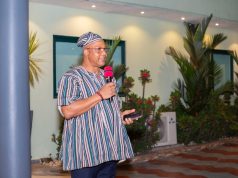
A Population Policy Analyst who is also the Executive Director for the Development Advocacy Initiative Africa, an advocacy and research focused NGO based in Accra, Dr. Godfred Bonnah Nkansah, in an exclusive interview with GBC News on the sidelines of World Population Day, noted that the high population growth rate poses serious challenges, including a housing deficit where a lot more of people become homeless, pressure on educational sector as government need to build and expand infrastructure in schools, train and employ more teachers, and also bring about the creation of slums in urban communities, which can breed criminals.
“At any point you will find that a country with a rapid population growth rate is spending nearly all its resources on social infrastructure and social interventions, though it is not bad, it means you will not have enough money for economic production and you may compromise on your security as well”.
Dr Bonnah Nkansah explained some four major drivers of rapid population growth, such as the incidence of child marriages, teenage pregnancies, no contraceptive use among women who are sexually active, and the culture’s belief in large family sizes.
He proposed education on family planning, providing family planning services at an affordable rate, prioritizing the adolescent, a critical look at some restrictive laws on reproductive health, and funding of population management issues as some interventions to the problems.
“We really have to put money into population management issues. We have to invest in family planning. Its that most of our family planning commodities are purchased for us as a country by donors. Up until last year, 97 percent of the budget for the purchase of family planning commodities for Ghana was handled by UNFPA and USAID. The government contributed only three percent. We cannot say we are serious about population management when you depend on a donor to buy your commodities for you”, he pointed out.
The population analyst called on the government to prioritize population management as an issue of national importance and make budgetary allocations for it.
“Currently, population management does not receive attention in the budget. It is an afterthought. The conversation on family planning, reproductive health, and population management does not feature in any of the government’s programmes”, he said.
On challenges women face in accessing reproductive health, Dr. Bonnah Nkansah mentioned the culture of large family size, the culture of not involving men in family planning issues, the unavailability of family planning commodities, and low education about family planning and reproductive health as the challenges and urged the media to lead the agenda.
“I think that the conversation on reproductive health has to be embraced as part of humanity. We are sexual beings and should be comfortable talking about it in an age appropriate and culturally sensitive way. The more we talk about it, the more it gets into the consciousness of people that this is an aspect of life I have to pay attention to.”
As a country, there is the need to pay attention to reproductive health and family planning issues as a development indicator and make the necessary investments. The conversation on family planning should be central to every poverty reduction programme run in the country.
More Stories Here