
By Lucy Mawufemor Kpeglo
Award-winning journalist Portia Gabor has urged media organisations to prioritise the mental health of their workers, particularly journalists, who are often required to cover emotionally difficult stories without notice.
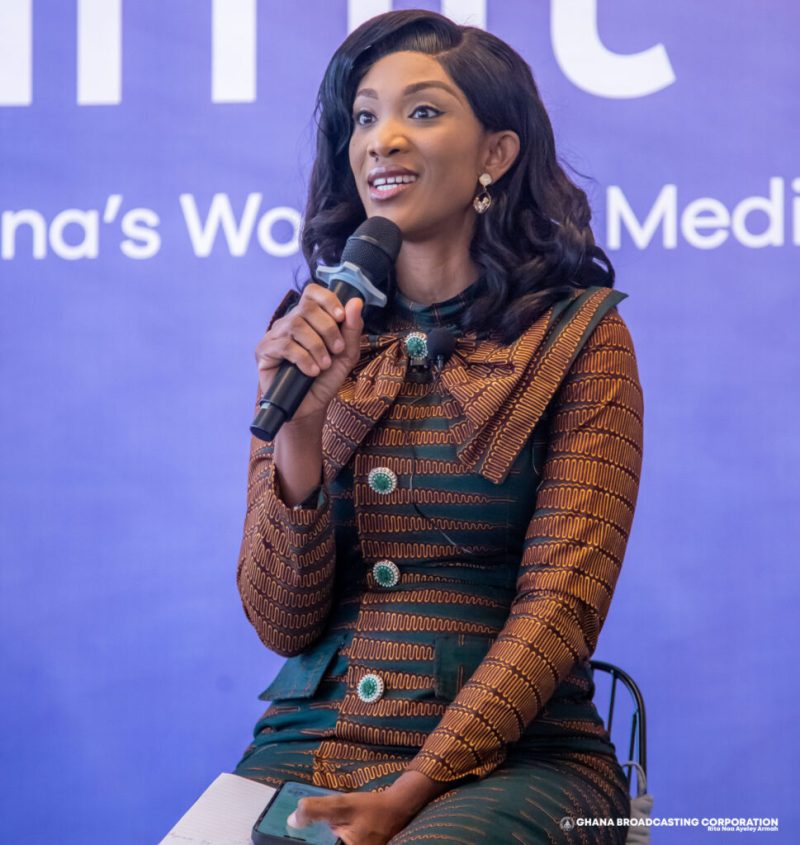
Speaking during a panel discussion at the Her-Press Summit under the theme “Stories Only She Can Tell”, Portia highlighted the lack of female representation in the media. She encouraged women to share not only their own stories but also those of others through diverse forms of media content.
Explaining her view on women’s natural empathy, she shared a personal experience of receiving distressing news from a doctor after childbirth. She said the incident had a deep psychological impact on her and later inspired her to report on disability-related stories and other socially impactful topics.
“After delivering my baby, the doctor told me my baby could have disabilities and asked me to come back later. It really affected me. I didn’t know who to talk to. I asked myself, is this what women with children living with disabilities go through? That’s how my journey of doing stories on disability began until I eventually won Journalist of the Year,” she said.
Portia also expressed concern about the mental health toll on journalists covering tragedies such as disasters and accidents. She referenced the recent helicopter crash in the Ashanti Region, which claimed the lives of eight government officials.
“Look at the helicopter crash—many of those who were at the scene were journalists, and some could not even sleep for a long time. Yet, work had to go on,” she noted.
She recalled her husband once advising her to seek psychological support because of the traumatic nature of her assignments. She recounted moments when she had to maintain a cheerful appearance on television while privately struggling with grief or distress.

“I remember one day my husband told me I needed psychological support because of the things I see. There are times when I am in a bad mood or I’ve lost someone, and then I’m smiling on TV. I call someone to say I’m not okay, and they say, ‘We just saw you smiling on TV.’ They don’t believe I’m going through an emotional time. You cannot even apply for leave to take care of your mental health,” she shared.
She concluded by urging media organisations and employers to treat the mental health of journalists with greater seriousness.
“I think going forward, HR and employers should take the mental health of journalists seriously because we go through different things,” she said.