
By: Ashiadey Dotse
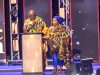
At the 90th Anniversary Lecture of the Ghana Broadcasting Corporation (GBC), a Senior Lecturer in Public History, Bath Spa University, UK, Dr. Victoria Smith, delivered a powerful and emotional reflection on the pivotal role of radio in Ghana’s fight for independence.
Recalling the historic night of March 6, 1957, she invited the audience to imagine the moment when Dr. Kwame Nkrumah proclaimed, “At long last, the battle has ended,” highlighting how radio carried that iconic message into homes across the country, amplifying the spirit of freedom and unity.
She painted a vivid picture of how people across Ghana marked the historic moment—some in the crowd at the Old Polo Grounds in Accra, others in their hometowns, huddled around radios with family and friends.
Dr. Smith also shared a personal story of the late writer Ama Ata Aidoo, who was just a 15-year-old student at Wesley Girls’ High School at the time.In her eagerness to witness history, Aidoo tried to sneak into the school’s assembly hall to hear the live broadcast. Though caught and ultimately missing the moment, her determination, Dr. Smith noted, symbolized the deep yearning of countless Ghanaians; young and old, to be part of the nation’s birth through the power of radio.
“People across Ghana—from Nandom to Nungua, from Sampa to Jasikan—gathered around radio boxes at homes, markets, lorry stations and palaces. They fell silent, not because they had nothing to say, but because they wanted to listen and witness history,” Dr. Smith said.
She explained that what is now popularly called Radio Ghana was originally announced by then Interior Minister Ebenezer Ako Adjei as the Ghana National Broadcasting System. Even before independence, the decision was made to let a 25-year-old broadcaster, Frank Parks, lead the live coverage. Parks, who had impressed many with his storytelling and command of English, narrated the scenes in Accra so vividly that people across the country felt part of the action.
Dr. Smith noted that in 1957, nearly half of Ghana’s population—about 2.5 to 3 million people—had access to radio. While not everyone understood English, it was the local language services in Twi, Fante, Ewe, Ga, Dagbani, and Hausa that made the broadcast meaningful to Ghana’s multilingual audience.
“The joy was loud, but the message reached all ears because GBC made it possible in all our languages,” she stated.
She traced the history of GBC back to its early days in the 1930s as Station ZOY, established by British colonial governor Arnold Hodson, who had earlier helped set up radio services in Sierra Leone and the Falkland Islands. Hodson introduced a wired Rediffusion system, connecting hundreds of wooden poles across Accra to deliver radio signals. This system allowed the British authorities full control, as it only allowed listeners to switch radio units on or off and adjust volume, but not to change channels.
The first broadcast came on July 31, 1935, just three months after the station’s technical team—originally made up of three Ghanaian engineers—began work at a small bungalow near Ridge police station now known as GH one. They set up a network that reached about 300 homes and the Palladium Cinema, then a major public venue.
Dr. Smith explained that although the colonial system was designed to promote British culture, Ghanaians quickly embraced the technology. “Radio became popular not because it served colonial interests, but because it connected people,” she said. “It overcame barriers of literacy, geography, class and even gender.”
She also explained how, after World War II and the 1948 Accra riots, the British used radio to try to maintain control in the face of rising nationalism. But Ghanaian broadcasters found creative ways to make the content relevant to the people, slowly turning the tool of colonial control into a voice of freedom.
“Radio did not lead the fight for independence,” Dr. Smith said. “But it helped people imagine what it meant to be Ghanaian. It allowed people to feel connected to others they had never met—and that was nation-making.”
Her lecture focused on three main points: the origins of GBC from the 1930s to the 1950s, why radio became so popular, and how radio supported the formation of a new national identity in the years leading to independence.
She concluded by quoting GBC’s Director-General, Prof. Amin Alhassan, saying, “Ghana was born through radio.” She emphasized that before the internet, television or commercial media, it was radio that gave Ghanaians a shared space—a platform that helped transform colonial subjects into citizens of a new republic.