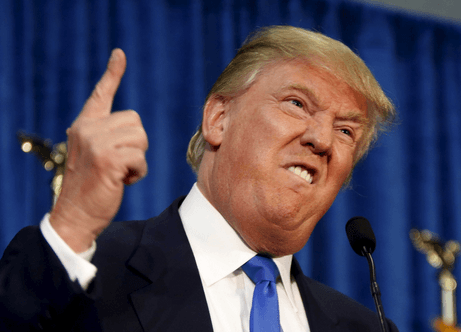

Some opportunities come, but once. Africa has many missed opportunities, for a continent that is endowed with a greater percentage of some of the world’s natural and human resources. But this opportunity is not to be missed. The re-emergence of Donald Trump must be a wake-up call to Africa.
When Trump was first elected in 2016 and he was inaugurated in 2017, he did not hide his penchant for erratic decisions that clearly hurt others – people or countries. His America first rhetoric sent enough signals that other countries that depended on America should prepare for the worse. But he lost the 2020 elections. The world sighed in relief, but then he returned in 2024, and he returned with vengeance – America and the rest of the world felt his return.
His re-emergence should teach the rest of the world something some past events didn’t. But it doesn’t appear to yet.
Shutting down USAID
Trump’s performance so far should shake other countries to the realization that they need to be self-reliant. Other countries, especially African countries should begin to look inward for solutions – more so after he shut down a lot of programmes and imposed visa restrictions. The closing down of the United States Agency for International Development (USAID) for instance, hit the world hard. The US through USAID spent $68 billion on international aid in 2023. According to available information the total is spread across several departments and agencies, but USAID’s budget constitutes more than half of how much America spent across the world, at around $40 billion – and that’s about 0.6% of total US annual government spending of $6.75 trillion.
Much of USAID funding is in Asia, sub-Saharan Africa and Europe – primarily on humanitarian efforts in Ukraine. He also imposed visa restrictions on some countries.
Some studies have projected USAID cuts could lead to more than 14 million additional deaths by 2030, including over 4.5 million among children under 5, or about 700,000 extra child deaths per year. Other studies also found that global aid cuts could lead to at least 9.4 million additional deaths by 2030, if the current funding trend continues, and about 2.5 million of those deaths are projected to be children under the age of 5.
The shutting down of USAID alone should be a major awakening. African countries don’t need any triggers more than that.
Conflict with Iran
The ongoing conflict with Iran, involving Israel and the US, is even a louder signal. The Gulf Cooperation Council (GCC) countries’ realities also teach a lot. They heavily rely on the US for their air defence. But as the war raged on and Iran started targeting them, American defence systems didn’t give efficient protection. They became lame ducks even with American presence. The first seven American service men to be killed were in the GCC countries. That is a clear indication that it is not enough to just rely on the US.
South Korea also tasted American indecision and abandonment. The US is reported to have dismantled a missile interceptor in that country and moved it to the GCC area, leaving South Korea vulnerable.
The financial crisis of 2008
The financial crisis of 2008 is another good example. When the financial crisis of 2008 hit, especially the US, and other parts of Europe, it didn’t affect Africa as much because the continent’s economy wasn’t fully integrated into the global economy, it was said. The incident collapsed markets, banks, and strangulated some economies.
That incident should have made African countries wake up, sit up, re-imagine and re-engineer their economies to be independent and self-reliant, but it doesn’t appear that they have.
The AfCFTA
African countries continue to rely on external economies to the extent that the most viable economic agreement, the African Continental Free Trade Agreement (AfCFTA) is not being accelerated as it should.
Africa has 54 countries with a combined GDP of $3-$4 trillion and a population of 1.4 billion, the AfCFTA is a ripe market for the continent’s economic transformation. Intra-Africa trade is a necessary and sufficient condition for economic diversification, industrialization, job creation and scientific explosion on the continent. But the AfCFTA isn’t moving as it should. Some African countries are being tardy in its operationalization and implementation.
Since its launch in 2021, to date, only about 49 African countries have deposited their instruments of ratification of the AfCFTA with the Secretariat. Many tariffs still remain in some African countries.
Visa requirements and air travel in Africa
As the US continues to impose visa restrictions on many African countries – about 27 of them for various reasons, there are ironically many African countries also requiring visas from other Africans. Visa regimes in Africa are the most ridiculous. They are vestiges of colonialism and division that do not augur well for Africa, and yet many African countries continue to demand visas from other Africans. Travelling within Africa among Africans is the most expensive and difficult.
Not only does one require visas to travel to many African countries for many African, it is also expensive. Many African countries have closed skies policies, while they open up to countries from the West.
In 1990 African countries signed the Yamoussoukro Agreement for open skies. As at 2017, 44 signatory countries had agreed to deregulate air services, and promote regional air markets open to transnational competition. But that hasn’t been achieved yet, crippling air travel across the continent.
ECOWAS
The Economic Community of West African States (ECOWAS), a bloc of original 15 countries is in tatters after failing to develop a common currency. Even though it has a policy of free movement, it is not as free as it should be, with many other treaties still on paper. And it is now even being fragmented further with the departure of three countries to form the SAHEL bloc.
PAPSS
The Pan-African Payment and Settlement System (PAPSS), a seamless, secure, instant payment platform to facilitate trade across Africa, is being sabotaged by African countries, egged on by some European governments. PAPSS is designed to make payment across borders in local currencies. For instance, a buyer in Ghana can pay a seller in Nigeria with cedis and the buyer would receive the equivalent in Naira without sweat. That effectively cuts away the stress of foreign exchange payments.
Mobile Money technology
Even though Mobile Money technology was spearheaded in Africa, making Mobile Money payments across Africa is not entirely possible. While mobile money payments are possible within countries and cross platform payments are happening, and it is possible to make mobile money payments from Kenya to some countries and Rwanda to other countries, you can’t make payments from Kenya to Ghana, even though you can make payments from Rwanda to Ghana. It is apparently possible to make payments across some specific networks across a small number of other Francophone countries.
The Mobile Money technology which has become the largest source of financial engagements in Africa with growth in mobile technology hasn’t permeated the continent yet. Cross-border payments are in patches.
You can’t even make mobile money payments from Ghana to Togo nor to Côte d’Ivoire, nor Burkina Faso.
You can’t also make Western Union payments from Ghana to Togo nor to Côte d’Ivoire, nor Burkina Faso, Ghana’s closest neighbours. You can however make Western Union payments from Burkina Faso and Togo to Ghana. I don’t know about Côte d’Ivoire.
What Huawei and China taught the world
Huawei and China have taught the world a lot. But is anyone paying attention?
Another example is the US-Huawei crisis that sparked a major geopolitical technology conflict between the US and the Chinese technology company. The US accused Huawei of posing national security risks to it, and acting as a conduit for Chinese espionage.
The US, as a result in 2019 blacklisted Huawei, and restricted its access to crucial American technology such as semiconductors and software. America also pressured its allies to ban Huawei from 5G networks.
Huawei was banned from using Android and Google systems.
Huawei didn’t fold its arms and cried. It didn’t fold at US bullying, it was moved to look into itself and build its own infrastructure, including cloud, OS and AI technologies.
The Iran conflict
The current Iran conflict is another example of looking within yourself to build self-reliance. After 47 years of sanctions and isolation, Iran knew this day would come. The country looked within and developed resilience and prepared to fight back when this day came. With Israel and the US attacking Iran, the country still stood firm, took the hits and hit back at Israel and US allies in ways that no one could imagine.
There are many lessons for anyone who wants to learn. America has no permanent friends. It only has permanent interests – and trump has only deepened that stance. His America first rhetoric, and the attacks on Iran would change global geopolitics forever, even log after Trump’s tenure is over.
Africa must wake up
Trump is a blessing for Africa. African countries must wake up, and start taking themselves seriously. Begin investing in science and technology much more intensely.
African countries have the lowest investments in research and development and seem to have haphazard education systems with no clear philosophies of education.
With the major re-calibration of global geopolitics arising from the emergence of Trump and the ongoing Iran and Ukraine conflict, the single most important message is countries that do not look within and build from within would have lesser chances of survival.
By Emmanuel K Dogbevi
Email: [email protected]