
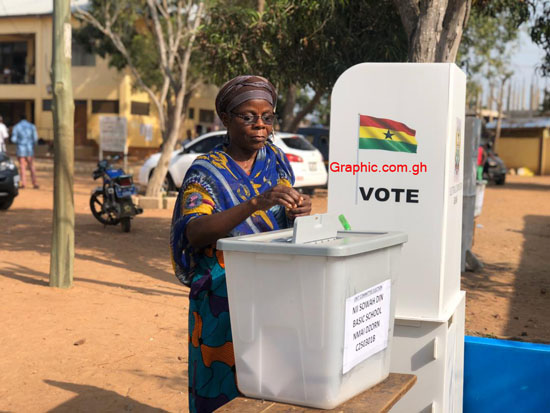

Every election year in Ghana, a familiar ritual unfolds. Political rallies colour our streets, manifestos flood the airwaves, and debates rage in taxis, chop bars and living rooms. Yet alongside the serious business of democratic choice, another spectacle quietly but confidently takes centre stage: the rise of the election prophet.
They appear with certainty and flourish, declaring who will win, who will lose, who will be removed by divine judgment, and which political party has supposedly secured God’s irreversible blessing.
These declarations are delivered with solemn authority, often wrapped in spiritual language that discourages questioning. They are amplified by social media algorithms, radio pulpits and eager congregations hungry for certainty in uncertain times.
When the prophecies fail—as many inevitably do—the explanations arrive swiftly and conveniently. God changed His mind. The people did not pray enough. Spiritual forces interfered. Or, most frequently, the familiar refuge: “All things work together for good for those who love God” (Romans 8:28).
The issue here is not prophecy itself.
Christianity, at its core, affirms that God speaks—to warn, to guide, to comfort and to correct. Scripture is rich with prophetic voices who challenged injustice and called societies back to righteousness. The problem arises when prophecy loses its moral weight and becomes performance: a spectacle designed to impress, attract followers, generate relevance or even secure financial and political advantage.
Romans 8:28, so often deployed as a theological escape hatch, was never intended to sanitise error or excuse reckless pronouncements. St Paul was addressing believers grappling with suffering and uncertainty, assuring them of God’s redemptive purpose even in hardship. To weaponise this verse to shield failed predictions from scrutiny is to distort Scripture and mislead the faithful.
Equally instructive is St Paul’s counsel in 1 Thessalonians 5:8, where believers are urged to be sober, clothed with faith, love and the hope of salvation. Sobriety here is not merely about abstaining from excess; it speaks to spiritual alertness, discipline and responsibility. Prophecy without accountability—especially when delivered publicly and politically—is the very opposite of sobriety.
In recent election cycles, the line between faith and political manipulation has grown dangerously thin. Some prophecies align too neatly with partisan interests to be dismissed as coincidence.
Others are deliberately sensational, crafted for virality rather than truth. Fear sells. Drama trends. And in a crowded religious marketplace, outrage and certainty attract attention faster than humility and restraint.
The cost of this trend is not merely theological; it is deeply human.
Followers who place unquestioning trust in prophetic declarations often experience confusion, disappointment and spiritual injury when predictions collapse. Instead of nurturing discernment, such prophecies encourage passivity—waiting for divine announcements rather than engaging responsibly in civic life. Democracy suffers when citizens outsource their agency to self-appointed spiritual forecasters.
Scripture itself offers a corrective. “Do not despise prophecies, but test everything; hold fast what is good” (1 Thessalonians 5:20–21). Testing implies scrutiny, humility and the courage to admit error. Yet public apologies for failed prophecies are rare. Accountability is frequently replaced with spiritualised spin, and questioning is dismissed as lack of faith.
Ghana’s democracy, still young and fragile, does not need prophetic theatrics that inflame tensions or undermine trust in institutions. It needs voices—religious and secular—that promote peace, truth, responsibility and national cohesion. The Church’s true prophetic role is not to predict ballot outcomes but to speak truth to power, defend the vulnerable and uphold justice.
Authentic prophecy calls people to repentance, reconciliation and hope. It does not gamble on elections or trade certainty for applause. Faith thrives on truth, and truth has nothing to fear from humility.
If prophecy is to retain its moral force, it must recover its conscience. Anything less reduces sacred speech to political theatre—and that serves neither God nor country.
Post Views: 1
Discover more from The Business & Financial Times
Subscribe to get the latest posts sent to your email.