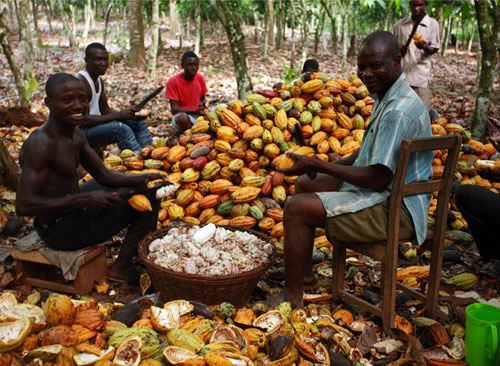

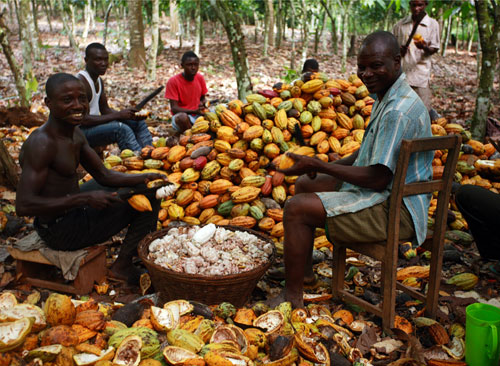
Reforms anchored on national interest are required for the nation to navigate through her crisis in the cocoa sector.
Considering the huge economic prospects and general benefits of the sector to the nation, it will be suicidal if partisan considerations are allowed to center-spread discourses on cocoa sector reforms.
Challenges
As one of the finest cocoa beans producing countries, the present challenges in the nation’s cocoa sector like liquidity constraints, delayed payments to farmers, and deep structural imbalances, exposed systemic vulnerabilities.
This is basically because the sector largely serves as the reliable economic livelihood of millions of farmers and a significant contributor to the nation’s Gross Domestic Products (GDP).
However, the sector is plagued by structural weaknesses, political blame games, and financing inefficiencies, as well as gradual decline in productivity.
Unpredictable farmer unrest, fiscal pressure on the Ghana Cocoa Board (COCOBOD) tailored with rising criticism and policy inconsistencies, are increasing the vulnerabilities in the sector, while declining producer prices and inefficiencies in financing arrangements are weakening the sector’s confidence.
Despite the reform package, the cocoa sector faces enduring structural issues that transcended partisan party politics.
Historically, the COCOBOD continues to struggle with debt accumulation, irregular funding flows, and heavy reliance on syndicated loans that remain unsustainable.
Persistent payment delays and reduced producer prices of cocoa have adversely affected farmer livelihoods, contributing to social discontent, with cross-border price differentials fueling smuggling, undermining national output and revenue.
Unfortunately, only a fraction of the nation’s cocoa is processed domestically, limiting value addition and job creation opportunities for wealth creation and poverty reduction.
Undue pressures arising from global standards, within the European Union (EU) in particular, demands improved traceability systems and stricter deforestation controls, and Ghana’s failure to meet these requirements risks losses in market shares.
Intervention
Responding to these and several other challenges, the government unveiled a comprehensive reform agenda to stabilise the cocoa value chain and restore the financial health of the Ghana COCOBOD.
Peeping into it, convincingly, the reforms will greatly give life to the sector and promote the welfare of farmers who remain the backbone and strong pillars of the cocoa sector.
The government reform measures signal a shift from ad-hoc policy approaches to a more strategic framework, designed to ensure long-term sustainability.
In February this year, Dr Cassiel Ato Forson, the Minister of Finance and Economic Planning announced a series of reforms following a Cabinet meeting, and central to the reforms is realignment of the producer price structure.
Reform provisions
The government reduced the farmgate price of cocoa from GH¢3,600 to GH¢2,587 per 64kg bag for the 2025/26 season.
It said the price cut was partly because of global market realities, as well as the need to shore up COCOBOD’s liquidity to settle outstanding debts.
However, farmers were to be guaranteed up to 90 percent of the Free-On-Board (FOB) value of their beans that intends to protect incomes against world price volatility.
Key components of the reforms include restructuring legacy debt through equity conversions, to strengthen COCOBOD’s balance sheet, as well as introducing domestic cocoa bonds to replace unsustainable financing models.
Prioritising local processing with a set target of at least 50 per cent of cocoa beans domestically by the 2026/27 season, is welcoming too, it said.
The reforms also involve transferring cocoa road obligations from COCOBOD to the relevant ministries to reduce fiscal pressure as well as implementing cost-containment measures as well as investigations into COCOBOD’s operations.
These reforms remain foundational steps towards building a more robust, accountable and financially stable cocoa sector, capable of sustaining long-term growth.
Those measures follow persistent sector challenges, as the global price volatility constrains export competitiveness.
In fact, weak domestic processing capacity has limited the nation’s ability to capture greater value from its cocoa output.
Concerns
In an interview with the Ghana News Agency, some concerned farmers expressed their worry that political interference in the cocoa sector, could undermine accountability and impede sustainable growth.
Nana Oboadie Boateng Bonsu II, the President of the Concerned Farmers Association of Ghana, advised political actors to desist from interfering in the affairs of COCOBOD, to enable the sector to go through meaningful transformation.
“Political interference often breeds corruption and that contributes to the accumulation of debt with limited accountability,” he stated.
Nana Bonsu II cited procurement of jute bags worth millions of US dollars, questioning their availability and argued that: “Citizens remain uncertain whether the items are available or not.”
He said allowing competent professionals to manage the sector without undue interference would greatly restore integrity and reduce corruption, calling on the government to probe alleged mismanagement at the COCOBOD.
Way forward
Looking into the future, revitalising the nation’s cocoa sector requires a balanced strategy that extends beyond price adjustments and debt restructuring.
Expansion of local processing infrastructures, improving access to affordable farm inputs, strengthening extension services, and investing in productivity-enhancing technologies remain essential too.
It’s equally important to insulate cocoa sector policy from partisan politics and build cross-party consensus to ensure continuity of government reforms beyond electoral cycles.
Ultimately, sustaining the country’s legacy as among the leading cocoa producers and exporters in the world, reforms must prioritise collective national interest, aligning economic imperatives with farmer welfare, fiscal stability, and value-added growth.
The approach will not only stabilise the sector but also enhance resilience in an increasingly competitive and rapidly evolving global cocoa market.
As public debate intensifies, it is becoming clearer that reforming the country’s cocoa sector for useful socio-economic purposes should go beyond partisan politics.
By Benjamin Akoto
Source: GNA