

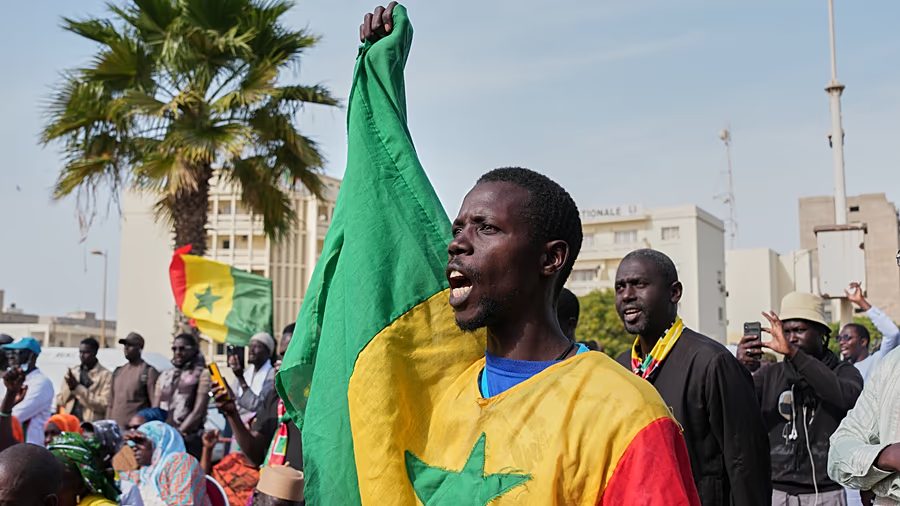
Senegal’s parliament has approved a new law doubling to 10 years the maximum prison term for sexual acts by same-sex couples and criminalising the “promotion” of homosexuality.
A total of 135 MPs voted in favour, zero against and three abstained. The next step will be for the president to sign it, then it will become law.
The legislation, which was a campaign promise of President Bassirou Diomaye Faye and Prime Minister Ousmane Sonko, was sent to parliament after a wave of arrests over alleged same-sex relationships, already banned under Senegalese law.
The government spokesman dismissed international criticism of the bill, arguing that the move reflected the views of Senegalese people.
“The majority of Senegalese do not accept homosexuality. Our culture rejects it and we are firmly opposed to it,” said Amadou Moustapha Ndieck Sarré.
Some conservative activists in Senegal have long demanded harsher penalties.
The movement And Sàmm Jikko Yi, which campaigns to defend what it calls Senegalese moral values, has repeatedly urged authorities to adopt stricter legislation criminalising homosexual acts. Its leaders argue the law is necessary to protect Senegalese cultural and religious norms.
However, rights groups warn the move could worsen discrimination and violence against sexual minorities. Human Rights Watch researcher Larissa Kojoué said the proposed changes were worrying.
READ ALSO: Burkina Faso Passes Law Criminalizing LGBTQ Practices
“Criminalising same-sex conduct and arresting people for their sexual orientation violates multiple internationally protected rights, including equality and non-discrimination.”
She added that such measures risked exposing people who were already stigmatised to “violence and fear.”
Alioune Tine, founder of the think-tank Afrikajom Center, told the BBC that the current climate could worsen social tensions. “If it is true that social concerns must be addressed, [the law] also has to respect human rights and protecting public-health policies.”
Others have pointed out that same-sex relationships are a part of life and cannot be abolished by a law.
“Most of the same-sex relationships were hidden anyway. There are even people who are married in the society and who are still entertaining a safe-sex relationship because of the norm and the cultural norm in that society,” Senegal LGBTQ Association head and medical doctor Charles Dotou told BBC Newsday.
All that will happen is “people will be hiding more, it will create more fear and people will be scared to live normally in that community. So there will be an exodus of people, particularly people who were already exposed so that that creates a bit of chaos in society,” Dr Dotou added.
The toughing of Senegal’s law follows a wave of arrests last month over alleged same-sex relationships. Police detained 12 men – among them two public figures and a prominent journalist.