

By Juliet Aguiar DUGBARTEY
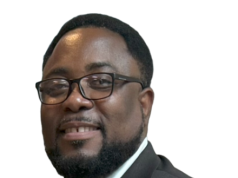
Professor Komla Tsey, a Professorial Research Fellow at Central Queensland University in Australia, has stated that Ghana’s long-standing railway challenges stem not from a lack of ideas, but from the failure to translate those ideas into decisive actions that deliver tangible benefits to citizens.

He noted that despite the sector’s strategic importance, progress has remained uneven and attributed this to policy inconsistency, underinvestment and decision-making processes that often exclude key stakeholders such as communities, workers and local producers.
“We cannot afford that cycle any longer. What is required now is a deliberate shift-from dialogue to decisions,” he said, stressing the need to rethink both the structure and purpose of policy discussions.
He highlighted the need to reassess the historical and structural foundations of the railway sector.
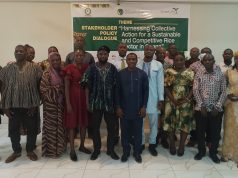
He made the remarks at the Sea-ing Africa Fieldschool and Conference held at the School of Railways and Infrastructure Development (SRID) of the University of Mines and Technology (UMaT), Essikado Campus, in the Western Region.
The conference, part of the “Sea-ing Africa: Tracing Legacies and Engaging Future Promises of ‘Big’ Infrastructure Projects in Port City Territories in Ghana and Morocco” project, was coordinated by Leiden University in collaboration with SRID.
The Sea-ing Africa Fieldschool and Conference has emerged as a key platform for discourse on Ghana’s railway sector, which for decades has been touted as a critical driver of economic transformation-linking farms to markets, mines to ports and industries to opportunities.
Professor Tsey, who is also an Adjunct Professor at James Cook University in Australia, explained that railways were designed for extraction, not inclusion. That logic has proven stubbornly resilient, shaping not only where investments go, but who benefits from them.
According to him, the unveiling of the Railway Master Plan and ongoing investment negotiations present an opportunity to prioritise community participation along railway corridors, strengthen environmental oversight particularly in areas affected by illegal mining and create opportunities for local businesses.
Professor Tsey also underscored the role of the media in shaping public understanding of railway reforms.
“The media must become an integral tool in telling the railway story. This will help ensure railway reform is not treated as an abstract technical issue, but as a national development priority with real implications for jobs, equity and economic growth,” he added.
Dr. Costanza Franceschini, Coordinator of the fieldschool, examined the historical role of transport infrastructure in facilitating the movement of raw materials, with ports serving as critical nodes influencing local communities and livelihoods.
She noted that infrastructure development in Africa is deeply intertwined with geopolitics, economic systems, political interests and cultural values.
“Infrastructure such as ports, highways and railways are not neutral; they are embedded in systems that shape how citizens experience development,” she said.
Dr. Franceschini, who is also a Postdoctoral Researcher and Lecturer in Cultural Anthropology at the Institute of Cultural Anthropology and Development Sociology at Leiden University, reflecting on the colonial era, explained that much of Africa’s infrastructure was designed primarily for resource extraction, including bauxite and gold, and has since deteriorated due to inadequate maintenance.
Post Views: 31
Discover more from The Business & Financial Times
Subscribe to get the latest posts sent to your email.