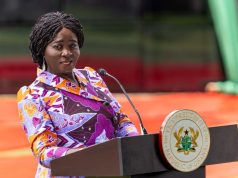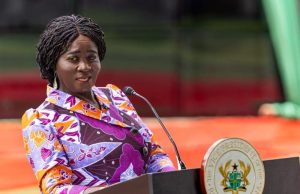
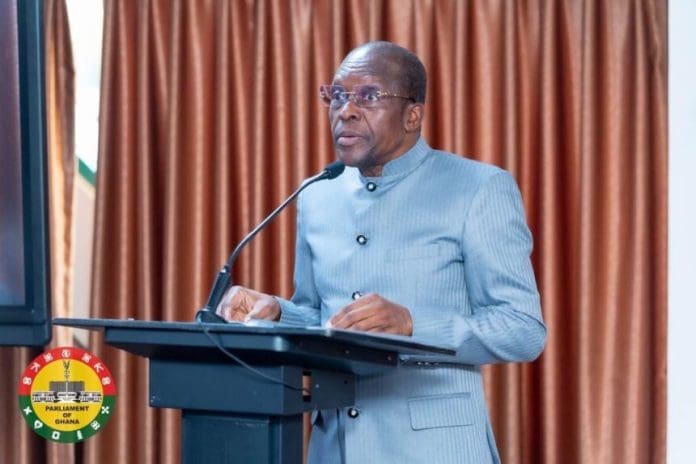

Speaker of Parliament Alban Sumana Kingsford Bagbin urged deeper collaboration between Parliament, the media and the public on Monday to reverse declining confidence in Ghana’s democratic institutions, citing survey data showing legislators rank among the least trusted officials in the country.
Speaking at the maiden Speaker’s Public Financial Management Dialogue in Accra, Bagbin noted that recent Afrobarometer findings revealed Members of Parliament, ministries, departments and agencies, along with assembly members, were the least trusted among 14 institutions evaluated. The programme, themed “Parliament, the Press, and the Purse: Building Accountability through Dialogue,” brought together business editors and senior financial journalists.
Bagbin referenced 2024 Afrobarometer data showing that while 73 percent of Ghanaians prefer democracy over any alternative, satisfaction with how democracy functions has fallen to 49 percent, down sharply from 78 percent in 2017. He described the erosion of public trust as striking and placing greater responsibility on public servants to exhibit transparency and accountability in managing state resources.
The Speaker emphasized that Parliament and the media play indispensable roles in strengthening public financial management and rebuilding confidence in elected officials. He said effective accountability becomes possible only when both institutions engage openly, exchange insights and constructively challenge each other.
Bagbin expressed hope the dialogue would achieve five key outcomes including amplifying citizens’ voices in economic governance, enhancing public participation in budget processes, improving communication on complex financial issues, reaffirming Parliament and media as pillars of democratic governance, and reinforcing collaboration between the two institutions.
The Speaker addressed long standing constitutional limitations on Parliament’s role in budget processes. He stressed that merely sitting in Parliament to receive budget presentations proves insufficient, noting much of the document is submitted for information rather than approval. He revealed the Budget Committee is now engaged early in preparation processes to guide government in setting medium and long term priorities.
Bagbin emphasized that on an annual basis, government must decide where money goes, with Parliament legislating and authorizing government to tax and manage public funds because citizens entrust their resources to the state. He said sustained dialogue and collaboration between Parliament and media remain essential for restoring trust, enhancing transparency and reinforcing accountability in Ghana’s democratic processes.
The programme received support from the UK Foreign, Commonwealth and Development Office (FCDO) and forms part of broader initiatives aimed at enhancing capacity of Members of Parliament and parliamentary staff. The Speaker noted these efforts prove crucial for improving stakeholder dialogues that connect technical information with citizens’ everyday realities.
Such engagements, Bagbin said, bridge the gap between technical experts and the wider fabric of citizens, blending numbers and stories in detail. He urged closer cooperation to reduce misinformation, avoid needless confrontations and deepen mutual understanding between Parliament and the media.
Majority Chief Whip Rockson Nelson Dafeamekpor lauded the programme as a necessary wake up call, urging MPs to thoroughly interrogate documents and figures presented to them. He acknowledged the need for Parliament to regain public confidence through more rigorous oversight of government spending and policy implementation.
The dialogue represents part of ongoing efforts by parliamentary leadership to address the institution’s declining reputation. Trust in Parliament has faced significant challenges in recent years, with various surveys consistently showing low confidence levels among Ghanaians regarding their elected representatives.
Public dissatisfaction stems from multiple factors including perceived corruption, inadequate oversight of executive action, concerns about accountability in public spending, and disconnect between legislators and constituents. The Afrobarometer surveys tracking Ghanaian attitudes toward governance have documented steady erosion of confidence in political institutions over the past decade.
Parliament’s role in approving budgets and authorizing government expenditure places it at the center of public financial management. However, critics have argued that parliamentary oversight often proves weak, with government proposals passing with minimal scrutiny or substantive amendment. The Speaker’s acknowledgment of constitutional limitations reflects ongoing debates about Parliament’s actual power versus its theoretical responsibilities.
The media plays a critical watchdog function in democratic systems, investigating government activities, exposing corruption and providing platforms for public discourse. However, relationships between Parliament and journalists have sometimes been adversarial, with complaints about access to information and concerns about media accuracy creating tensions.
Bagbin’s call for collaboration signals recognition that both institutions share common goals of accountability and transparency despite occasional friction. By working together rather than at cross purposes, Parliament and media can more effectively inform citizens about resource allocation and policy decisions affecting their lives.
The dialogue format allows journalists to engage directly with parliamentary leadership and staff, asking questions about budget processes, committee work and oversight mechanisms. This creates opportunities for media professionals to better understand parliamentary procedures while parliamentarians gain insights into information needs of journalists and the public they serve.
Ghana’s democracy has earned regional recognition for peaceful transfers of power and competitive elections since returning to constitutional rule in 1993. However, the decline in satisfaction with democratic performance revealed by surveys suggests that electoral democracy alone does not guarantee citizen confidence without effective governance and accountability.
The World Bank partnership supporting these capacity building initiatives reflects international recognition of Parliament’s importance in development outcomes. Strong legislative oversight of public finances contributes to better resource allocation, reduced corruption and improved service delivery, all critical for achieving development goals.
The FCDO support aligns with UK government priorities of strengthening democratic governance in partner countries. Britain has maintained strong development cooperation with Ghana for decades, with governance and accountability featuring prominently in bilateral programmes.
Parliamentary committees responsible for finance and economic governance received particular attention in capacity building efforts. These committees scrutinize budgets, examine revenue collection, monitor government borrowing and investigate public spending. Enhanced technical capacity enables more effective examination of complex financial information presented by government.
The Speaker’s emphasis on early Budget Committee engagement in preparation processes represents a significant shift. Traditionally, Parliament received completed budget documents with limited ability to influence priorities. Earlier involvement allows legislators to shape spending plans rather than merely react to executive proposals.
Success of these collaborative efforts will depend on sustained commitment from both Parliament and media. Building trust requires consistent transparency, meaningful engagement and demonstrated responsiveness to public concerns. Single dialogues cannot reverse years of declining confidence, but they can initiate processes that gradually restore credibility.
The programme comes during a period of economic recovery for Ghana following years of fiscal challenges that necessitated International Monetary Fund (IMF) support. Effective parliamentary oversight of public finances becomes even more critical as the country implements reforms and manages debt obligations while seeking to deliver services to citizens.
Public trust in institutions ultimately rests on perceived performance and integrity. Parliament can strengthen confidence by demonstrating rigorous oversight, engaging meaningfully with constituents and maintaining high ethical standards. The media contributes by providing accurate, contextualized coverage that helps citizens understand complex governance issues.
The dialogue represents one component of broader efforts to strengthen Ghana’s democratic institutions. Parallel initiatives address judicial independence, electoral integrity, civil service professionalism and local government effectiveness. Comprehensive approaches recognizing interconnections between institutions offer greater promise than isolated interventions.