

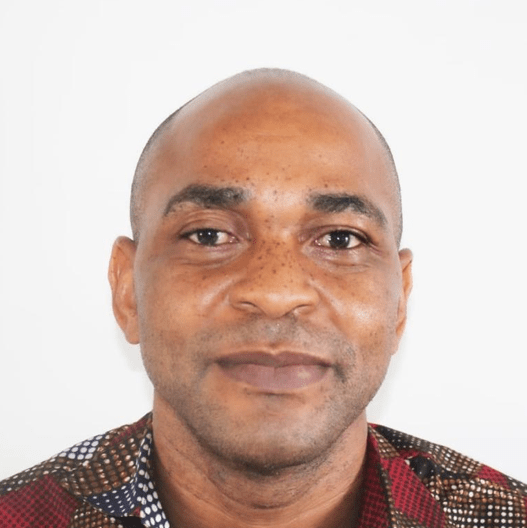
By Michael Kofi Fosu
Should taxpayers be compelled to absorb the debts of poorly managed State-Owned Enterprises (SOEs)?
This question sits at the heart of one of Ghana’s most persistent economic dilemmas. Allowing major SOEs to collapse could trigger systemic shocks.
Yet repeatedly rescuing them risks rewarding inefficiency, mismanagement and, in some cases, outright recklessness.
Ghana finds itself caught between fiscal prudence and economic stability.
The “Too Important to Fail” agument
Certain SOEs provide essential public goods. The Electricity Company of Ghana (ECG) and Ghana Water Company Limited (GWCL), for example, deliver services fundamental to daily life and national security.
If they were to collapse under the weight of debt, economic activity would stall. Private operators may not find it commercially viable to supply water to rural communities or maintain electricity distribution networks nationwide. In such cases, government intervention is framed as necessary to keep the lights on and the taps running.
But this raises a troubling question: does the certainty of rescue encourage complacency or even reckless behaviour among management?
Beyond Utilities: Why Bail Out Non-Essential SOEs?
The state’s intervention extends beyond utilities. Entities in manufacturing, energy refining and logistics have also benefited from repeated debt absorption.
Government often justifies this on systemic grounds. If a large SOE defaults on loans, the shock can ripple through the banking sector. Domestic banks heavily exposed to SOE debt could face liquidity crises, threatening depositors’ savings and financial stability. From this perspective, bailouts are seen as protecting the wider economy rather than the enterprise itself.
There is also the employment factor. The sudden collapse of a major SOE could trigger mass layoffs, rising unemployment and potential social unrest. Policymakers frequently conclude that the fiscal cost of rescue is lower than the economic and political cost of failure.
These arguments explain the policy — but they do not make it fair.
Is Debt Absorption an Achievement?
Should the use of taxpayers’ funds to settle deliberately accumulated debt be presented as a policy success?
Without structural reform, bailouts amount to pouring water into a leaking bucket. Every billion cedis used to absorb SOE debt is a billion not invested in hospitals, schools or roads. Worse, repeated rescues signal to management that profitability and efficiency are optional.
The fundamental issue is accountability.
A Tale of Two Realities
Recent performance data paints a mixed picture. According to the 2024 State Ownership Report released by the State Interests and Governance Authority (SIGA), several SOEs have improved operationally. Some entities have recorded consistent accounting profits.
However, profitability alone does not determine sustainability. As the financial adage reminds us:“Profit is an opinion; cash is a fact.”
An organisation can report impressive profits while facing crippling liquidity constraints. Selling on credit inflates revenue figures, but without cash inflows, a company cannot meet payroll, service debt or fund operations. A true “going concern” requires sustainable cash flow, not just accounting gains.
Meanwhile, total SOE debt reportedly surpassed GH¢200 billion by early 2025. ECG, GWCL and COCOBOD remain major contributors, driven by structural inefficiencies, exchange rate losses and heavy borrowing.
Operational improvements, therefore, coexist with deepening financial fragility.
The COCOBOD Question
Would COCOBOD survive in its current form without state backing?
Under private ownership, an organisation carrying persistent deficits, high administrative costs and foreign exchange exposure would likely have faced insolvency or radical restructuring long ago. Without a sovereign guarantee, borrowing costs would surge, potentially triggering a debt spiral.
In a purely commercial environment, COCOBOD might be broken up, privatised or forced into aggressive restructuring. That, however, could jeopardise the welfare of millions of smallholder farmers who depend on its stabilisation mechanisms and subsidies.
The uncomfortable truth is that some SOEs survive not because they are financially robust, but because they are politically and socially indispensable.
Breaking the Cycle
The real issue is not whether intervention sometimes becomes necessary. It is whether the cycle of mismanagement and rescue can be broken.
Several reforms are imperative:
- Depoliticised leadership.
SOEs should be managed by qualified professionals selected on competence, not political loyalty. Governance structures must shield management from partisan interference. - Enforced accountability.
Leadership must face consequences for persistent losses arising from negligence or misconduct. Performance contracts should carry real sanctions. - Financial discipline and transparency.
Robust oversight, stronger audit functions and clearer reporting standards are essential to restore credibility. - Strategic restructuring.
Debt renegotiation, operational streamlining and, where appropriate, partial privatisation or public-private partnerships can inject capital and expertise without full fiscal absorption. - Clear classification of essential entities.
Government must define which SOEs are genuinely strategic. Non-essential enterprises should be privatised, merged or wound down if they consistently drain public resources.
A Question of Priorities
State-Owned Enterprises were created to support national development — not to become recurring liabilities on the public purse.
If SOEs are to justify continued state support, they must demonstrate financial discipline, operational efficiency and measurable public value.
Otherwise, taxpayers will continue to underwrite losses that crowd out development spending.
The choice is not simply between collapse and rescue. It is between reform and repetition.
Ghana cannot afford another decade of recycling debt through the national budget. The time has come to demand performance — not perpetual bailouts.
The writer is the CEO ITFP
Post Views: 32
Discover more from The Business & Financial Times
Subscribe to get the latest posts sent to your email.