
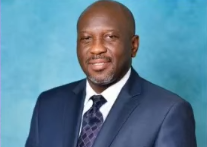
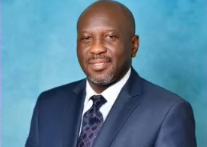
The Director of Public Relations at Ghana Water Limited, Stanley Martey, says the Tamale water project is expected to ease persistent water shortages in northern Ghana, providing much-needed relief to communities across the region.
His comments follow a JoyNews Hotline Documentary titled “The Thirst in the North,” which highlights the ongoing water crisis affecting several communities in the northern parts of Ghana.
The documentary reports that many health facilities in the region record daily cases of diarrhoea, cholera, typhoid, skin rashes and other serious health complications linked to unsafe water.
Speaking on the Super Morning Show on Joy FM on March 10, Mr Martey acknowledged that rapid population growth has pushed water demand beyond current production capacity in parts of the northern regions.
He explained that although demand continues to rise, steps have been taken to increase water production. According to him, the construction of a weir will enable more raw water to be extracted for treatment.
“I’m saying that because of population increase, now we are unable to meet demand. But because we have constructed the weir, we will be able to extract more water for treatment,” he said.
Mr Martey also cited the ageing nature of some pumps at water treatment facilities as a major challenge affecting production. Currently, he said, three pumps are functioning and helping to boost water output.
“As I speak, we have three pumps functioning, and so we are producing more water currently,” he noted.
He added that the company has procured equipment to retrofit some of the ageing pumps to improve their efficiency and enable them to extract more water for treatment and distribution.
Despite these interventions, he admitted that even if facilities operate at full capacity, water supply may still fall short due to the growing population in the northern regions.
To address the shortfall, Mr Martey revealed that a major water supply project for Tamale will soon come on stream. The project will draw water from the White Volta River to supply communities, including Damongo and the Tamale municipality.
“When the Tamale water project is on board, we will be able to solve the water situation within Tamale,” he said.
Mr Martey further explained that while large urban centres may benefit from such large-scale infrastructure, several rural communities across the three northern regions will have to rely on community-based water systems.
According to him, these systems often depend on mechanised boreholes to supply water to residents within specific localities.
“There are several rural areas within the three northern regions, and that can only be served by community water systems, which use mechanised boreholes to serve people within their jurisdiction,” he explained.
He also disclosed that a separate water project for Yendi is expected to commence soon to improve the water supply in the area.
As part of the intervention, new pumps will be installed at the Yendi water treatment plant to increase water extraction, particularly during the dry season when shortages become severe.
“During the dry season in Yendi, the water situation is quite terrible,” he noted.
Mr Martey said additional works are underway to dredge parts of the water source in the area. According to him, rocks that obstruct the flow of water during periods of low water levels are being removed to improve water flow downstream.
“We have realised that there are some rocks that block the flow of water, especially in the dry season when the levels go low. So those rocks are being broken down so that the water can flow downstream,” he explained.
He added that once the dredging works are completed and new pumps are installed, the system will be able to extract more water and maintain the supply even during the dry season.
Mr Martey further revealed that the new Managing Director of Ghana Water Limited has prioritised improving water supply in northern Ghana since assuming office. He said management has undertaken several visits to the three northern regions to assess the situation and accelerate interventions.
“In the last few months that my new managing director has taken office, we have visited the three northern regions quite often, all in a bid to ensure that the water situation is ameliorated within the shortest time possible,” he said.
He expressed optimism that the ongoing projects and upgrades will begin to yield results soon.
“We are hopeful that in the next two years we should see some positive signs, and the water situation could be solved,” Mr Martey added.
DISCLAIMER: The Views, Comments, Opinions, Contributions and Statements made by Readers and Contributors on this platform do not necessarily represent the views or policy of Multimedia Group Limited.
DISCLAIMER: The Views, Comments, Opinions, Contributions and Statements made by Readers and Contributors on this platform do not necessarily represent the views or policy of Multimedia Group Limited.
Source link