

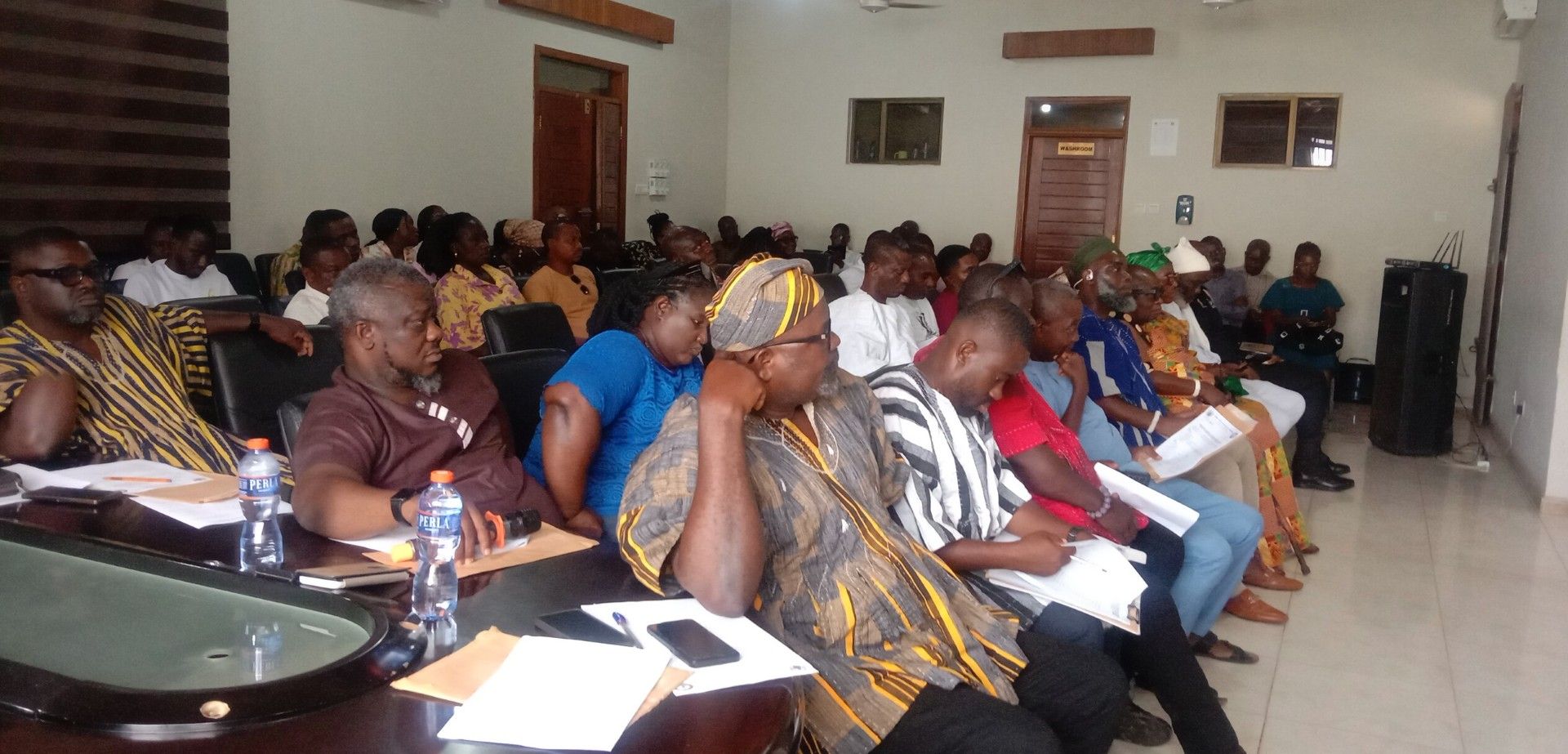
Some assembly members in the Tema West Municipality have raised concerns over the alleged prevention of pupils in some basic schools from writing examinations due to their inability to pay Parent-Teacher Association (PTA) levies.
The assembly members argued that the practice undermined the principle of free basic education and might be contributing to increasing school dropout rates within the municipality.
They described the situation as troubling and called for urgent intervention from the appropriate authorities, adding that reports from their electoral areas indicated that some headteachers were enforcing the payment of PTA levies as a condition for allowing pupils to sit for examinations.
Raising the issue at a general assembly meeting, they stressed that such actions contradicted national education policies aimed at ensuring inclusive and equitable access to basic education.
In addition to the issue of levies, the assembly members raised concerns about alleged financial and administrative improprieties in some schools, claiming that certain school authorities were selling water belonging to the schools to private individuals.
Others were also accused of leasing portions of school lands to members of the public for commercial activities.
The assembly members further alleged that some teachers engaged in inappropriate practices by selling items such as toffees, biscuits and sausages to pupils on credit.
Again, they mentioned that school canteens were being rented out to churches instead of giving the space to cooks under the School Feeding Programme who currently prepare meals from their homes.
An official from the Municipal Education Directorate explained that the levies were based on agreements between parents and teachers and that the directorate was not aware since no complaints had been submitted by any parents.
However, Mr Ludwig Teye Totimeh, Tema West Municipal Chief Executive, disagreed with this position, stating that the issues were widespread across many schools in the municipality; as such, the directorate could not claim ignorance of the situation given the frequency of the concerns being raised.
Some assembly members also expressed dissatisfaction with the management of PTA funds, claiming that parents often paid levies without receiving official receipts, making it difficult to track how the funds were used.
They further alleged that certain PTA executives maintained close relationships with school authorities, which limited transparency and accountability, noting that many executives were still in position even though their wards were no longer in schools in the municipality.
According to the assembly members, this situation creates a system where some PTA executives wield significant influence, making it difficult for ordinary parents and community leaders to demand accountability.
The assembly members have indicated their readiness to support investigations into the matter, emphasising the need to protect the rights of pupils and uphold standards in the administration of basic education within the municipality.
In response to the concerns, Mr Gilbert Kenneth Mag-Mawuli, the Presiding Member of the TWMA, directed the official from the Municipal Education Directorate to submit a written explanation to the assembly.
The directive specifically requires the directorate to clarify why pupils were being prevented from writing examinations due to non-payment of PTA levies.
Source: GNA