


By Eline GADEGBEKU
Tar moped the congested street that separated the hustle and bustle of the Kaneshie Market from the relative civility of the Kaneshie Police Station. The fumes of burning coal and construction dirt filled my nostrils, and those of any other creature within a fifty-metre radius. As I got closer to the scene, harsh drilling noises drew my attention to the wide gutter between the police station and the road.
Everything in view was grey and wet, except for the various people wearing brightly coloured vests and T-shirts, standing knee deep in the gutter or holding equipment as they worked. Despite the unpleasant environment, what stood out most was a feeling of relief and determination. Settling into a spot at the intersection of the site and the road, I adjusted my
microphone and cleared my throat. I was ready.

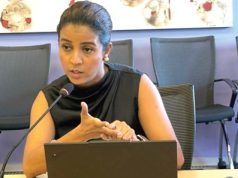
On that day, November 30, 2025, and in that very setting, I conducted my first ever interview. I did it with the founder of the rising youth environmentalist group, BuzStopBoys, Oheneba K. Safo.
Overview of the interview
Founded by Mr. Safo in 2023, BuzStopBoys began as a small group of driven young adult volunteers who were determined to create change in their communities through optimism, drive, and patriotism.
Service to mankind is service to God,” Mr. Safo emphasised at the beginning of our interview. He explained that it was a phrase commonly used by the late Apostle Kwadzo Safo, which deeply resonated with him and inspired the movement. He also mentioned that part of his motivation was to restore the sense of accountability that has been lost over the years in many communities, especially among elders who once held young people responsible for keeping their surroundings clean. This naturally led into his belief that the biggest challenge they face today is the mindset many people have about cleanliness.
“Typhoid and malaria don’t come out of thin air.” As I mentioned briefly in an earlier article, many of the diseases our local communities struggle with are a direct result of poor sanitation. Mr. Safo explained that BuzStopBoys would only consider stopping their work when people begin to take responsibility for their own waste and no longer litter, whether subconsciously or intentionally. This reinforced his belief that a shift in mindset is essential to keeping Ghana clean. He also pointed out the need for greater investment in modern machinery.
Today, people are still sweeping with straw broomsticks and trimming grass with cutlasses, even though modern equipment such as tractors or cleaning machines could make these tasks faster and more efficient.
Shifting from what still needs to be done, Mr. Safo went on to discuss how the youth can contribute to this ongoing movement. “Our future is currently watching us in silence,” he proclaimed, adding that what we do now will determine the kind of lives we live in the future, including the type of environment we will inhabit. He also addressed the common habit of comparing Ghana’s sanitation to that of other countries, without recognising that those countries invested significant time, effort, and discipline into maintaining their spaces. This, he noted, is something we must begin to take seriously as a community.
Wrapping up our informative interview, Mr. Safo shared his vision of Ghana ten years from now. Despite having started just two and a half years ago, he explained that BuzStopBoys has already influenced about twenty-three other youth groups across Ghana to carry out similar work, proving that change is a collective effort. He ended the interview with a powerful message that speaks to all of us today. “If we keep the momentum and keep pushing, in ten years even those who are in kindergarten will adopt a new mindset that will make them a different kind of Ghanaian from who we are today.”
Where your trash ended up
At the end of our interview, I was invited off camera to a beach cleanup they were hosting the following month at Sakumono Nautical Beach. Excited by the opportunity to put the advice I had received into action, I invited some of my family members, my reading club, Titanic Beach Readers Club, and my SDG Champions Club at school. SDG stands for Sustainable Development Goals, and being part of this club means actively working toward these goals in our communities to help make the world a better place by 2030.
Our club was led by Senyo Hosi Jnr., who organised many of our members to attend and actively supported us throughout the cleanup. As my literacy club and I walked down the steep, sandy path, I looked up to see the beauty of the sea before me: the sparkly blue water reflecting the morning sun’s glow, the crisp scent of salt guiding us to our site, the small fishing boats dancing along the line where the sky meets the sea, and the waves crashing onto the shore.
Suddenly, my attention was drawn to the beach itself. Its multicoloured appearance gave me no choice but to stare. From east to west, the shoreline was utterly polluted. The waste varied widely—Ghana’s “beloved” black rubber bags were present, alongside alarming amounts of textile waste such as clothes and shoes, plastic water bottles, and occasional glass shards.
One beach cleaned, thousands of memories made
We began cleaning immediately. Soon, my club members and many others—out of a total of about eight hundred volunteers—joined in, and the beach transformed from an eyesore and breeding ground for bacteria into a lively site for work and play. Young people of all ages worked together wearing gloves, smiles, and carrying trash bags. As I went to empty my first collection of waste, I noticed that the large dumps were divided into different categories, sorting trash not only by type but also by what would be done with it afterwards.
While cleaning, I had the opportunity to speak briefly with the Ambassador of Spain, Mr. Ángel, and his assistant, Ms. Duch. During our conversation, I learned about sanitation practices in Spain, such as the policy of not giving out free plastic bags to reduce plastic use and encourage reusable bags. I also learned that environmental cleanliness is viewed not only as a local responsibility, but as something that benefits the entire world. We concluded the day with words of encouragement, and later, when I reached out to the assistant, she shared this message with me: “I trust you will continue working hard to improve what is within our reach, not only in Ghana but in the whole world.”
We ended the cleanup with chicken, music, and peaceful views of the beach. Looking back, I am deeply grateful for the opportunity to interview the BuzStopBoys, receive guidance from Mr. Safo, and gain insight from the Ambassador of Spain and his assistant. Most importantly, I am thankful for the chance to make an impact, however small. Living on this earth means taking care of it to the best of my ability, and as I bring this sanitation series to a close, I want to end with the most memorable words from my interview with Mr. Safo: “The only thing that continues to make life meaningful is the environment.”
To watch my full interview, click this link: https://youtu.be/jrVeKCTWyqI
>>>This article is dedicated to my SDG Champions Club members for fostering a love and commitment toward making the world a better place, and for joining and supporting the beach cleanup. Contact me @[email protected] to share the eco-friendly steps you have been taking to you have been taking to impact your community recently!
>>>the writer is a 14-year-old student, writer, and literacy advocate. She is a member of her school’s newsletter club and the founder of Titanic Beach Readers, a community reading program she created to help children in her neighborhood fall in love with books. Eline is passionate about storytelling, empathy, and helping kids discover their voices through reading. Through her writing, she shares her thoughts and experiences from a young person’s point of view—speaking to both kids and grown-ups with honesty, curiosity, and hope
Post Views: 1
Discover more from The Business & Financial Times
Subscribe to get the latest posts sent to your email.