
On the morning of Valentine’s Day, 14 February 2026, a truck carrying Ghanaian tomato traders pulled into the northern Burkinabe town of Titao. By the time JNIM militants had finished their assault, seven Ghanaian men were dead, their bodies burned beyond recognition alongside the truck. Three survivors were eventually airlifted to the 37 Military Hospital in Accra. The women in the group were separated and spared. The men were not. This is not a geopolitical abstraction. This happened to Ghanaians. This is the storm that is already here.
There is an observable shift in West Africa, and anyone paying close attention in Accra’s policy circles over the last two years has felt it. The Sahel, once a distant concern managed by French legions and multilateral frameworks, is no longer abstract. Extremism is moving south, surveillance technology is proliferating faster than doctrine can absorb it, and drones, once the exclusive tools of superpowers, are now in the hands of armed groups across nine African countries.
The Sahel accounts for more than 51% of global terrorism-related deaths, with Burkina Faso the most affected country. Ghana cannot watch this from a comfortable distance any longer. In 2014, Burkina Faso had no records of deaths related to terrorism, but 10 years on, it sits atop the global terrorism index, demonstrating how rapidly threats can metastasize when institutional capacity lags technological and ideological diffusion.
Accra faces a stark reality: the Sahel’s violence is edging dangerously close to home, particularly in the northern parts, where vulnerabilities such as limited access to education and social amenities could be exploited for radicalization. The psychological distance that once separated Ghana from Sahelian chaos has collapsed; threats are now measured in kilometers, not abstract geopolitical categories.
This piece draws from a broader research paper on the Convergence of Geopolitics and Technology in West Africa, focusing specifically on Ghana’s vulnerabilities and the case for locally-manufactured aerial systems as a force-multiplying solution for border surveillance and aerial intelligence.
The Storm Is Already Here
The consequences of this arms race fall on us in ways that are rarely named plainly. African militaries (including ours) are becoming operationally dependent on imported systems: Turkish drones, Chinese biometric platforms, Israeli intelligence software, etc. We operate them but we do not own them, and we certainly do not control the data they generate.
At the same time, our border posts are being upgraded with biometric scanners and automated management systems, many of them funded quietly by European migration-control programmes with their own strategic interests. And because we are not coordinating regionally, armed groups have learnt to simply move across jurisdictions; exploiting the gaps between our unconnected responses. These are not abstract policy failures. They are the architecture of our current vulnerability.
The story unfolding across the Sahel is not merely a security crisis; it is a signal of how profoundly the world is changing around us. Geopolitics, technology, and the harsh realities of climate change are converging. And for Ghana, historically an island of stability, the choices we make today will determine whether we shape this new landscape or are simply swept along by it.
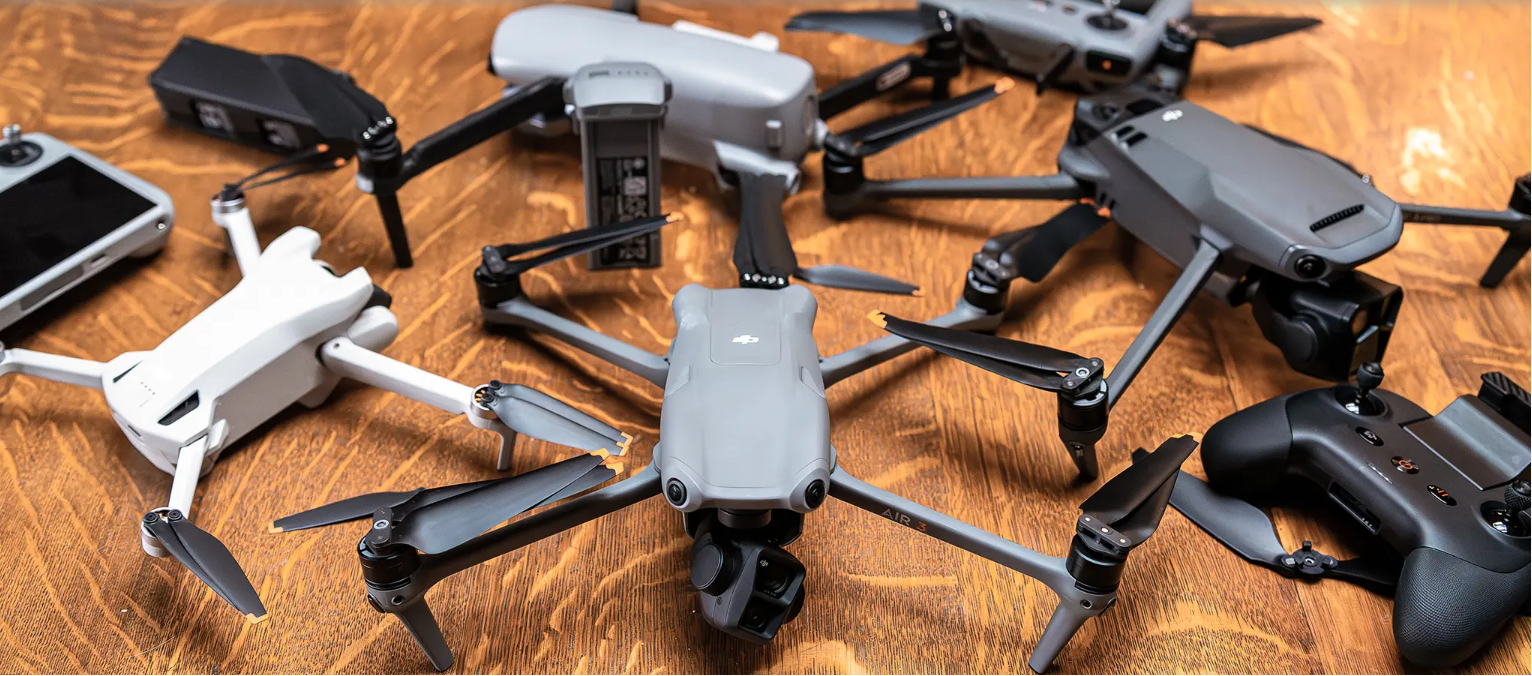
A drone can carry explosives and other contraband across a border just as easily as it can transmit live footage of a military patrol. It is a technological arms race, and for too long, we have been playing catch-up.
The cost shows up in ways we rarely name directly. First, we are becoming operationally dependent on systems we cannot maintain, modify or truly control, and the data those systems collect does not stay here. Second, our border infrastructure upgrades are largely being financed by European migration-control programmes. Third, and most dangerously, we are not talking to each other. Armed groups have figured out that if they simply cross a border, they can reset the clock on any pursuit. We have not yet built the regional architecture to follow them.
Meanwhile, the Sahel is collapsing under the weight of ecological disaster. As desertification turns farmland to dust, people are moving south. They are not just refugees; they are a human tide heading for our borders. This puts immense strain on our infrastructure and creates vulnerable populations that extremist groups prey upon. For Ghana, the illusion of insulation is over without targeted investment.
The Clock Is Running
We have long prided ourselves on our democratic stability. We have built a robust counterterrorism framework on paper. But as a recent stakeholder forum in Accra revealed, our early warning systems and inter-agency coordination need serious work. We have plans for new barracks and border projects, but infrastructure alone will not secure Ghana’s vast and rugged border corridors.
A foot patrol covering just five kilometers can take over an hour; the same ground a drone clears in 40 minutes, with zero risk to human life. The efficiency gains are undeniable. But when the technology is not locally built, the deeper question becomes: who truly owns the intelligence it collects.
This is the new face of modern security; not the replacement of our brave soldiers and border guards, but the elevation of their capabilities. It is about equipping human courage with superhuman tools. About moving the needle from reaction to anticipation, from response to prevention. And above all, it is about ensuring that the intelligence gathered stays where it belongs – in our own hands.
The Eyes We Need
What Ghana needs are platforms that do more than surveil. We need systems capable of counter-terrorism reconnaissance in the north, infrastructure protection across our mining and critical infrastructure belt, disaster response mapping in flood seasons, and maritime awareness along a coastline that pirates have already tested.
Ghana’s 560-kilometer coastline is not only an economic asset; it is also a vulnerability. Piracy remains an active threat, as evidenced by the recent Ghana Navy and Air Force rescue of 71 fishermen who had been brutally attacked at sea. That rescue, commendable as it was, represents a reactive posture. The goal must be to get ahead of the threat to transition from response to anticipation through UAV-enabled maritime patrols and AI-powered analytics capable of flagging suspicious vessel movements in real time for human analysts to act upon. The same technology that secures our waters can monitor illegal fishing, track oil spills, and protect our blue economy. Security and prosperity, in this case, are the same investment.
In Ghana’s context, these platforms enable early detection of militant movements, weapons smuggling routes, and clandestine border crossings. Mining sites, oil installations, and telecommunications infrastructure which are frequent targets for sabotage and theft can be monitored continuously through aerial patrols. Beyond security, the same systems serve the nation in peacetime: mapping illegal mining activity, assessing flood damage, and supporting agricultural planning. One investment. Dual purpose. Permanent value.
The Honest Reckoning
However, we must be honest. Drones are not a magic wand. They are tools. They cannot replace the need for boots on the ground, human induced analysis and judgment or the intelligence gained from community engagement. If we do not invest in the engineers and technicians for proper use and maintenance, they become expensive, grounded metal. When civilian expertise and military capability operate in concert, the outcome is greater than either can achieve alone.
Beyond capability lies the question of independence. Dependence on foreign technology is not merely a procurement decision; it is a sovereignty question. When the systems that watch our borders, scan our coastlines, and map our territory are built, owned, and ultimately controlled elsewhere, the intelligence they generate may serve interests beyond our own.
We must be deliberate. The data collected over Ghanaian soil must remain under Ghanaian authority, free from what analysts rightly call ‘data colonialism’. The path forward is not isolationism; it is intentionality. It means investing in our own engineers, our own platforms, and our own intellectual capacity; and where foreign technology is unavoidable, assimilating it on our terms, not theirs.
Act Now or Pay Later
Burkina Faso did not become the world’s most terror-affected country overnight. It happened gradually, and then suddenly. Ghana has something Burkina Faso did not have at its inflection point: time, institutional strength, and the democratic legitimacy to make hard decisions before a crisis forces them. That advantage is real. But it is not permanent. The window for deliberate, sovereign-led investment in our own security architecture is open, and it will not stay open indefinitely.
Geopolitics and technology are converging on this continent whether we are ready or not. Other actors, some friendly, some not, are already making decisions about whose systems will define African security for the next generation. Ghana has the democratic credibility, the institutional foundation, and frankly the talent to shape that outcome rather than inherit it. The cost of investing in our own sovereign capability is real. The cost of not investing is higher and unlike a budget line, it cannot be revised in the next fiscal year.
Part 2 of this Article Looks at Building Sovereign Capacity Through Ghanaian Enterprises
Sources Reference:
-
Hussein, S. (2026). “Ghana Reviews Counter-Terrorism Framework Amid Regional Extremism Threats.” Ghana News Agency, March 26. Available at: https://gna.org.gh/2026/03/ghana-reviews-counter-terrorismframework-amid-regional-extremism-threats/
-
Ablakwa, S.O. (2026). “Ghana FM Warns of Increasing Terror Attacks in West Africa, Sahel Region.” Xinhua, January 30. Available at: https://english.news.cn/20260130/635a66bf78d14c03a3ad1dbeca27940e/ html
-
Abdul-Razak, O. (2026). “National Security Backs Stronger Anti-Terror Measures.” Ghana Business News, March 29. Available at: https://www.ghanabusinessnews.com/2026/03/29/national-security-backs-strongeranti-terror-measures/
-
Mahama, J.D. (2026). “SONA 2026: President Announces Major Security Overhaul Amid Rising Threats.” Graphic Online, February 27. Available at: https://www.graphic.com.gh/news/general-news/sona-2026mahama-announces-major-security-overhaul-amid-rising-threats.html
-
Opoku-Agyemang, J.N. (2026). “Ghana Signs Pact with Europe to Fight Jihadist Threat.” The Africa Report, March 26. Available at: https://www.theafricareport.com/412728/eu-backs-ghana-to-tighten-gripon-sahel-spillover/
______________________________________________________________________________
About the Author
Fortis Sentinel Group, a Ghanaian defense-tech and security holding company specializing in AIpowered autonomous defense systems and integrated security solutions for Africa’s industrial and sovereign infrastructure.
Contact:
Fortis Sentinel Group | 10th Avenue Flint Street, Tesano | Accra, Ghana
Email: [email protected] | Website: fortissentinel.com |Phone: +233-24-559-9000
Post Views: 14
Discover more from The Business & Financial Times
Subscribe to get the latest posts sent to your email.