
By Konrad Kodjo Djaisi
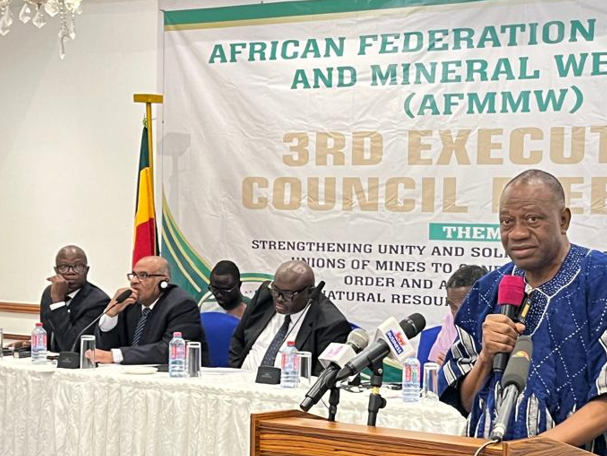
The Ghana Mineworkers’ Union (GMWU) of TUC hosted delegates from trade unions operating in Africa’s mining sectors in South Africa, Zambia, Zimbabwe, Botswana, Namibia, Burkina Faso, Liberia, Mali, Tanzania, Egypt, among others, in Accra for a two-day ( March 26-28) summit.
The programme was themed “Strengthening unity and solidarity among the African unions of mines to confront the new global order and attempts to control natural resources and rare minerals”.
The African Federation of Miners and Mineral Wealth (AFMMW) is a continental body established on February 27, 2024 in Cairo, Egypt, as the umbrella organisation representing mineworkers’ unions across Africa.
The federation was formed to unite African mineworkers at the continental level, promote and protect their rights, advance occupational health and safety standards, strengthen solidarity among member unions, and collaborate with governments and regional bodies to achieve the African Mining Vision and ensure that Africa’s mineral wealth benefits its people.
President of the African Federation of Mines and Mineral Wealth, Joseph Chewe, in his opening address, said the theme directly affects the struggle of our time.
“The time when Africa stands at the centre of global attention because of what lies beneath our soil – from copper and cobalt to lithium and rare earth elements, our continent holds the very minerals that are driving the global energy transition and the technologies of the future”.
Yet, despite this wealth, the African worker remains vulnerable, disadvantaged and with the African voice fragmented, he decried.
President Chewe noted that the “new global order” is shaped by powerful economic interests seeking to secure access to Africa’s minerals, often on terms that do not prioritise African workers, communities or her long-term development.
“In this rising global demand for Africa’s critical minerals, we are witnessing renewed pressure for flexible labour models, outsourcing and external control of production systems. These are not just economic strategies; they are structural mechanisms that risk undermining job security, weakening unions and diluting national sovereignty while sidelining a just transition in the African continent”.
When workers in one country face exploitation, unions across Africa must respond collectively, he added.
The Minister for Labour, Jobs and Employment, Dr. Abdul-Rashid Pelpuo, observed that Africa’s rich natural resources, from cobalt and lithium to gold and oil, remain crucial for the world’s energy transition and technological advancement.
“Nevertheless, these are not without risks. Africa’s rich natural resources also expose the continent to exploitation”.
History provides an important lesson to learn from our past, where our resources have fuelled development elsewhere but left our people in poverty till present day, he added.
“The African Union’s vision of an integrated, prosperous and peaceful Africa is more relevant today than ever”. We must strengthen solidarity among our nations, people and unions ensuring that our collective voice is heard on the global stage on matters of critical continental importance, he impressed.
According to the African Development Bank, Africa’s untapped mineral resources is estimated at 8.6 trillion United States Dollars.
We must take absolute control over our natural resources and rare minerals to improve the quality of lives of our people, the minister reiterated.
“It requires strengthening regional integration through the African Continental Free Trade Area to boost intra-African trade and industrialisation. By trading with one another, we reduce dependency on external markets”.
The scramble for control and influence of Africa’s resources threaten the sovereignty and the well-being of Africans.
Post Views: 23
Discover more from The Business & Financial Times
Subscribe to get the latest posts sent to your email.