

By Ebenezer NJOKU
The Venture Capital Trust Fund has signed a memorandum of understanding (MoU) with the 24-Hour Economy Secretariat to establish a dedicated financing vehicle for small and medium-sized enterprises intending to operate around the clock, the fund’s chief executive confirmed during an executive site visit to portfolio companies in Accra.
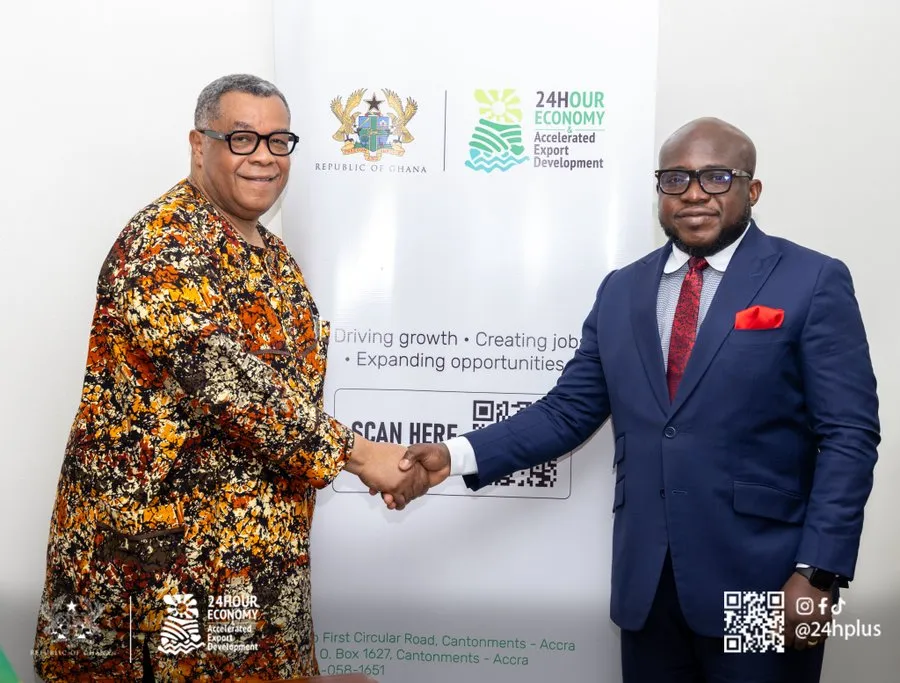
The agreement, first announced at the 2025 Kwahu Business Summit, was concluded on the eve of the site visit (Monday, March 2, 2026) and represents the most tangible institutional step yet to channel structured private capital into government’s 24-hour economy programme.
The initiative has emerged as a central pillar of Ghana’s strategy to accelerate industrial output, attract foreign direct investment and expand formal employment.
Emmanuel Abbey, Chief Executive-Venture Capital Trust Fund, said the MoU was designed to ensure businesses seeking to run continuous operations would have access to long-term, risk-tolerant financing of a kind that conventional commercial lenders have been unwilling to provide.
“We are already thinking about expansion projects and what businesses are thinking about,” Mr. Abbey said, speaking at the premises of ESERB – a mattress manufacturer in Tema that was built from inception using VCTF-backed funding.
“The fund that will be established, dedicated to SMEs that want to run 24-7, could also tap into it,” he further stated.
By mid-2025 the fund had committed GH¢359.6million into its network of venture funds, an outlay that has catalysed more than GH¢2billion in additional capital from private investors.
Similarly, for every cedi deployed by VCTF GH¢5.58 has been mobilised from external sources, according to the fund. Portfolio companies have collectively remitted nearly GH¢47million in taxes to the state.
Already, that capital has translated into investments across 77 companies, 14 profitable exits and the creation of more than 28,000 jobs.
Emmanuel Ewool, Chief Executive of ESERB, said the VCTF investment has been transformative for the business, which had no operational existence prior to receiving funding.
Before securing backing through VCTF’s fund manager ICA – Impact Capital Advisors – Mr. Ewool had been seeking investment abroad, having been turned down by multiple prospective financiers.
The capital enabled ESERB to acquire land, construct a facility, procure machinery, recruit and train staff and ultimately bring a certified product to market.
Mr. Ewool said the company has attained Ghana Standards Authority certification and is already building out its sales and distribution network in Accra, with export sales informally recorded in Ivory Coast even before its formal commercial launch. He expressed an ambition to expand across the West African sub-region within three to five years, describing the VCTF relationship as foundational to those prospects.
Electricity supply, however, remains a material operational constraint.
“The only challenge that we have and we have a solution to is the erratic electricity. We have bought a generator. It is a little bit expensive, but if and when the lights go off the generator powers up and we can go on,” he said. The additional overhead of diesel generation compresses margins at a stage when the business is still establishing its revenue base.
The challenge Mr. Ewool described is one government has explicitly acknowledged at the national level. Plans are underway to reduce industrial electricity tariffs to between US$0.04 and US$0.07 per kilowatt-hour, down from the current average of US$0.13 to US$0.17 per kWh that most industrial users presently face; a reduction which, if realised, would more than halve energy costs for qualifying businesses.
Augustus Tannoh, Presidential Advisor for the 24-Hour Economy and Accelerated Export Development, disclosed the tariff target in remarks delivered last month at the World Bank’s Business Ready report launch. Mr. Tannoh identified high energy costs as a structural disadvantage that has eroded Ghana’s competitiveness relative to neighbouring countries competing for the same industrial investment flows.
The convergence of a dedicated financing facility and a substantially lower energy cost environment would materially alter the feasibility calculus for manufacturers and processors considering round-the-clock operations; sectors that have historically been deterred by both capital constraints and prohibitive electricity bills.
Mr. Abbey indicated that the fund is already exploring ways to address energy constraints through cross-portfolio collaboration, pointing to a solar installation company within VCTF’s investment portfolio as a potential supplier of renewable energy solutions to manufacturing companies facing similar difficulties.
The case for that shift is already visible in VCTF’s agricultural portfolio. At RIOSAP Farms – an integrated rice, cassava and poultry operation in Yilo Krobo, also backed by VCTF – the fund’s intervention has driven rice yields from between 1 and 1.8 tonnes per hectare to between three and four tonnes; with the most recent harvest approaching the upper end of that range.
Staff numbers have grown from fewer than ten employees to approaching forty, while VCTF co-funding helped construct a one-million-dollar warehouse that underpins the company’s post-harvest logistics and storage capacity.
Richard Osei Appiah, Chief Executive-RIOSAP Farms, said the investment has been the decisive factor in the company’s development across equipment, infrastructure and production capacity.
“Earlier on we were less than ten, but with the coming in of VCTF we have gone far beyond thirty. They have really helped us, otherwise we would not have reached where we are now and we know with their support we can go a long way,” he said.
Mr. Osei Appiah’s endorsement extended beyond his own company. He called on the financial backers of VCTF itself to increase their support, urging them to expand the fund’s capacity to underwrite businesses beyond its current portfolio.
The VCTF operates as a government-backed fund of funds, deploying capital into licenced Venture Capital Finance Companies which in turn invest directly in SMEs. The fund maintains board representation at the VCFC level and requires quarterly performance reporting from fund managers; a governance architecture designed to preserve accountability over public funds while allowing professional investment managers to make operational decisions.
Mr. Abbey, who joined VCTF last year, said the site visit has reinforced his conviction that patient capital – long-term financing which tolerates the extended gestation periods characteristic of early-stage businesses – has a material and measurable role to play in building Ghana’s private sector.
“This significantly tells a story that Venture Capital Trust Fund and, more particularly patient capital, has a huge role to play in ensuring we build robust businesses. Sustainable businesses which are indeed the backbone of our economy,” he said.
Post Views: 1
Discover more from The Business & Financial Times
Subscribe to get the latest posts sent to your email.