

By Juliet Aguiar DUGBARTEY, Takoradi
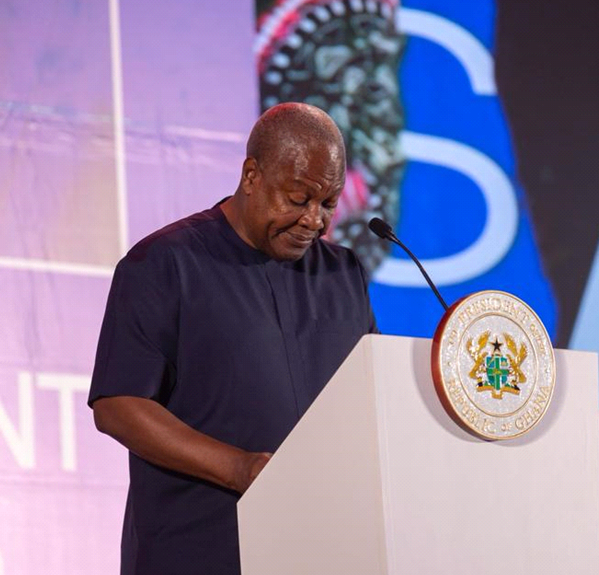
President John Dramani Mahama has reaffirmed his administration’s commitment to repositioning the economy from a primary exporter of raw minerals to a competitive player across the global extractive value chain.
Speaking at the Local Content Summit 2026, organised by the Minerals Commission in Takoradi on the theme ‘Strengthening local content and indigenisation – building a resilient mining sector in Ghana’, he outlined an ambitious roadmap aimed at deepening local content, accelerating industrialisation and positioning Ghana as a technology-driven mining hub.
He said although Ghana remains Africa’s leading gold producer and ranks among the top-six globally, much of the high-value activity in advanced engineering, processing, equipment manufacturing, technical services and refining still takes place outside the country.
“We’ve been prolific producers, but we have not yet become full participants in the extractive value chain.”
He challenged stakeholders to reflect on the long-term legacy of Ghana’s mineral wealth, asking whether a century from now it will be remembered merely in export statistics and royalty payments or as the foundation for world-class industries, thriving Ghanaian enterprises and resilient mining communities.
Drawing lessons from Botswana, Chile and Indonesia, President Mahama said smart, enforceable and forward-looking local content policies do not deter investment but rather create sustainable competitiveness. The key, he stressed, is balance – policies must be ambitious yet practical; and firm yet performance-based.
First, he said, local content must evolve from transactional procurement to transformational partnerships. Government is reviewing mining legislation and regulatory frameworks to ensure Ghanaian enterprises move up the value chain – from suppliers of consumables to manufacturers of critical components and innovators.
Equity participation, technology transfer and knowledge-sharing, he said, must become standard practice.
Second, he declared it unacceptable for Ghana to continue exporting raw ores while importing finished products – setting a five-year target to eliminate raw ore exports.
He pledged support for refineries, bullion infrastructure, mineral-based innovation and industrial clusters, while promoting downstream processing of bauxite, manganese and lithium in line with the global green energy transition.

Another pillar strategy, he said, should focus on human capital development. Institutions such as the University of Mines and Technology and technical universities will be strengthened, alongside expanded apprenticeship programmes in partnership with the mining industry. Skills in automation, robotics, drone technology, data analytics, environmental sustainability and renewable energy integration will be prioritised.
Also, the President stressed that mining’s future is digital and technology-driven. Ghana, he said, must position itself as a hub for AI-assisted exploration, IoT-enabled asset management, blockchain-based supply chain transparency and locally driven research and development. Government will explore establishing a national mining innovation and research hub to institutionalise this transformation.
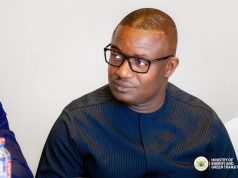
Chief Executive-Minerals Commission Isaac Andrews Tandoh said the summit is the beginning of what will become an annual platform to rally all industry players around responsible exploitation and management of mineral resources.
He cautioned Ghanaians against fronting for foreign businesses to the detriment of the country’s interests. “Why do you lend your name to such agreements or arrangements? Open your eyes – you are being used,” he warned.
He announced that the Commission is working on a new royalty regime and reviewing long-term leases which often outlive prevailing policies and regulatory systems.
“We are ready to support Ghanaian businesses, civil society organisations, local communities and other stakeholders to derive tangible benefits from the sector,” he stated.
Western Regional Minister Joseph Nelson said the summit has come at an opportune time as stakeholders work toward building a more resilient, diversified and inclusive regional economy.
He urged traditional authorities and host communities to continue nurturing a peaceful and stable environment that enables sustainable mining operations to thrive.
He stressed that local content must evolve from basic participation to high-value technical engagement – from the supply of goods to engineering, digital services and manufacturing and from labour provision to knowledge-based roles.
He also highlighted the link between strengthening local content and the fight against illegal mining, arguing that empowering local enterprises, formalising supply chains and ensuring transparent indigenisation will reduce incentives which fuel unlawful operations.
“These measures will create lawful and structured participation in the mining sector; the region stands ready to support policies and partnerships that promote capacity building for businesses, transparent procurement frameworks, environmental sustainability, responsible mining practices and strong collaboration between mining companies and host communities.”
President of the Western Regional House of Chiefs, Nana Kobina Nketsia V, called for a fundamental transformation of Ghana’s mining sector to ensure that resource wealth directly benefits host communities.
He emphasised that the time has come to move beyond rhetoric and adopt bold, people-centred reforms which prioritise indigenous participation and community development.
Underscoring the historical significance of Western Region as the backbone of Ghana’s gold production, he cited key mining towns such as Tarkwa, Prestea, Bogoso and Wassa – noting that despite their immense contribution to national revenue, many of these communities continue grappling with underdevelopment.
He urged stakeholders to deepen local content policies, expand indigenous ownership, reduce capital flight and build domestic industrial capacity within the mining value chain.
Post Views: 1
Discover more from The Business & Financial Times
Subscribe to get the latest posts sent to your email.