
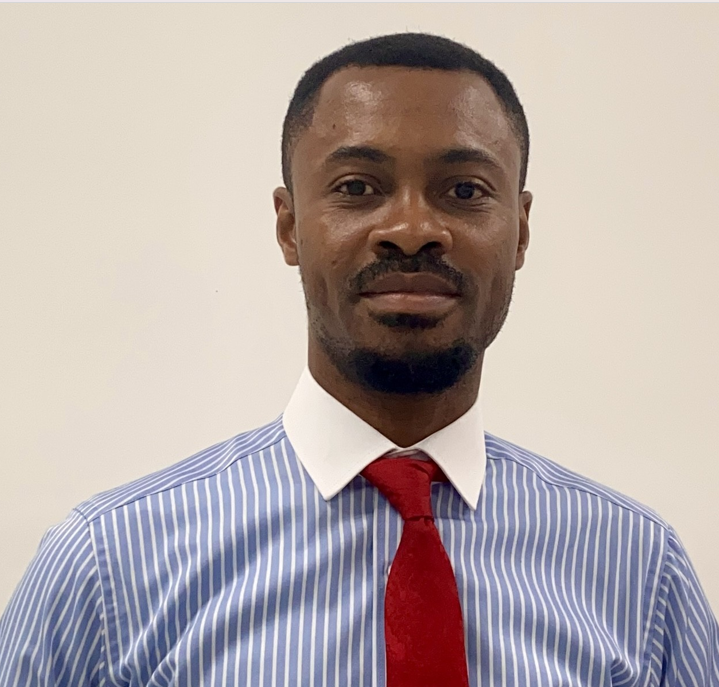

By Desmond Isaac Addo
Email: [email protected]
Do you remember Dumsor? A time when the lights went out often and came back without warning. Businesses struggled to operate. Households adjusted their lives around uncertain power supply. The whole country felt the strain.
Shops closed early. Cold stores lost stock. Students studied by candlelight. And for many businesses, every outage meant lost revenue.
At the peak of the crisis between 2012 and 2015, Ghana faced a power deficit estimated at over 500 megawatts, with some areas experiencing outages lasting 12 to 24 hours at a time. The economic cost was significant, with studies suggesting that power outages reduced Ghana’s GDP growth by around 1 – 2 percentage points annually during that period.
At that time, Ghana needed more electricity very quickly. Power plants were possible options.
But building power plants is expensive. Very expensive. These are projects that cost hundreds of millions of dollars and take years to complete. For context, a single thermal power plant can cost anywhere between $300 million and $1 billion, depending on its size and technology.
Government alone could not carry that burden without putting serious pressure on public finances.
So, a different approach had to be found.
The story of Karpowership
One of the solutions that emerged was something quite unusual – a floating power plant.
A Turkish company, Karpowership, brought in a power barge and connected it to Ghana’s national grid. Instead of building a plant on land, electricity would be generated on a ship and supplied directly into the system.
It sounded unconventional. But it worked as a quick response to an urgent problem.
The Karpowership project in Ghana has had a capacity of roughly 450 megawatts, making it one of the largest single power additions to the national grid during the crisis period.
But the more interesting part was not just the technology. It was how the project was financed.
Karpowership did not come in expecting the Government of Ghana to pay for everything upfront. Instead, the company financed the plant itself, took on the responsibility of operating it, and agreed to recover its investment over time through the electricity it supplied.
Ghana, on its part, agreed to buy that power over a period of about 10 years under a structured agreement, with annual payments estimated in the range of $150 million to $200 million, depending on fuel costs and usage. So instead of one large payment at the beginning, the cost was spread over time.
In simple terms, the project would pay for itself gradually, through the sale of electricity.
That is project finance.
Globally, this is not a small concept. Project finance supports investments of over $300 billion to $400 billion every year, funding infrastructure, energy, transport, and industrial projects across the world.
Connecting the dots
If you look closely, you will see that this idea connects to things we have already discussed.
It is closely related to Public-Private Partnerships, where government and private investors work together to deliver projects. It also links to sovereign guarantees, where government may step in to support payments or reduce risk if things do not go as planned.
Project finance is not a separate concept; it is often the engine behind many of these arrangements.
But like every solution, it comes with trade-offs.
Ghana did not have to pay everything at the beginning. But it committed to making payments over time. And if conditions change, if demand shifts, currency weakens, or finances tighten, those obligations do not simply disappear.
That is why how these projects are structured matters just as much as the projects themselves.
So, what is project finance?
At its core, project finance is simply a way of funding large projects where the project itself is expected to generate the money needed to repay the investment.
Instead of relying on the wider business of an investor, everything depends on the success of that one project.
If you build a power plant, the loan is repaid from the electricity it sells.
If you build a toll road, the loan is repaid from the tolls drivers pay.
If you build a processing plant, the loan is repaid from the products it sells.
It sounds simple. But behind that simplicity is careful planning.
How it works in simple terms
To make this work, a separate company is usually created just for that project. Its only job is to build, run, and manage the project.
Think of it as a company with one purpose and one focus. A Special Purpose Vehicle (SPV).
That company:
• Raises the money
• Builds the project
• Operates it
• Earns revenue
• Pays back the loan
Everything is tied to that one project.
Because of this, lenders do not just look at the company; they look deeply at the project itself.
Will it generate enough income?
Is there a reliable buyer?
Are the costs realistic?
If the answers are not convincing, the project does not get financed.
The importance of contracts
Project finance does not work on assumptions. It works on agreements.
Before construction even begins, key questions are answered:
Who will buy what is produced?
At what price?
For how long?
Who builds the project?
Who operates it?
For example, in power projects, there is usually a long-term agreement to buy electricity. This gives investors confidence that revenue will come in over time.
Without these agreements, the project simply cannot move forward.
Where the risk goes
At the heart of project finance is one idea: risk must be shared properly.
Different parties take on different responsibilities:
The contractor is responsible for building the project.
The operator is responsible for running it efficiently.
The lenders provide financing and expect repayment.
Government may step in where necessary to reduce policy or payment risks.
When each party carries the risk they understand best, projects are more likely to succeed.
The hidden risk
But this is where caution is needed.
Project finance can make big things possible; power plants, roads, water systems, industrial zones. But if the assumptions behind them are too optimistic, or if contracts are poorly designed, problems can emerge.
For example:
If demand is overestimated, revenues may fall short.
If costs rise unexpectedly, the project may struggle.
If payment structures are not sustainable, pressure builds over time.
In some countries, contingent liabilities from poorly structured projects have grown to as much as 5% to 10% of GDP, creating hidden fiscal pressures that only become visible during economic downturns.
And when that happens, the burden can quietly shift back to government; and ultimately to citizens.
What started as private financing can become a public responsibility.
Why this matters to everyday life
We all experience project finance every day;
When the lights stay on.
When water flows from the tap.
When roads are built and maintained.
When factories operate and create jobs.
Reliable electricity alone can significantly improve productivity, in some cases by 20% or more while unstable power supply can significantly reduce output, increase costs, and discourage investment.
Behind these everyday experiences are financial structures that make them possible.
The bigger picture for Ghana
Ghana has big ambitions.
We want reliable energy.
We want strong agriculture.
We want industrial growth.
We want better infrastructure.
All of these require significant investment.
Across Africa, the infrastructure financing gap is estimated at over $100 billion per year, highlighting the scale of investment required to meet development needs.
Government alone cannot fund everything.
Project finance allows private capital to come in and support these ambitions – without immediate pressure on public purse.
But it must be done carefully.
Projects must be well thought through.
Contracts must be realistic.
Risks must be properly shared.
Because in the end, it is not just about building projects.
It is about building projects that can stand the test of time.
The real question
What do you know about project finance – and are we structuring our projects well enough to make them truly sustainable?
Because the next time the lights stay on, it may not just be because a project was built.
It may be because it was structured and financed the right way.
And if we get that right consistently, then we are not just solving today’s problems; we are quietly building a stronger, more reliable economy for the future.
Post Views: 41
Discover more from The Business & Financial Times
Subscribe to get the latest posts sent to your email.