
Ghana’s wetlands, once revered as life-giving ecosystems and protected through deeply rooted traditional practices, are rapidly disappearing under the combined weight of encroachment, pollution, and weak enforcement.
As the world marks World Wetlands Day, the deteriorating state of critical wetlands such as the Sakumono, Kpeshie, Laloi and Chemu lagoons exposes a quiet but deepening crisis, one with far-reaching consequences for Ghana’s fisheries sector, public health, coastal livelihoods and climate resilience.
Wetlands under pressure: Sakumono, Kpeshie and Chemu
At the Sakumono Lagoon in Tema, a Ramsar-designated wetland of international importance, years of unchecked encroachment have narrowed the lagoon’s natural boundaries. Residential and commercial structures have crept into buffer zones once protected by both customary rules and statutory law.
Mangroves that served as breeding and nursery grounds for fish, crabs, and shrimps have been cleared, while drainage channels that ensured free water exchange between the lagoon and the sea have been altered. Though pockets of conservation efforts still exist, the lagoon’s ecological resilience has been significantly weakened.
Several demolition exercises by the TDC Company Limited, the Tema Metropolitan Assembly (TMA) and other stakeholders have attempted to reclaim parts of the wetland. However, destroyed structures are often re-erected, reflecting persistent enforcement challenges and competing land-use pressures.
The situation at the Kpeshie Lagoon in Accra is even more alarming. Once a natural floodplain and fish nursery rich in mangroves, the lagoon has increasingly been filled with sand and construction materials. Buildings now sit directly within the lagoon basin, obstructing water flow, accelerating pollution, and eliminating critical habitat.
Recently, the Greater Accra Regional Minister, supported by a multi-agency task force, demolished some illegal structures in the area. While widely welcomed, the exercise also underscored how intervention often arrives after irreversible ecological damage has already occurred.
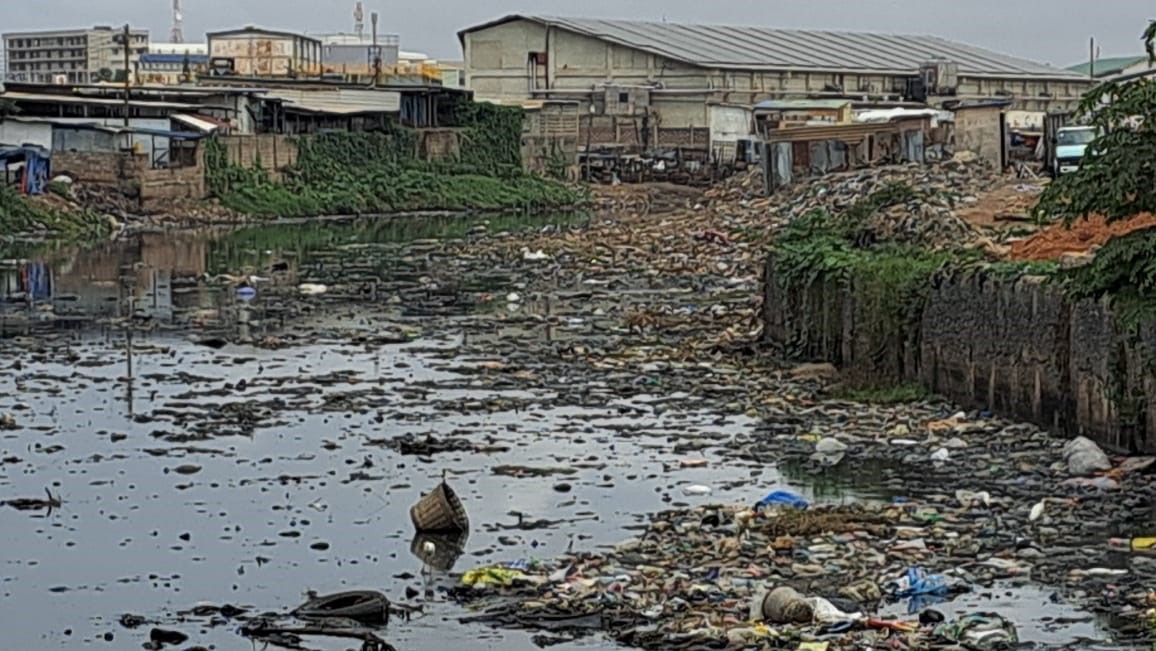
At the Chemu Lagoon in Tema Newtown, the damage is stark and visible. The lagoon has turned dark and lifeless, with heaps of refuse lining its banks and informal slum settlements surrounding it. Industrial effluents, combined with domestic waste and inadequate sanitation, have depleted oxygen levels in the water. Aquatic life has virtually vanished, transforming what should be a thriving ecosystem into a stagnant, polluted basin.
From wetlands to the sea: breaking the fisheries life cycle
Mr Richster Amarh Amarfio, the Executive Director of the Blue Economy and Governance Consult, explains that wetlands are natural buffer zones typically found around lagoons, mangroves, and low-lying coastal areas. They absorb excess water during heavy rainfall and high tides, preventing floods and regulating ecological balance.
“Wetlands are neither fully ocean nor fully community spaces,” he said. “They are transitional ecosystems closely linked to mangroves, and they perform critical environmental and economic functions,” he added.
Wetlands and lagoons are not isolated systems. They form a vital link in the marine food chain. Many fish species depend on brackish water environments (a mixture of fresh and salt water) to complete their life cycles. Juvenile fish, crustaceans, crabs, and shrimps rely on mangroves and shallow wetland waters as nurseries rich in nutrients and relatively safe from predators.
When wetlands are polluted, blocked, or reclaimed, this life cycle collapses. Fishes are unable to migrate to spawning grounds, juveniles fail to mature, and stocks that should replenish Ghana’s coastal waters steadily decline. Pollutants from lagoons flow directly into the sea, degrading near-shore water quality and compounding stress on already depleted fish populations.
Fisherfolk along Ghana’s coast increasingly report dwindling catches, longer fishing hours, and rising operational costs, trends that directly reflect the loss of wetland-supported species. These pressures are further intensified by overfishing, illegal fishing practices, and climate change.
Ripple effects on livelihoods and health
The consequences extend beyond the water. Coastal communities that depend on fishing for income and food security are among the hardest hit. Reduced fish availability drives prices upward, affecting household nutrition, particularly protein intake for low-income families. Women, who dominate fish processing and trading, face shrinking supplies and declining incomes.
Degraded wetlands also pose serious public health risks. Polluted and stagnant waters become breeding grounds for disease-carrying vectors. Toxic substances, including heavy metals from industrial and mining-related activities, can enter the food chain. Communities living around polluted lagoons are exposed to foul odours, waterborne diseases, and increased flooding during heavy rains, as wetlands lose their natural capacity to absorb excess water.
Lost traditions, weakened governance
Long before modern environmental laws, Ghana’s wetlands were protected by traditional knowledge and customary authority. Fishing was forbidden on certain days or during specific seasons to allow fish to spawn, serving as an early form of today’s closed seasons, according to Nana Kweigyah, the National President of the Canoe and Fishing Gear Owners Association of Ghana (CaFGOAG).
Mangroves were regarded as sacred and cutting them was taboo. Certain lagoons were periodically closed and reopened under customary rules to allow regeneration. Traditional leaders enforced compliance through social sanctions, ensuring respect for ecological boundaries.
As these traditions weakened and modern regulatory systems struggled with enforcement, wetlands became increasingly vulnerable. Conservation approaches imposed without community ownership often failed, while unchecked development thrived. The result is a governance gap where neither tradition nor regulation adequately protects Ghana’s wetlands.
A call to restore, not just commemorate
World Wetlands Day is more than a symbolic observance—it is a warning. The 2026 theme: “Wetlands and Traditional Knowledge: Celebrating Cultural Heritage”, highlights the need to reconnect conservation with indigenous practices and local stewardship.
Protecting and restoring wetlands such as Sakumono, Kpeshie and Chemu is not only an environmental obligation but also an economic and social necessity. Enforcing buffer zones, restoring mangroves, integrating traditional knowledge with modern science, strengthening accountability, and curbing pollution are critical steps.
Without urgent action, Ghana risks losing not just its wetlands but also the fisheries, livelihoods, and food security they sustain. When wetlands die, fish disappear—and with them, the resilience of coastal communities and the health of the nation.
By Laudia Anyorkor Nunoo
Source: GNA