

By Dr Andrews Ayiku
Ghana’s youth are at the forefront of potential change-makers in a time when innovation, digital transformation, and entrepreneurial agility are shaping the global economy more. Young Ghanaians, who make up more than 60% of the population under 35, have the vitality, inventiveness, and flexibility required to lead the country toward greater prosperity in the future.
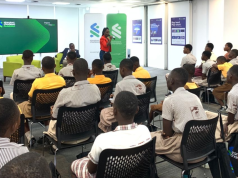
However, realizing these potential calls for more than just passion; it also calls for strategic ecosystems, organized assistance, and useful skills. One important effort to close this gap was the Youth Economic Forum (YEF) 2026, which was hosted by the Business and Financial Times (B&FT). Held on February 26, 2026, in the University of Professional Studies, Accra’s (UPSA) Kofi Ohene-Konadu Auditorium, this historic event was the first of its kind in Ghana and was solely focused on empowering youth in economic development. This article explores how the YEF 2026 will keep fostering young people’s potential and promoting long-term, sustainable economic growth in Ghana and beyond.
Promoting Knowledge Transfer and Practical Skills
Theoretical education is insufficient in the quickly changing digital economy. To address this, the YEF 2026 offered practical workshops on crucial competencies including financial literacy, marketing, and business architecture. For example, my pre-forum training on Product Market Fit gave almost 1,000 young people the tools they needed to test and improve business concepts in response to consumer requests.
The forum prepares young people to traverse industries like agriculture, technology, and health all important cornerstones of Ghana’s emerging economy by emphasizing skill-building over memorization.
Creating Sturdy Networks and Strategic Alliances
Young entrepreneurs are frequently stifled by isolation, but the YEF 2026 built connections between young and veteran players. Direct access to business mentors and financial networks was made possible through partnerships with Ecobank and Maxwell Investment Group. Participants made ties with leaders and legislators through networking, which carried over into the online community platform.
Such ecosystems, where concepts develop into workable goods, are essential for sustainability, as Professor Mawutor (Vice Chancellor) pointed out. By facilitating cross-border cooperation through Ecobank’s 33-country digital infrastructure, these networks democratize prospects for Ghana’s youth, who constitute a population bulge. Innovation will be spurred by this connection, transforming local potential into regional economic forces.
Mentorship and Ethical Guidance
The YEF 2026 firmly rooted mentoring, the unsung hero of entrepreneurial success. During pitch sessions, finalists in the Entrepreneurship Challenge received individualized input from professionals like me, emphasizing long-term viability and ethical standards. The forum supports UPSA’s required entrepreneurial courses, which teach values and discipline to combat short-termism.
Providing Financial Incentives and Resource Access
Although financial access is still a challenge, the YEF 2026 found creative solutions. In addition to mentorship packages, the challenge’s GH¢50,000 top prize offers seed money without the drawbacks of unrestricted loans. Future youth initiatives from Ecobank offer customized digital tools that will improve financial inclusion and lessen reliance on physical banking. The forum’s emphasis on integrating incentives with training originates from the fact that, as Tara Squire noted, failure frequently results from weak structures rather than a lack of resources. This demystifies finance for Ghana’s youth, who constitute a sizable portion of the country’s consumer and labour force, allowing for scalable businesses that boost GDP and create jobs in developing industries.
The forum’s core message was scalability
Moving from side projects to long-lasting businesses, was the forum’s central theme. Dr. Ampong’s observation that “a scalable business survives on systems” struck a strong chord with young people, inspiring them to prioritise procedures over spontaneity. Sessions examined real-world examples of disciplined execution, such as the growth strategy of Maxwell Investment Group. This holistic approach is new in Ghana, where SMEs dominate but many fail within five years.
Innovation and Growth Driven by the Community
Lastly, by establishing a forum for community development and idea sharing, YEF 2026 stimulated creativity. Being the first forum of its sort, it brought together various stakeholders behind a common goal, and the virtual platform guaranteed continued cooperation. My role as a pitch guide uncovered unrealized innovation in fields like aggrotech and sustainable technology. By focusing on 100,000 young people, it increases Ghana’s demographic advantage and turns population pressure into a business opportunity. This is summed up in Dr. Godwin Acquaye’s idea of young people “standing up for themselves”: innovative environments foster growth. Through youth-led solutions, this will propel the new economy and promote inclusive growth that benefits all sectors.
Conclusion
The Youth Economic Forum 2026 is a movement more than just an event. It enables Ghana’s young to spearhead economic development by tackling skills shortages, networks, mentorship, finance, scalability, and innovation. The promise of today will become the prosperity of tomorrow as we expand upon this foundation, establishing a thriving, youth-driven economy for future generations.
Dr Ayiku is a Senior Lecturer/SME Industry Coach,Coordinator (MBA Impact Entrepreneurship and Innovation),University of Professional Studies Accra
IG: andy_ayiku
@AndrewsAyiku
F: Andyayiku
Post Views: 1
Discover more from The Business & Financial Times
Subscribe to get the latest posts sent to your email.