By: Ashiadey Dotse
The Minister of Education, Haruna Iddrisu, says about 91% of Ghana’s literate population is made up of people aged 15 years and below, describing the figure as an encouraging sign of the country’s progress in literacy.
He said Ghana’s literacy rate currently stands at about 78%, compared with a global figure of 98%.
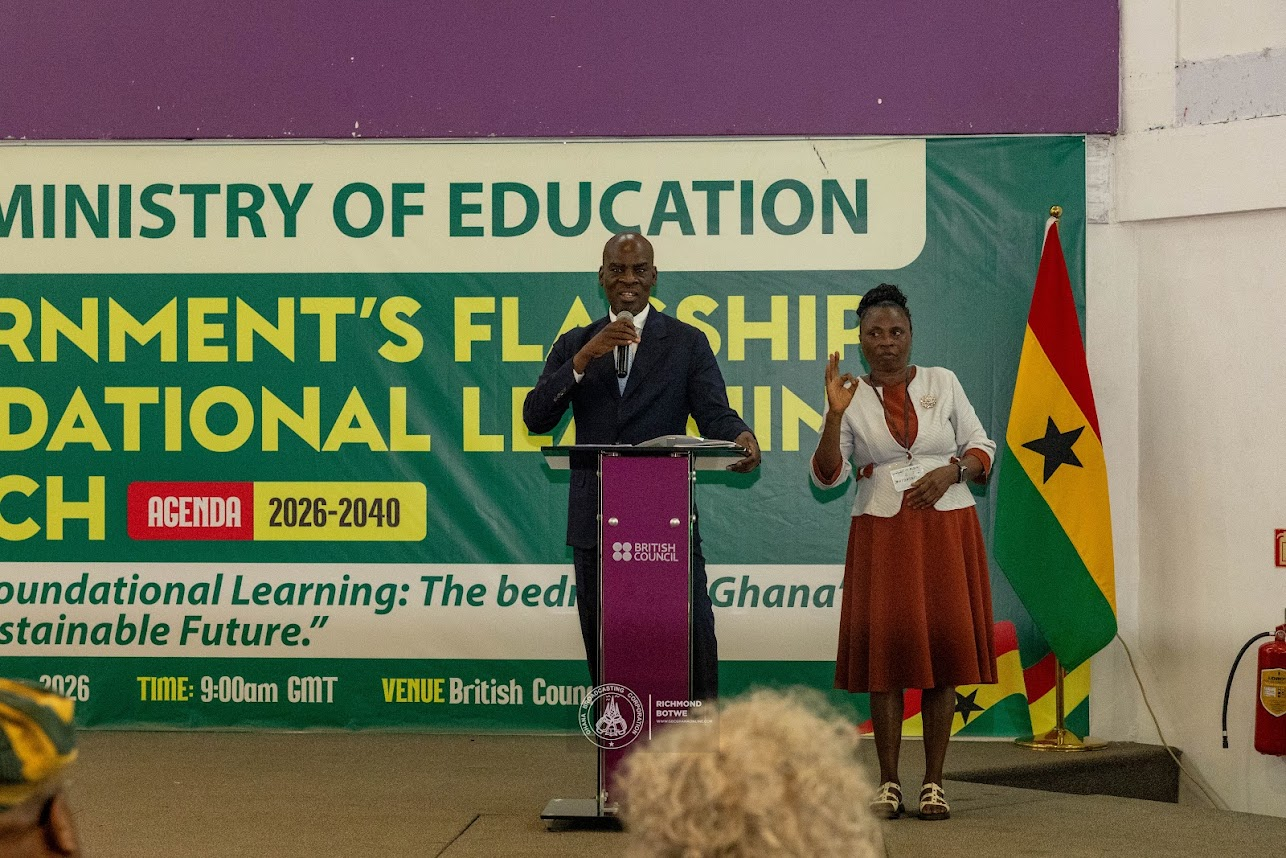
Mr. Haruna Iddrisu made the remarks at the launch of the Government’s Flagship Foundational Learning Agenda at the British Council in Accra on Wednesday, November 11, 2026.
The agenda will run from 2026 to 2040, providing a 15-year framework to improve foundational learning and strengthen the delivery of basic education across the country.
He said the figures showed that Ghana was making progress, particularly among younger people, but stressed the need to strengthen foundational learning to ensure that children acquire essential reading and writing skills at an early age.
The Minister said the government was committed to giving every child a strong start in education, describing foundational learning as a key part of President John Dramani Mahama’s education reforms.
“President Mahama is resetting, and resetting with faith and belief that every child deserves to get it right and strong at the start with foundational learning,” he said.
Mr. Iddrisu also called for patience in assessing his performance as Education Minister, arguing that meaningful improvements in education should be measured over a longer period.
“Those of you who think that you want to measure the success of a Minister for Education in two, three, four years, I will disappoint you. In a decade,” he stated.
He acknowledged that differences remained in the quality of basic education available to children in rural and urban communities, as well as between public and private schools.
He said the new strategy would address these inequalities and help ensure that no Ghanaian child was denied access to foundational education because of gender, geographical location or financial circumstances.
The Minister further assured development partners that Ghana would work with the British government and other organizations to achieve the objectives of the agenda.
He also recalled that the 1992 Constitution guarantees free, compulsory and universal basic education, saying the government was determined to assess how far the country had come in fulfilling that commitment.
Mr. Iddrisu said government was realigning its investments to support the new education vision, with particular attention to foundational learning.
He added that children who receive quality early childhood education before the age of five are more likely to perform better throughout their education, enter school on time and complete primary and secondary education.