

By Dr. Beatrice Akua Duncan, Executive Director, Gender Data Ghana
The Economic Challenge
Ghana’s rice sector is facing a severe market disequilibrium. More than 700,000 metric tons of paddy rice from the 2025 harvest remain unsold, creating a severe constraint on the ability of farmers to commence planting for the 2026 season. The resulting liquidity crisis threatens not only agricultural output but also rural incomes, food security and the broader goal of restrictions on imports.
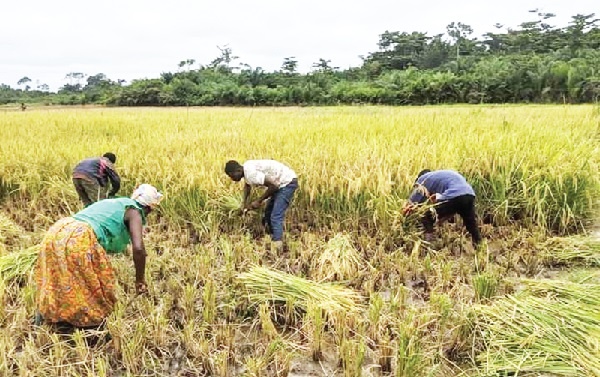
The situation is particularly acute in the rice-producing valleys of Northern Ghana and the Volta and Oti Regions. Although men predominantly own land and mechanized equipment, women constitute the backbone of the rice value chain.
They are heavily engaged in land preparation, transplanting, harvesting, processing and marketing. Consequently, disruptions in production and market access disproportionately undermine women’s livelihoods and heighten the vulnerability of rural households.
Evidence consistently demonstrates that economically empowered women allocate a larger share of their disposable income to investments in children’s education, health and nutrition. Increased income and asset ownership also strengthen women’s agency in household decision-making, including reproductive choices and community participation.
Sustaining women’s productive capacity is therefore not merely a social objective; it is an economic imperative with intergenerational returns and other multiplier effects.
The current glut carries broader macroeconomic implications. Weak market incentives discourage production, capital assets deteriorate through underutilisation, and post-harvest losses rise, thereby exacerbating food insecurity.
At the same time, insufficient domestic absorption of locally produced rice increases dependence on imports, intensifying demand for foreign exchange and exposing consumers to imported inflation. Such dynamics undermine Ghana’s food sovereignty and weaken the resilience of the agricultural sector.
Policy Imperatives
Addressing both current and future surpluses requires a coordinated public-private response. The State National Food Buffer Stock Company remains a strategic instrument for procuring, storing and distributing staple commodities such as rice, maize and soybeans. Its role in reducing post-harvest losses, stabilising producer prices and strengthening national food security should be reinforced.
Equally important is the mobilization of private sector investment across the agricultural value chain. Using the 24-Hour Economy framework, incentives should be provided to expand commercial participation in the purchase, processing and value addition of surplus agricultural produce. Such investments would create employment opportunities, particularly for young people, while enhancing domestic agro-industrial capacity.
Public procurement policies should also be leveraged more effectively. School feeding programmes, correctional facilities, hospitals and other public institutions should be required to utilise locally produced rice. Such guaranteed demand mechanisms will improve market certainty, stabilise farm incomes and reduce dependence on imported substitutes.
Integrating Women’s Strategic Interests
Policy responses to agricultural crises cannot assume gender neutrality. Economic shocks affect women and men differently because they occupy distinct positions within production systems and possess unequal access to resources, assets and decision-making structures. A one-size-fits-all approach is therefore likely to produce gender-blind outcomes.
Women farmers agro-processors are often invisible in stakeholder consultations and policy design, despite their central role in agricultural production. Effective and sustainable solutions require their meaningful participation in problem identification, policy formulation, implementation and monitoring.
Gender mainstreaming is not merely a social consideration; it is a development strategy that enhances policy effectiveness by addressing structural inequalities and barriers to productivity.
Targeted interventions should include temporary social protection mechanisms such as cash transfers and cash-for-work programmes to cushion affected households. Beyond immediate relief, women producers should be supported through expanded agricultural extension services, functional literacy programmes, childcare facilities, financial inclusion initiatives, legal literacy, access to health services—including sexual and reproductive health—market information systems, appropriate technologies and improved access to markets.
Women’s cooperatives should also be strengthened through leadership development, business management, agricultural economics, marketing and organisational capacity-building. Such investments would enhance productivity, improve bargaining power and promote economies of scale.
A Rights-Based Development Imperative
These policy priorities are consistent with the Sustainable Development Goals, particularly Goals 1 and 5; Article 14 of the Convention on the Elimination of All Forms of Discrimination against Women (CEDAW); Article 19 of the Maputo Protocol; Critical Areas of Concern 1 and 7 of the Beijing Declaration and Platform for Action; and General Recommendation No. 34 of the CEDAW Committee, all concerning the rights of rural women.
Ultimately, resolving Ghana’s rice surplus crisis demands more than market interventions. It requires policies that recognize women as economic agents whose productivity and resilience are indispensable to agricultural transformation. A gender-responsive strategy would not only avert the immediate crisis but also contribute to inclusive growth, food security and sustainable development. Ignoring the gender dimensions of the problem risks perpetuating inefficiencies and deepening rural poverty. Incorporating them offers an opportunity to build a more resilient and equitable agricultural economy.
Post Views: 3
Discover more from The Business & Financial Times
Subscribe to get the latest posts sent to your email.