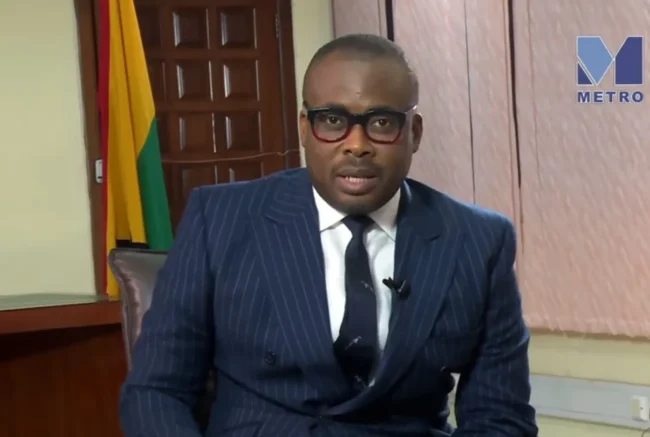
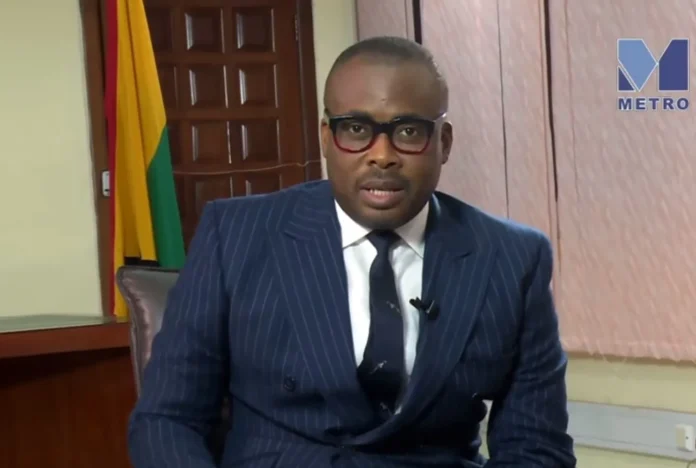

Broadcaster Paul Adom-Otchere has provided historical context for his commentary on the National Democratic Congress’s leadership succession following a heated on-air clash with party elder Ato Ahwoi over discussions about the party’s future direction.
The confrontation occurred after Ahwoi criticized Adom-Otchere on Metro TV’s Good Morning Ghana show, telling him to “shut up” and “keep quiet” over his analysis of the NDC’s leadership choices. The NDC founding member argued that President Mahama deserves time to govern, having served only nine months of his term, before succession conversations begin.
On his Good Evening Ghana program, Adom-Otchere responded by tracing the NDC’s succession dynamics back to the Jerry John Rawlings era to explain why such discussions provoke strong reactions from party veterans. His analysis sought to demonstrate that current conversations about future leadership represent uncharted territory for the party.
“This will be the first time that the NDC has to go through a succession process through a fully democratic way,” Adom-Otchere stated on his program. He characterized the selection of a new presidential candidate as the bitter pill of democracy that every political party must eventually swallow, describing it as a necessary but uncomfortable stage in political evolution.
The broadcaster highlighted Ato Ahwoi’s central role in managing the party’s first major succession in the late 1990s. When President Rawlings faced constitutional term limits and could not contest the 2000 elections, the party lacked an official succession plan, creating what became a defining moment in NDC history through the Swedru Declaration.
According to Adom-Otchere’s account, Ahwoi and his allies championed this declaration to pave the way for then Vice President John Evans Atta Mills to become the party’s flagbearer. The broadcaster explained that Ahwoi seized the opportunity to bring in Professor Mills first as Rawlings’ running mate and later as the endorsed presidential candidate for the 2000 elections.
That decision, while strategically aimed at preventing factional fighting within the party, triggered significant consequences. The move led to one of the biggest breakaways in NDC history when discontented members, particularly supporters of Goosie Tanoh, eventually formed their own political party. The split highlighted tensions between those who accepted the top-down succession arrangement and those who wanted a more open, democratic process.
By drawing this historical parallel, Adom-Otchere suggested that Ahwoi’s intervention during the recent broadcast stems from his long-standing belief that internal leadership contests should be tightly managed to preserve party unity. The veteran broadcaster indicated he understands this perspective, stating that he can clearly see where Ahwoi is coming from based on the party elder’s historical experiences.
During the confrontation, Ahwoi accused Adom-Otchere of being a mischief-maker attempting to sow confusion within the ruling party, and revealed that the broadcaster had once approached him seeking a position under an NDC government. These allegations added personal dimensions to what began as a political discussion about succession planning.
The exchange reflects broader tensions within the NDC about when and how to address questions about leadership beyond President Mahama’s current term. Some party members argue that such discussions are premature and potentially divisive while Mahama still has years remaining in office. Others contend that planning ahead represents responsible governance and democratic practice.
Adom-Otchere’s historical framing attempts to position the current moment as fundamentally different from past NDC transitions. Unlike the Swedru Declaration era when Rawlings effectively anointed his successor, the party now faces the prospect of conducting an open, competitive process to select its next presidential candidate whenever that time arrives.
The broadcaster’s analysis highlights how the NDC’s founding generation managed succession through controlled processes that prioritized unity over competition. The Swedru Declaration became infamous precisely because it represented a departure from democratic norms, with party leadership essentially deciding who would carry the NDC banner rather than allowing a competitive primary process.
That approach created lasting controversies within the party. While it successfully prevented potentially destructive factional battles in the immediate term, it also established precedents that some members found troubling. The departure of Tanoh supporters demonstrated that not everyone accepted top-down succession arrangements, regardless of the unity rationale.
The current discussions about NDC succession take place in a vastly different political landscape. Ghana’s democracy has matured significantly since the late 1990s, with established norms around competitive primaries and transparent candidate selection processes. Party members increasingly expect opportunities to participate in choosing leaders rather than having candidates presented to them.
This evolution explains why conversations about post-Mahama leadership generate such strong reactions. For veterans like Ahwoi who lived through earlier succession challenges, the discussions may seem premature and potentially destabilizing. For others, including political commentators like Adom-Otchere, analyzing future scenarios represents normal political discourse in a functioning democracy.
The broadcaster’s willingness to explain his perspective after the confrontation suggests he views the exchange not as a personal dispute but as reflecting deeper questions about democratic practice within political parties. His historical analysis serves to contextualize why succession discussions remain sensitive topics for the NDC decades after its founding.
Ghana’s political parties continue navigating the balance between maintaining unity and embracing democratic competition in selecting leaders. The NDC’s journey from the Swedru Declaration to potentially more open succession processes mirrors broader democratic development across the country’s political landscape.
For Adom-Otchere, understanding this history remains essential to comprehending current political dynamics. His response to Ahwoi attempted to demonstrate that his commentary stems from analyzing these historical patterns rather than from any intention to create mischief or division within the party.
Whether the NDC will indeed conduct what Adom-Otchere describes as its first fully democratic succession remains to be seen. The process will unfold over coming years as President Mahama’s term progresses and the party eventually must address questions about its next generation of leadership.
The public exchange between the broadcaster and the party elder nonetheless serves as a reminder that succession questions remain among the most sensitive and consequential political issues any party confronts. How parties manage these transitions often determines their long-term stability and democratic credibility.