
By: Marcella Mwinkoma Babing
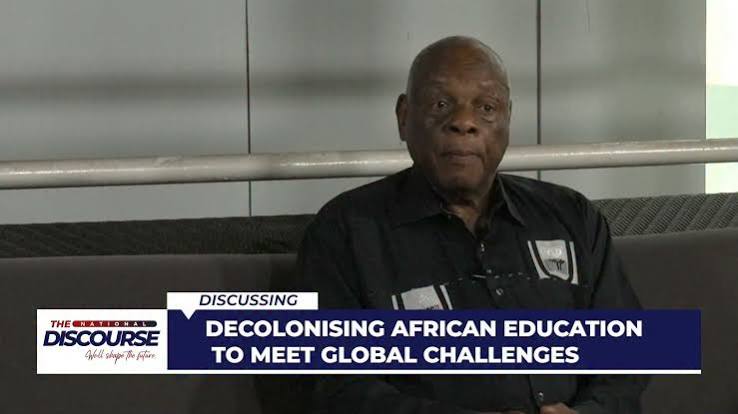
A philosopher, cultural historian and founder of the Theory of Afrocentricity Professor Molefi Kete Asante says, for the development of Africa to become meaningful, African nations must take control of their historical narrative and develop a shared ideological foundation that strengthens continental unity,
Speaking on GBC’s programme The National Discourse Professor Kete Asante argued that, Africa’s inability to establish a common narrative about its identity and history remains one of the major obstacles to achieving continental unity.
According to him, Africa’s story should not be left in the hands of Europe or other external powers, insisting that Africans themselves must determine how their history, identity and civilisation is presented to the world.
Professor Asante recalled the vision of Ghana’s first President, Dr. Kwame Nkrumah, who believed that Ghana’s independence would have little meaning if it was not connected to the liberation and unity of the entire African continent.
He noted that Nkrumah’s vision of a united Africa remains relevant, but argued that achieving it requires an Afrocentric ideological foundation capable of bringing Africans together around a shared understanding of their history and identity.
“Our narrative is our own narrative, and there is nothing more significant for us than the narrative that we tell about who we are as a people,” he stressed.
When asked how Africa could begin reclaiming its narrative, Professor Asante pointed to the need to transform the continent’s educational system, particularly the way African history is taught to children.
He argued that just as European education places ancient Greece and Rome at the centre of its historical foundations, African education should give similar prominence to the ancient civilisations of Kemet, which is present-day Egypt, and Nubia, also known as Kush, along the Nile Valley.
He described these ancient societies as essential starting points for understanding Africa’s intellectual, cultural and civilisational contributions.
Professor Asante particularly highlighted Imhotep, the ancient Egyptian architect, physician and scholar traditionally associated with the design of the Step Pyramid of Djoser, as a historical figure whose contributions deserve greater recognition in African classrooms.
He maintained that African children should grow up learning about the achievements of their ancestors, including their contributions to architecture, medicine, philosophy and literature as a way of nurturing brilliance among Africans and for African children to believe that they too can achieve what great people from other cultures are known to have achieved.
For him, teaching African history from an Afrocentric perspective is more than an academic exercise. It is a revolutionary approach to education that helps young Africans develop a stronger sense of identity, pride and historical consciousness.
“I know about many African Universities being run by Africans, but I have never seen an Afrocentric University.” he noted.
He further argued that understanding Africa’s history from its earliest documented civilisations would help explain the continent’s historical journey, including the divisions, conflicts and the differences that have emerged among its people over time.
Incidentally, President Mahama at the Russia – Africa Summit, spoke during an interview, about how colonial infrastructural development in Africa, was designed to haul African raw materials to destinations outside Africa while such infrastructure prevents African people from different countries from trading with each other.
The professor believes that Africa must begin its historical education from its own civilisational foundations rather than depend entirely on historical frameworks developed elsewhere.
The discussion comes at a significant time as Ghana intensifies its efforts to reclaim Africa’s historical identity and pursue reparations for historical injustices. Professor Kete Asante’s central message was clear: Africa cannot fully define its future without taking ownership of its past.
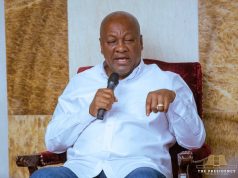
President John Dramani Mahama, in his capacity as the African Union Champion on Advancing the Cause of Justice and Reparations for Africans, is leading a global push for recognition, accountability and reparatory justice for the injustices suffered by Africans and people of African descent. His advocacy reinforces Professor Asante’s argument that Africa must take ownership of its history, challenge narratives shaped by external forces and ensure that the experiences and contributions of its people are properly acknowledged.