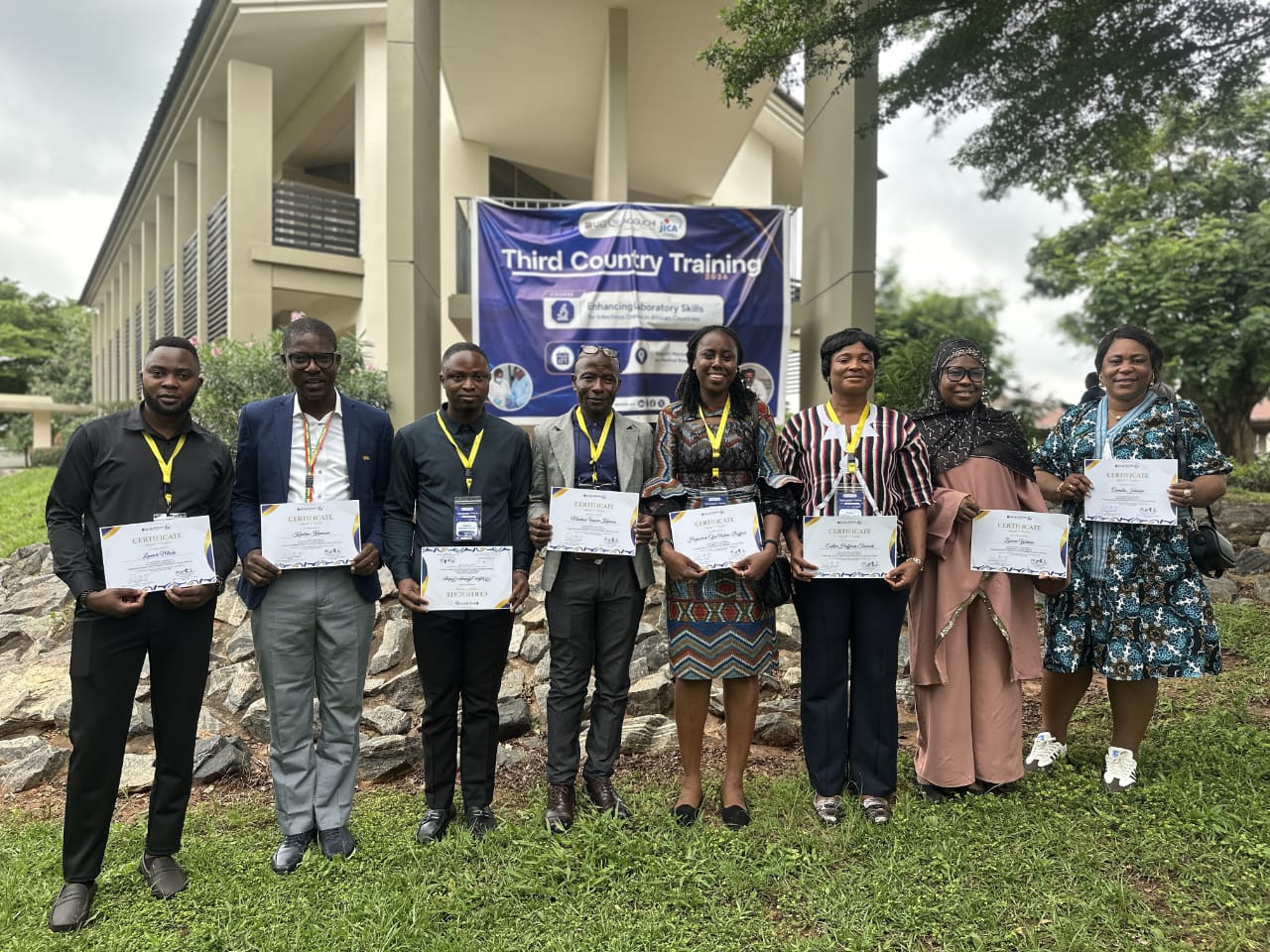

Eight laboratory professionals from six African countries have completed an eight-week training programme, in the country aimed at strengthening the continent’s capacity to detect, diagnose and respond to infectious diseases.
The participants, drawn from Ghana, Liberia, Nigeria, Sierra Leone, Togo and Zambia, underwent specialised training in parasitology, virology and bacteriology at the Noguchi Memorial Institute for Medical Research (NMIMR) under the Japan International Cooperation Agency (JICA)-NMIMR Third Country Training Course on Enhancing Laboratory Skills for Infectious Diseases in African Countries.
The programme combined virtual and in-person learning, reflecting a growing preference among international health institutions for blended training models that reduce costs while expanding access to technical expertise across borders.
The online phase ran from April 20 to May 15, 2026, while the practical component took place in Accra between June 1 and June 26, allowing participants to undertake laboratory-based diagnostics and research training at one of West Africa’s leading biomedical research institutions.
Health experts have increasingly pointed to the need for stronger laboratory systems across Africa following the COVID-19 pandemic and recurring outbreaks of diseases such as Lassa fever, cholera, mpox and Ebola, which exposed weaknesses in surveillance and diagnostic capacity in several countries.
Improving laboratory expertise has become a priority for many African governments and development partners as countries seek to reduce dependence on overseas testing facilities and improve the speed of outbreak detection and response.
Since its establishment, the JICA-NMIMR Third Country Training Course has trained 72 laboratory professionals from across the continent. The latest cohort brings the total number of beneficiaries to 80, contributing to a growing network of specialists expected to support disease surveillance, diagnostics and research within their respective countries.
The programme also reflects deepening health cooperation between Japan and African countries through technical assistance and knowledge transfer initiatives, an area that has gained greater prominence since the pandemic underscored the importance of cross-border collaboration in managing public health threats.
JICA said the completion of this year’s programme highlights the longstanding partnership between them and NMIMR and their shared objective of strengthening global health security through scientific collaboration and skills development.
Post Views: 8
Discover more from The Business & Financial Times
Subscribe to get the latest posts sent to your email.