

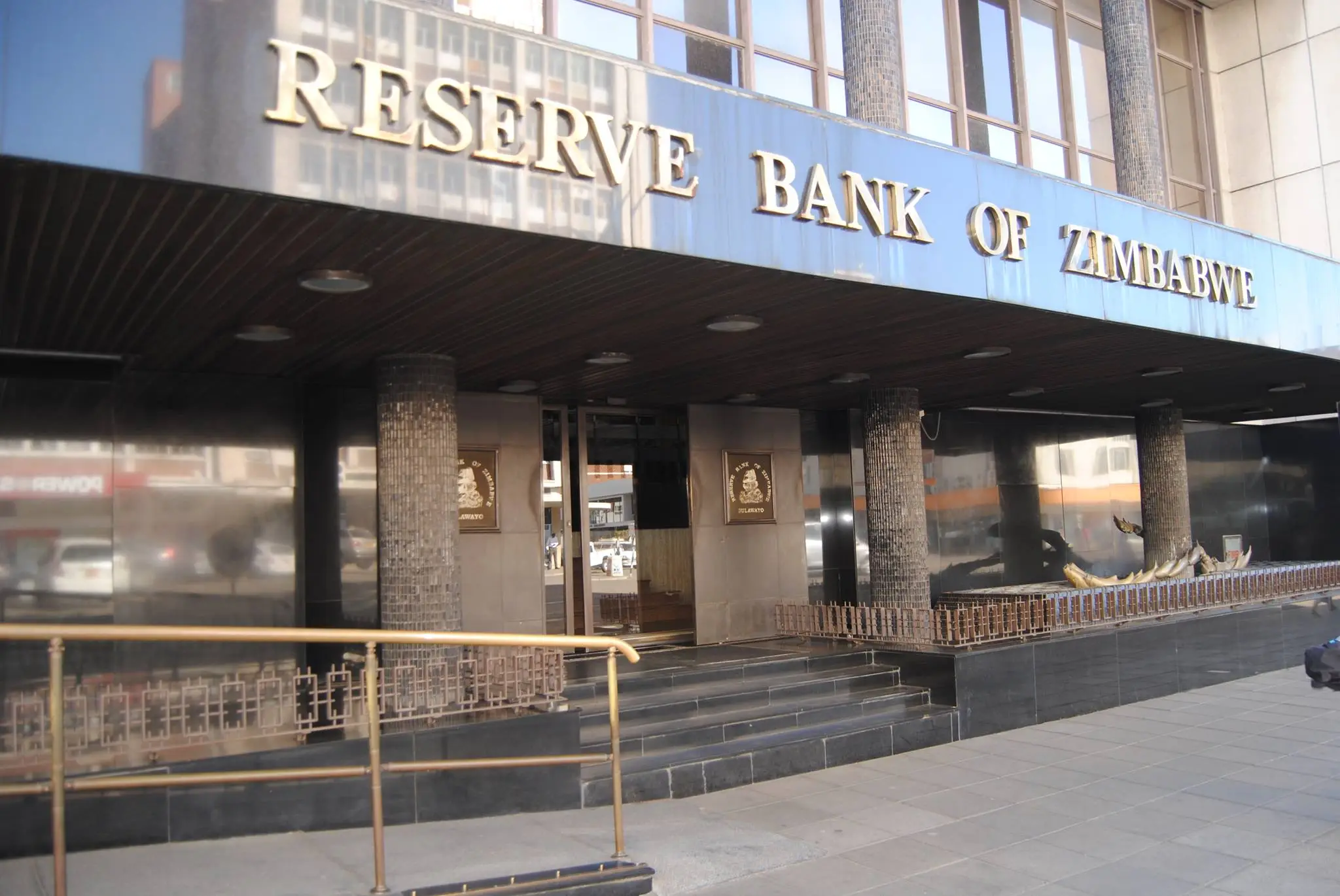
Zimbabwe’s annual inflation rate has slowed to single digits for the first time in nearly four decades, the Reserve Bank of Zimbabwe has confirmed, as the country’s monetary authorities point to a strengthening macroeconomic position and make an active pitch for foreign investment across its mining, agriculture, and tourism sectors.
The Bank has cited the performance of the Zimbabwe Gold currency introduced in 2024 as evidence that the monetary framework underpinning the economy has achieved a degree of stability that had long eluded policymakers in Harare.
The assessment was delivered by Dr. Innocent Matshe, Deputy Governor of the Reserve Bank of Zimbabwe, in a January 2026 presentation outlining the state of the economy and its investment proposition.
The occasion served to market Zimbabwe, which is actively courting foreign capital across mining, agriculture, tourism, and manufacturing and the data Dr. Matshe presented offer a very substantive picture of where the economy stands.
A currency experiment taking hold
The ZiG, introduced in April 2024 as Zimbabwe’s latest attempt to establish a credible domestic currency after decades of hyperinflation, currency collapses, and eventual dollarisation, has performed better than most observers expected.
Annual ZiG inflation fell from a peak of 95.8 percent in July 2025 to 4.1 percent in January 2026, a trajectory the Reserve Bank describes as the country’s first return to single-digit annual inflation in 37 years. Month-on-month ZiG inflation averaged 0.4 percent between February 2025 and January 2026.
The Reserve Bank attributes the disinflation to disciplined money supply management. Reserve money growth in the local currency component fell to an average of 3.6 percent month-on-month in 2025 from above 23.1 percent in 2024. Broad money growth in the local currency component similarly decelerated, averaging 3 percent monthly in 2025 against more than 10 percent the prior year.
The bank has also maintained a policy of zero lending to the government; a structural discipline that, if sustained, addresses one of the central failure modes of Zimbabwe’s previous currency arrangements.
The exchange rate has stabilised within a band of ZiG25 to ZiG27 per US dollar on the interbank market. The parallel market premium, which had been a persistent source of distortion, fell to around 20 percent by early 2026, still elevated by international standards, but a material improvement from earlier in the ZiG’s life. The Reserve Bank has intervened in the foreign exchange market to the tune of US$1.34 billion since April 2024 to support orderly market functioning under the willing-buyer, willing-seller arrangement.
Critical to the ZiG’s credibility is its reserve backing. Foreign currency reserves (comprising cash, nostro balances, and gold holdings) reached US$1.2 billion in December 2025, sufficient to cover approximately six times the stock of ZiG reserve money and roughly double total ZiG deposits. Gold holdings have expanded from 1,500 kilogrammes in April 2024 to 4,247 kilogrammes by January 2026, with their dollar value rising to US$738 million as gold prices strengthened. The reserve cover ratio, at 5.88 times ZiG reserve money, provides a buffer that earlier Zimbabwe currency regimes conspicuously lacked.
Foreign currency position
Zimbabwe’s external receipts have been a significant support for both reserves and exchange rate stability. Total foreign currency receipts reached US$16.2 billion in 2025, a 21.8 percent increase from US$13.3 billion in 2024. Receipts averaged US$1.3 billion per month against external payment obligations averaging US$951 million, generating a monthly surplus of approximately US$400 million. The current account is estimated to have recorded a surplus of over US$2.1 billion in 2025, a fourfold expansion from US$501 million in 2024.
Export earnings constituted 59.7 percent of total receipts, with gold alone accounting for 45.3 percent of export value. Platinum contributed 16.7 percent and tobacco 16.0 percent, underscoring the continued concentration of Zimbabwe’s export base in minerals and one agricultural commodity. Diaspora remittances, at 13.5 percent of total receipts and averaging more than US$160 million per month, represent a structurally important and relatively stable inflow that has supported domestic consumption.
The foreign reserves position of US$1.2 billion, representing 1.5 months of import cover, remains well below the three-to-six months threshold the Reserve Bank has identified as necessary for the transition to monocurrency. That gap is consequential: until reserves reach the stated threshold and other conditions precedent are satisfied, Zimbabwe will continue to operate a multicurrency system; a structural anomaly that Matshe acknowledged is affecting export competitiveness, as Zimbabwe is the only Southern African Development Community member still running such an arrangement.
Growth and the macro outlook
Zimbabwe’s GDP expanded by more than 6.6 percent in 2025, outpacing both the global average of 3.2 percent and the sub-Saharan African average of 4.1 percent. Growth in 2026 is projected at 5.0 percent, ahead of projected sub-Saharan Africa growth of 3.1 percent and global growth of 4.4 percent. The deceleration from 2025 is partly attributable to the high base and an anticipated agricultural recovery following drought conditions, with mining output expected to sustain its contribution.
The macroeconomic framework is operating under a Staff Monitored Program with the International Monetary Fund (IMF), which is supporting the government’s arrears clearance strategy. Debt-to-GDP stands at 45 percent, a level the Reserve Bank characterises as sustainable, though Zimbabwe’s accumulated external debt arrears have long complicated its access to concessional financing and its engagement with multilateral institutions.
The investment pitch
Against this backdrop, the Reserve Bank is making an active case for inward investment. The capital flow framework has been liberalised: banks set their own interbank rates, foreign investors face no restrictions on bringing capital in or repatriating dividends and profits, and equity injections are ring-fenced in foreign currency accounts without being subject to statutory surrender requirements. Offshore borrowing is permitted in line with published guidelines, and disinvestment proceeds are remittable subject to Reserve Bank approval.
Sector-specific incentives are in place across mining, agriculture, and tourism. Mining investors receive duty-free importation of capital equipment and full foreign currency remittance of dividends, with the Reserve Bank identifying lithium value-addition and beneficiation as priority opportunities alongside the established precious metals sector. In agriculture, agro-processing of maize, wheat, and cotton is promoted as a gap in the value chain. The Victoria Falls Special Economic Zone offers tax holidays and duty-free capital goods importation for tourism developers.
The banking sector, Dr. Matshe stated, remains adequately capitalised, profitable, and stable, with non-performing loans at 3.47 percent in December 2025 — within the prudential threshold. The RTGS payments infrastructure was upgraded to ISO 20022 standards in November 2024, and Zimbabwe has joined the Pan-African Payment and Settlement System, which the Deputy Governor flagged as a mechanism for expanding intra-African trade in local currencies.
Building the turnaround narrative
The data Dr. Matshe presented are, within their own terms, credible. The disinflation trajectory is real, the reserve build-up is documented, and the foreign currency surplus is substantial. But Zimbabwe’s history imposes a burden of proof that a single good year of monetary data cannot fully discharge. The country has cycled through multiple currencies and stabilisation episodes; the ZiG itself replaced the Zimbabwe dollar after that currency failed. The conditions precedent for monocurrency transition, which include reserves of at least three to six months of import cover, durable single-digit inflation, exchange rate stability, and fiscal-monetary policy coherence, remain partially unmet, and the parallel market premium, though compressed, persists.
The more durable test of Zimbabwe’s recovery will be whether the institutional disciplines now in place, zero central bank lending to government, reserve backing for the currency, a functioning IMF monitoring arrangement, hold through an electoral cycle and through commodity price volatility in the gold and platinum markets that underpin the external surplus.


Source: Dr. Innocent Matshe,
Deputy Governor,
Reserve Bank Of Zimbabwe,
Courtesy: Standard Bank
Post Views: 35
Discover more from The Business & Financial Times
Subscribe to get the latest posts sent to your email.