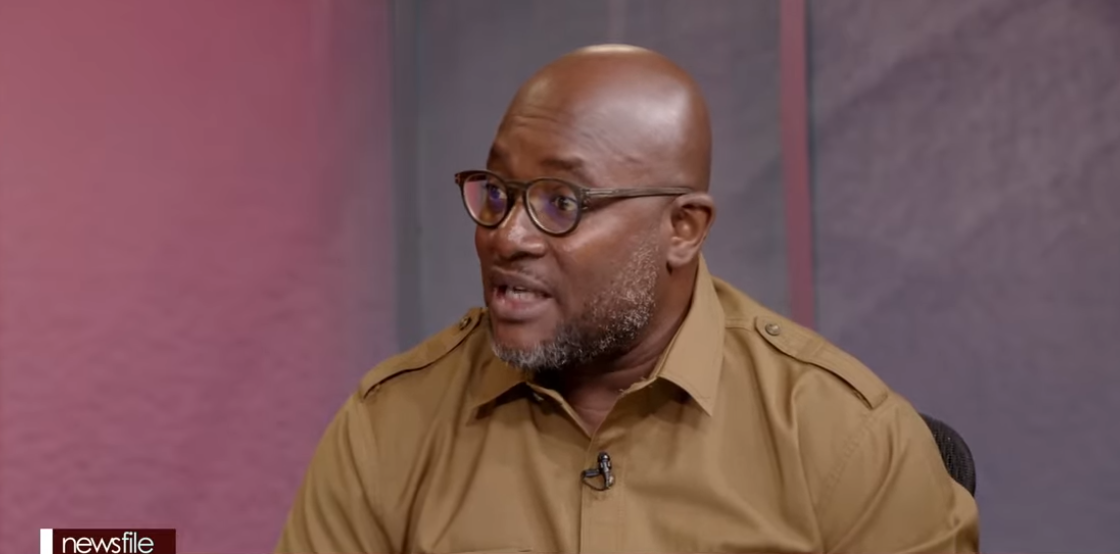
Former Member of Parliament for Sekondi, Andrew Egyapa Mercer, has accused the government of using arrests and denial of bail as tools to intimidate opposition supporters, particularly members of the New Patriotic Party (NPP).
Speaking on JoyNews’ Newsfile on Saturday, May 23, Mr Mercer said the NPP does not support insults in political discourse, but argued that the government’s response to controversial public comments had become excessive and politically motivated.
“Speaking for myself and the NPP, I dare say we do not subscribe to insults in our body politic,” he said.
“I certainly do not think that as political actors we need to advance our political arguments based on insults.”
However, he argued that individuals accused of minor offences under Sections 207 and 208 of the Criminal Offences Act should not be arrested and denied bail while investigations are ongoing.
“If somebody is accused of breaching Section 208 or 207, we do not think that denying that person bail is the way to go,” he stated.
“Nobody is saying do not investigate, but why do you have to arrest and detain somebody who has committed a misdemeanour?”
Mr Mercer alleged that there is an emerging pattern of state institutions being used against opposition figures.
“If you look at the trend of arrests, it clearly demonstrates that the NDC has set out to weaponise state institutions against actors within the NPP,” he claimed.
According to him, supporters of the governing National Democratic Congress (NDC) also make inflammatory comments online but are not subjected to the same treatment.
“People who belong to their stock are also on social media saying all sorts of things that are, if not the same, clearly equal to what they accuse and arrest NPP people of doing,” he said.
He further alleged that denial of bail was increasingly being used as a political tool.
“Clearly, they are using bail as a target, or denial of bail as a target, against NPP supporters,” he said, describing it as “a growing pattern of intimidation”.
Mr Mercer warned that such actions could undermine Ghana’s democratic reputation if left unchecked.
“It is important that as a country that belongs to the global community, we bring to the attention of the entire country and the international community these acts, which clearly do not serve the stability of our democracy,” he stated.
The former Minister for Tourism also referenced past debates over free speech and the criminal libel law during the era of former President Jerry John Rawlings.
“We have come a long way as a country. From the days of the criminal libel law during the Rawlings era, we know what these laws were used for — stifling free speech,” he said.
Mr Mercer noted that former President Nana Addo Dankwa Akufo-Addo repealed the criminal libel law after assuming office in response to public expectations.
He admitted that some arrests were also made during the Akufo-Addo administration, but argued that the current government had criticised those actions while in opposition and promised to do better.
“They promised the people of Ghana that, ‘Vote for us, and these things that President Akufo-Addo was doing, when we come into government, we will ensure that these things become a thing of the past,’” he said.
According to him, only “seven or eight people” were arrested under similar provisions during the eight years of the Akufo-Addo administration, compared to nearly 16 arrests within 16 months under the current government.
“You have come into government on the back of a reset, and within 16 months, you have arrested almost 16 people — essentially one arrest per month,” he stated.
“Where are we going as a country?”
Mr Mercer said Ghanaians expect governments to act differently once in office, particularly after criticising similar actions while in opposition.
“If you come into government on the back of a reset, Ghanaians expect that the kinds of things you complained about when you were in opposition, when you come into government, you will desist from them,” he added.
DISCLAIMER: The Views, Comments, Opinions, Contributions and Statements made by Readers and Contributors on this platform do not necessarily represent the views or policy of Multimedia Group Limited.
DISCLAIMER: The Views, Comments, Opinions, Contributions and Statements made by Readers and Contributors on this platform do not necessarily represent the views or policy of Multimedia Group Limited.
Source link