


By Kohe HASAN, Fatima Ali MOHAMED & Lily SABREENA
The quiet exodus
Eid was celebrated in Dubai recently. . It was a subdued affair compared to the exuberant celebrations of years past. Where the city was once full, it now feels noticeably sparse; where restaurants were once booked for weeks, reservations are now easily had.
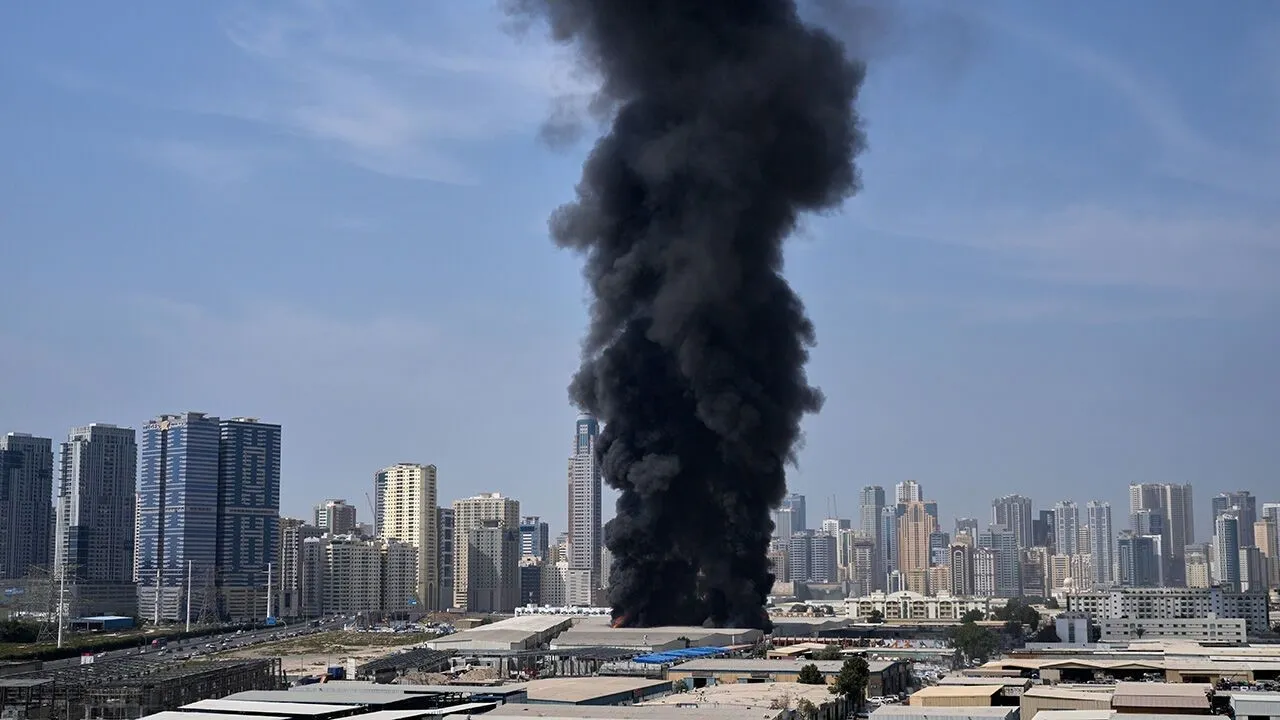
The skyline projects the same sense of forward momentum that has defined its rise over the past two decades, but this year, the crowds that usually animate its base were conspicuously thin.
The absence, however, is not confined to the city’s streets and tables. It is a metaphor for a larger, quieter exodus – one playing out in boardrooms and brokerage houses across the Gulf. Just as families and tourists have opted to stay away this Eid, businesses and investors have also quietly begun to decamp, seeking safe harbour from the regional instability.
When Iranian retaliatory strikes impacted airport, port and hospitality infrastructure across the UAE, market reactions were immediate. UAE stock exchanges temporarily halted trading and disruptions to cloud infrastructure affected segments of financial operations. These developments did not only trigger panic but also a reassessment.
Within days, Singapore-based private wealth advisers began reporting a measurable increase in enquiries from Dubai-based clients. Multiple advisers indicated that portfolios in the range of USD 50 million and above were exploring partial or immediate relocation of assets. Corporate and fund service providers similarly reported a surge in family office enquiries relating to Singapore.
When safe haven gets stress tested
For decades, Dubai’s value proposition extended beyond infrastructure and business-friendly regulations: whatever conflict happened elsewhere in the region, this city was untouched. Recent events have challenged that assumption, however.
The concept of a “safe haven” is, in practice, as much psychological as it is legal. Once this perception is tested, the response from globally mobile capital tends to be measured but decisive. Family offices and investment committees are increasingly revisiting core assumptions around continuity of banking operations, potential disruptions to airspace and travel, settlement and counterparty risk, as well as staff safety and operational resilience.
At the same time, the scale of Dubai’s financial ecosystem introduces a second-order consideration. By the end of 2025, the Dubai International Financial Centre (“DIFC”) hosted more than 290 banks, 102 hedge funds, 500 wealth management firms and over 1,200 family-related entities.5 While this concentration is a defining strength in peacetime, it brings into sharper focus the extent of jurisdictional concentration and by extension, the importance of redundancy in periods of uncertainty.
Singapore’s emergence as a natural alternative to the Middle East
Singapore’s emergence against this backdrop is not accidental – it solves for exactly the risks that are now being repriced.
First, Singapore’s strength as a wealth platform is anchored in its political stability and legal certainty. Its foreign policy is consistent and neutral,6 allowing it to remain a trusted hub even in periods of geopolitical tension. This is supported by an English common law system and clear regulatory policies from the Monetary Authority of Singapore. Together, these imbue confidence in investors, reinforced by Singapore’s continued AAA sovereign credit rating.
Singapore has also developed a mature and well-supported family office ecosystem. The sector has grown significantly, with more than 2,000 single-family offices supported by a strong network of private banks, legal advisers and fiduciary providers.8 Regulatory oversight has been strengthened, while processes for tax incentives have become more efficient.9 The broader tax framework which includes zero estate duty and capital gains tax, fosters a conducive environment for long-term planning.
In addition, it is strategically located within ASEAN, a significant economic bloc that is projected to reach approximately USD 4.5 trillion in GDP by 2030.11 Importantly, Singapore is not only a place to preserve wealth, but to deploy and manage it effectively. Its Variable
Capital Company structure provides flexibility for fund structuring.12 This is complemented by a robust trust framework and deep capital markets, with more than S$6 trillion in assets under management and established exit pathways through the Singapore Exchange.
Taken together, these elements position Singapore as not merely a domicile for capital, but as a platform through which capital can be raised, deployed and realised.
Positioning the Control Tower: Singapore’s Role in Africa-Asia Capital Flows
We envisage that when the dust settles, Dubai would still be a hub for deal origination across the Middle East and Africa. Its role in facilitating access, relationships and transactional flow will remain significant.
This is supported by the scale of activity moving through the region. The UAE has emerged as one of Africa’s largest trading partners, with total trade exceeding USD 100 billion annually.14 African capital is increasingly present within the UAE’s financial and real estate ecosystems with investors and businesses from Nigeria, Kenya and South Africa.
However, even in peacetime, African investors and businesses operating across Africa and the Middle East have increasingly been introducing jurisdictional optionality, and this is likely to grow with heightened geopolitical and regulatory uncertainties affecting key trade and financial corridors.
Singapore is increasingly being selected as the jurisdiction in which that optionality is anchored. Even prior to the outbreak of the Iran war, private equity firms and global asset managers such as Gateway Partners15 and Ninety One16 have all utilised Singapore as a base to intermediate global and Asian institutional capital for African opportunities, while maintaining operational footprints across the continent.
Operating from Singapore also offers businesses and investors two natural benefits. As Singapore is widely regarded as a Tier 1 financial jurisdiction, with a regulatory framework that is aligned with international standards, it helps to reduce counterparty friction when engaging global institutional investors.
It also enables Africa-focused strategies to connect directly with Asia-Pacific capital pools, particularly in North Asia and Southeast Asia, supported by deep institutional capital and a mature financial ecosystem.
From Flow to Control: Where capital is now anchored
For decades, Dubai has served as the natural hub for internationally mobile capital across the Middle East and Africa. Whilst that position is unlikely to change overnight, the assumption that a single jurisdiction is sufficient to anchor global wealth no longer holds.
As risk becomes more complex and less predictable, Singapore has emerged as a counterbalance, not a substitute for Dubai. Specifically for an African investor or business, Dubai remains where opportunities are sourced but Singapore is where those opportunities are governed, financed and scaled.
In a world where resilience is now a core component of strategy, that distinction is no longer theoretical. It is operational.
For further information on the evolving movement of Africa-origin capital and how your organisation may position its wealth or investment platform through Singapore, please reach out to Kohe Hasan ([email protected]) or Fatima AliMohamed ([email protected]) at M Kapital Consulting Pte Ltd.
References:
https://www.acra.gov.sg/business-entities/variable-capital-companies/faqs
https://www.bis.org/review/r250717h.htm?
https://www.reuters.com/world/middle-east/uae-announces-1-billion-initiative-expand-ai-africa-2025-11-22/
https://medium.com/%40gatewaypartne/gateway-partners-f5554a4ce431
https://ninetyone.com/en/singapore/contact-us?
https://www.reuters.com/world/middle-east/how-dubais-safe-haven-status-is-being-put-test-2026-03-02/;
https://www.difc.com/whats-on/news/dubai-international-financial-centre-announces-landmark-annual-results-for-2025
https://www.channelnewsasia.com/singapore/mfa-regrets-failure-negotiations-israel-us-strikes-iran-middle-east-5960456
https://www.fitchratings.com/research/sovereigns/fitch-affirms-singapore-at-aaa-outlook-stable-10-04-2025
https://www.businesstimes.com.sg/companies-markets/singapore-family-offices-exceed-2000-2024-43-year
https://www.channelnewsasia.com/singapore/shorter-processing-time-family-offices-mas-takes-risk-proportionate-approach-attract-ultra-rich-chee-hong-tat-5228526
https://www.edb.gov.sg/en/business-insights/insights/with-surge-in-family-offices-singapore-aims-to-boost-charitable-giving.html;https://www.iras.gov.sg/taxes/corporate-income-tax/income-deductions-for-companies/taxable-non-taxable-income
https://astnet.asean.org/wp-content/uploads/2024/01/00.-ASEAN-Statistical-Brief-on-GDP_19Jan2024.pdf
https://www.reuters.com/world/middle-east/how-dubais-safe-haven-status-is-being-put-test-2026-03-02/;
https://www.reuters.com/world/asia-pacific/wealthy-asians-look-move-dubai-assets-closer-home-iran-war-fears-2026-03-06/
https://www.reuters.com/world/middle-east/how-dubais-safe-haven-status-is-being-put-test-2026-03-02/; https://www.reuters.com/world/asia-pacific/wealthy-asians-look-move-dubai-assets-closer-home-iran-war-fears-2026-03-06/
Post Views: 33
Discover more from The Business & Financial Times
Subscribe to get the latest posts sent to your email.